
Close Menu
Simply Invest Asia
  • Home
  • About us
  • Explore industries/sectors
    • Automobile
    • Aviation
    • Banking
    • Biotechnology
    • Chemical & Fertilizer
    • Entertainment and Media
    • Food Processing
    • Healthcare
    • Iron and Steel
    • Leather
    • Mining
    • Oil and Gas
    • Pharmaceutical
  • Explore by countries
    • China
    • Dubai / UAE
    • Hong Kong
    • India
    • Indonesia
    • Japan
    • Malaysia
  • Explore cities
    • Bangkok
    • Beijing
    • Chongqing
    • Delhi
    • Dubai
    • Guangzhou
    • Jakarta
    • Kuala Lumpur
  • Why Asia
Facebook X (Twitter) Instagram Threads
Trending:
  • Adidas, New Balance end use of kangaroo leather material in products
  • Stock Market News and Research Tools
  • Burger King Japan’s V-Shaped Recovery
  • Editorial | Hong Kong’s rare, speedy response to fuel price surge shows preparedness
  • Guangzhou Port Company Limited Reports Earnings Results for the Full Year Ended December 31, 2025
  • Piyush Goyal assures supply chain support to Gulf counterparts | India News
  • Bangladesh seeks more scholarships, better integration for students in Malaysia
  • The UAE condemns the terrorist attack on a military base in Nigeria
  • Daiichi taps Imagene to sharpen cancer biomarker discovery | Biotechnology | The Pharmaletter
  • OIC condemns Israeli approval of 34 new West Bank settlements | Israel-Palestine conflict News
  • WHISKAS installs giant ‘Lucky Cat’ statue to spotlight feline nutrition in Thailand
  • Preview: Chennai v Delhi (Hindi) | IPL 2026 – Cricbuzz
  • Moderate Magnitude 4.5 Earthquake 48 km South of Manokwari, Indonesia
  • What China is learning from the Iran war – POLITICO
  • Remembering a Steadfast Hong Kong Democracy Activist
  • Families call on UK regulator to ‘find the truth’ of Air India crash amid ‘serious concerns ‘about probe
  • Katie Price’s husband Lee Andrews shares plans to get her back on the road by getting her a licence in Dubai – despite her seventh driving ban
  • Daily Memo: When Will Widebody Production Recover To Pre-Pandemic Peaks?
Friday, April 10
Facebook X (Twitter) Instagram
Simply Invest Asia
  • Home
  • About us
  • Explore industries/sectors
    • Automobile
    • Aviation
    • Banking
    • Biotechnology
    • Chemical & Fertilizer
    • Entertainment and Media
    • Food Processing
    • Healthcare
    • Iron and Steel
    • Leather
    • Mining
    • Oil and Gas
    • Pharmaceutical
  • Explore by countries
    • China
    • Dubai / UAE
    • Hong Kong
    • India
    • Indonesia
    • Japan
    • Malaysia
  • Explore cities
    • Bangkok
    • Beijing
    • Chongqing
    • Delhi
    • Dubai
    • Guangzhou
    • Jakarta
    • Kuala Lumpur
  • Why Asia
Simply Invest Asia
Home»Explore by countries»Japan»An Assessment – The Diplomat
Japan

An Assessment – The Diplomat

By IslaApril 9, 20265 Mins Read
Share
Facebook Twitter Pinterest Threads Bluesky Copy Link


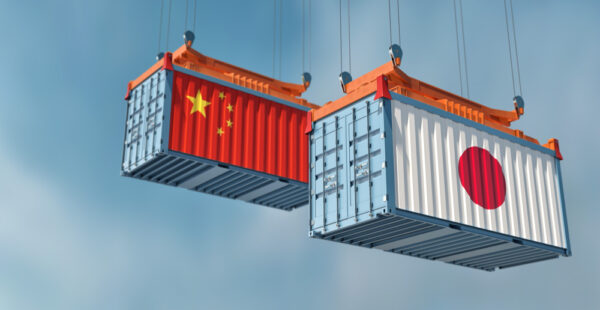
On February 24, 2026, China placed twenty Japanese companies on its Entity List. This move marked a significant shift in China’s posture: Having previously sought to keep Japan’s security status deliberately ambiguous, Beijing has now explicitly designated Japan a country of security concern and publicly identified specific firms it views as threats. By framing the measure under the national security exceptions recognized by the WTO framework, China has made it considerably more difficult for Japan to establish a clear trade rule violation.

Until now, China had pursued a different strategy. Rather than openly categorizing Japan as a security adversary, it engaged in “economic coercion” – discriminating against and pressuring specific countries for political, non-commercial reasons in violation of the WTO’s most-favored-nation (MFN) principle. In a paradoxical sense, China’s willingness to commit trade rule violations served to avoid sharpening its security posture. The recent use of the term “neo-militarism” suggests that China may be in the process of redefining Japan not merely as an economic partner, but as a security threat warranting active vigilance.

The foundational premise of international trade law is the separation of economics and security. The MFN principle requires equal treatment of all trading partners, while permitting discriminatory measures against specific countries as an exception where genuine security concerns exist. The WTO’s security exceptions are not unlimited, whereas the Regional Comprehensive Economic Partnership (RCEP) is understood to allow considerably broader scope for self-interpretation.

China has been systematically building the legal architecture necessary to invoke these security exceptions since around 2021, the opening year of its 14th Five-Year Plan. That year, Beijing signaled two distinct strategic directions simultaneously: a commitment to further opening, exemplified by its application to join the Comprehensive and Progressive Agreement for Trans-Pacific Partnership; and a parallel effort to strengthen national security institutions by assembling legal instruments for extraterritorial application of security measures modeled on the practices of other states. This duality – “openness” alongside “security” – has defined China’s external posture ever since.

The specific legal tools assembled include the Unreliable Entity List Regulations (2020), the Export Control Law (effective 2020), the Rules on Blocking the Unjustified Extraterritorial Application of Foreign Legislation and Measures (2021), the Anti-Foreign Sanctions Law (2021), and the Regulations on Export Control of Dual-Use Items (effective 2024). Presented as a “legal toolbox,” these instruments, developed with explicit reference to U.S. and European extraterritorial enforcement regimes, are designed to secure China’s own capacity to invoke security exceptions. Under the Export Control Law’s Entity List provisions, China may prohibit, restrict, or suspend transactions with importers or end-users deemed to threaten national security or interests. Throughout 2025, U.S. and Taiwanese defense-related firms were added to this list in succession. The February 2026 listings of twenty Japanese companies, along with a further twenty placed on a newly applied “watch list,” represent the extension of this framework to Japan.

Viewed through the lens of trade law, China’s approach appears to be shifting its center of gravity away from “economic coercion,” where illegality is relatively transparent, and toward “extraterritorial application” measures, where security exception arguments are more defensible.

Notable instances of economic coercion include the slowdown of rare earth exports to Japan in 2010, restrictions on Australian barley and wine in 2020, trade limitations targeting Lithuania in 2021, and the reduction of passenger flights and restrictions on tourism, study abroad, and entertainment following statements about a Taiwan contingency in 2025. These measures have been widely understood as carrying a strong presumption of MFN violation.

China may now be pivoting away from an outright deviation from international rules toward instruments that afford greater room for argumentation within the existing framework. Schematically, the Japan-China-U.S. relationship appears to have moved from a phase of economic coercion maintained under deliberate ambiguity into a security phase in which military tension and economic competition are increasingly intertwined.

What comes next? By formally listing firms it deems militarily threatening, China has arguably made it harder to assert security concerns against companies not on the list. This paradoxically may make it easier for Japan to frame economic coercion as a justiciable issue. One option would be for Japan to bring WTO dispute settlement proceedings against acts of economic coercion, thereby clearly placing the issue on the international agenda. The Entity List measures themselves, however, are far more difficult to challenge under WTO rules. In this scenario, China faces growing difficulty avoiding a finding of violation for economic coercion, while retaining the option to continue, expand, or selectively scale back Entity List designations as circumstances dictate. Should Japan choose not to contest economic coercion formally, China’s effective discretion would remain broad – free to continue or expand both economic coercion and Entity List operations as it sees fit, or to roll them back at will.

Responding to this new phase will require a considered, panoramic assessment of Japan’s strategic options.


Source link

Related Posts

Burger King Japan’s V-Shaped Recovery

April 10, 2026

Armor buried under Japanese temple linked to ancient Korean kingdom

April 10, 2026

Root cause of current state of China-Japan ties lies in Takaichi’s erroneous remarks on Taiwan question, says spokesperson

April 10, 2026
Add A Comment
Leave A Reply Cancel Reply

Top Posts

US trade chief says tech restrictions to block Chinese autos

April 10, 2026

Japan to release extra 20 days’ oil reserves from May

April 10, 2026

India's ModiFi Aviations secures NSOP with Falcon 2000 – ch-aviation

April 10, 2026
Don't Miss

Adidas, New Balance end use of kangaroo leather material in products

By IslaApril 10, 2026

A string of victories for corporate animal welfare activists means fewer shoe brands will be…

Stock Market News and Research Tools

April 10, 2026

Burger King Japan’s V-Shaped Recovery

April 10, 2026

Editorial | Hong Kong’s rare, speedy response to fuel price surge shows preparedness

April 10, 2026
SUBSCRIBE TO OUR NEWSLETTER

Get our latest downloads and information first. Complete the form below to subscribe to our weekly newsletter.


I consent to being contacted via telephone and/or email and I consent to my data being stored in accordance with European GDPR regulations and agree to the terms of use and privacy policy.

Stay In Touch
  • Facebook
  • YouTube
  • TikTok
  • WhatsApp
  • Twitter
  • Instagram
Top Trending

Moderate Magnitude 4.5 Earthquake 48 km South of Manokwari, Indonesia

By IslaApril 10, 2026

What China is learning from the Iran war – POLITICO

By IslaApril 10, 2026

Remembering a Steadfast Hong Kong Democracy Activist

By IslaApril 10, 2026
Most Popular

Piyush Goyal assures supply chain support to Gulf counterparts | India News

April 10, 2026

Media and entertainment industry; media and entertainment industry outlook

April 9, 2026

Mining People: International Battery Metals, Temas Resources, Xali Gold, Atlas Lithium, Kodiak Copper, Torex Gold Resources – Canadian Mining Journal

April 9, 2026
Our Picks

Slovenia's NLB to make counter takeover bid for SEE-active Addiko Bank – SeeNews

April 10, 2026

Guangzhou port 2025 net profit down 15.6% Y/Y

April 10, 2026

‘Prince of Dubai’ busted in Warsaw roadside gold scam – TVP World

April 9, 2026
SUBSCRIBE TO OUR NEWSLETTER

Get our latest downloads and information first. Complete the form below to subscribe to our weekly newsletter.


I consent to being contacted via telephone and/or email and I consent to my data being stored in accordance with European GDPR regulations and agree to the terms of use and privacy policy.

© 2026 Simply Invest Asia.
  • Get In Touch
  • Cookie Policy
  • Privacy policy
  • Terms & Conditions

Type above and press Enter to search. Press Esc to cancel.

SUBSCRIBE TO OUR NEWSLETTER

Get our latest downloads and information first.

Complete the form below to subscribe to our weekly newsletter.


I consent to being contacted via telephone and/or email and I consent to my data being stored in accordance with European GDPR regulations and agree to the terms of use and privacy policy.