
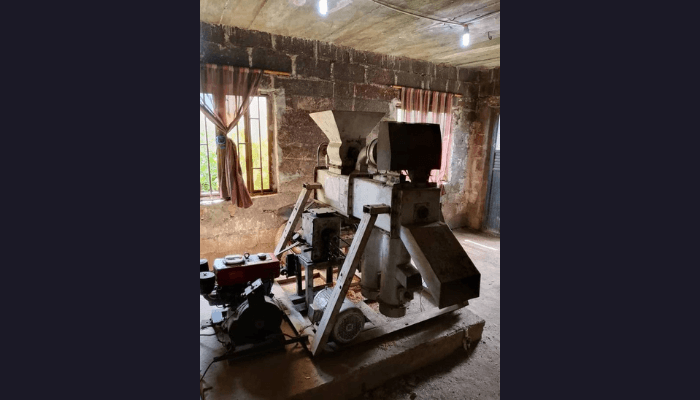
Food processing as part of the food value chain is significant because it is a process that transforms raw food items into various consumable products such as flours, pellets, fruit juice, fried, cooked formats and powders which, when well preserved would stimulate its usefulness to the consumers and enhances food security.
But over the decades Nigerian food processors have had to import sundry food machines adding to the overhead cost for production. The piece of good news however, is that some Nigerian innovators have come up with different food processing machines to save cost, create jobs and improve local productivity. Some examples would beam a searchlight on how to upgrade such for sustainable economic growth.
For instance, one process, chemical engineer, Iliyasu Nazifi, Founder of Prime Waves Ltd fabricated a rice milling machine with the capacity of 50 metric tons per day back in October,2016. The brand name of Green Pro Rice located in Nasarawa LGA of Kano state the company upgraded rice processing from the small-scale level with professionalism and profitability.
Taking it to a higher level, one interesting instance was the commissioning of the ENESI 1200 KPH Rice Combined Processor Assy built by the Kogi state-born Engineer Idris Sarki as commissioned in 2024. showing effectiveness of the blower and suction fan systems
Some other locally fabricated food processing machines in Nigeria were built by indigenous fabricators such as Niji Group and various artisan clusters. They serve to mechanize traditional staples, cut heavy labour, and lower equipment costs. Though small-scale units sometimes face challenges with standardisation and hygiene but the salutary impacts they make are worth the while.
Read also: How Nigeria’s financial sector is transitioning to domestic cloud
Other locally made food machines include the cassava grater which rapidly mashes peeled tubers for garri and fufu production. The hydraulic press dewaters wet cassava mash safely and faster. As for mechanical garri fryer it replaces manual, heat-intensive pot stirring with motorised paddles and controlled heat sources.
There is the multipurpose grain thresher / sheller that separates maize, sorghum, and beans from cobs or pods. And the hammer mill / grain grinder pulverizes maize, millet, and dry legumes into fine flours. While the palm oil digester & press extracts crude oil efficiently from boiled palm fruit, the palm kernel cracker, as the name goes cracks hard shells to separate nuts from the outer shell.
On its part, the. cabinet tray & flash dryer reduces moisture content, especially in cassava flour, yam flour (elubo).
Other innovations as found in our food research institutes, including FIIRO, Oshodi are fruit juice extractors, machines for milling grains and legumes, cassava-wheat composite flour for bread, machine for instant pounded yam flour, and others for soy-garri, soy-dadawa, soy-ogi, edible mushroom production as well as bottling and preservation of palm wine.
With regards to the impact of local food machines on food processing, experts agree that it reduces post-harvest losses, leads to quick processing saves perishable as it saves roots and grains from rotting on farms.
Similarly, it saves labor and time. It does so by replacing slow hand methods with higher-capacity mechanical operations. Improves affordability. It has been revealed that locally built units cost far less than imported factory lines and use easily sourced local spare parts.
It also boosts rural enterprise by empowering small-scale processors and cottage industries to package commercial food quantities. On quality & safety the challenges include Inconsistent use of food-grade stainless steel by some informal fabricators can introduce metal wear particles or lead to variable product standards.
But to make the desired impact is the impact of the Ajaokuta Steel Company Limited.
If fully operational, it can manufacture raw iron, steel components, and precision spare parts needed to mass-produce, maintain, and repair a wide range of local agricultural and food processing machinery, sharply reducing Nigeria’s reliance on imported food equipment.


