
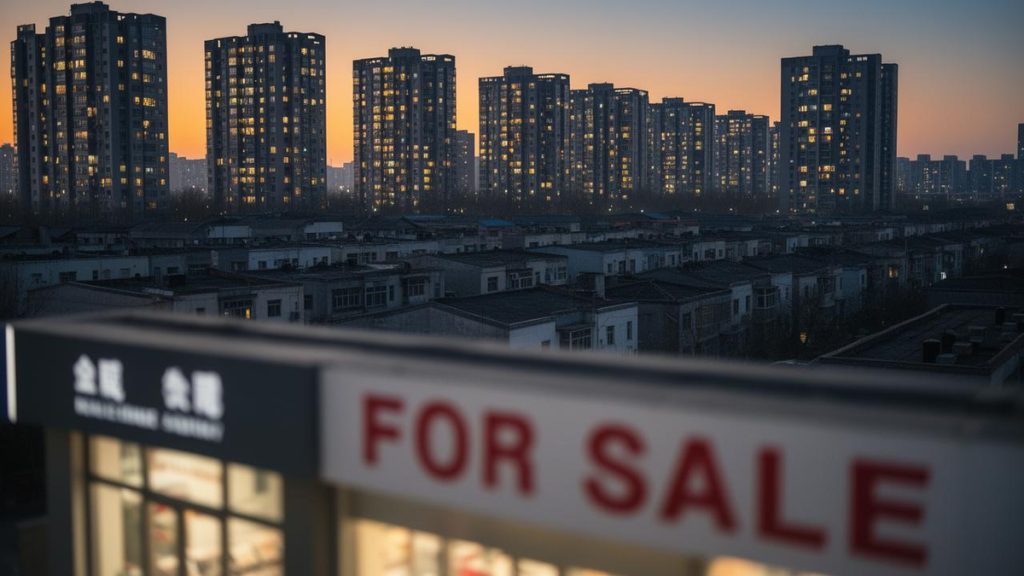
On the evening of August 7, the Beijing Municipal Commission of Housing and Urban-Rural Development, the Beijing Municipal Commission of Planning and Natural Resources, and the Beijing Housing Provident Fund Management Center jointly issued the “Notice on Further Optimizing and Adjusting the City’s Real Estate Policies,” delivering a dual-barreled salvo of purchase restriction easing and provident fund loan ceiling increases. The new policies officially took effect on August 8.
The core thrust of this round of policies is to lower the home-buying threshold and ease financial pressure. On one hand, the social security or individual income tax payment record required for non-Beijing-resident families to purchase commercial housing within the Fifth Ring Road has been drastically cut from “two years” to “one year.” On the other hand, the housing provident fund loan ceiling has seen a historic breakthrough, with dual-income families now eligible for a maximum first-home loan of up to 3.4 million yuan (approximately $503,950) when all preferential stacking conditions are met.
The speed of the policy’s implementation has sparked industry discussion. A real estate agent told reporters that while rumors had circulated, the official announcement still came as a surprise, especially the extent of the provident fund loan increase, which far exceeded expectations. Gao Yuan, president of the Beijing Lianjia Research Institute, analyzed that the new policy’s rollout in early August is precisely timed for the traditional “Golden September, Silver October” peak season. He noted the policy window was chosen prudently, continuing the regulatory rhythm of the past year.
Purchase Threshold Lowered Again, Citywide Social Security Requirement Unified at 1 Year
The adjustment to purchase restrictions is particularly noteworthy. The “Notice” clarifies that the social security or tax payment record required for non-Beijing-resident families to purchase commercial housing within the Fifth Ring Road has been further reduced from the previous “two years” to “one year.” With this move, the social security or tax threshold for non-Beijing-resident families to buy homes citywide is now uniformly “one full year.”
Under the new rules, non-Beijing-resident families with one year of social security or tax payments can purchase one commercial housing unit within the Fifth Ring Road, with multi-child families eligible for one additional unit. Outside the Fifth Ring Road, there is no longer any limit on the number of units they can purchase.
Looking back at Beijing’s path of easing purchase restrictions, the trajectory is clear. On December 24, 2025, Beijing reduced the social security requirement for non-resident families from “3 to 2 years” within the Fifth Ring Road and from “2 to 1 year” outside it. Before that, on September 30, 2024, it was reduced from “5 to 3 years” within the Fifth Ring Road and from “5 to 2 years” outside it. This latest adjustment marks Beijing’s third real estate optimization measure within a single year.
Gao Yuan pointed out that this targeted release of rigid demand purchasing eligibility within the Fifth Ring Road demonstrates clear policy thinking and strong continuity. However, he cautioned that the transmission period from demand stimulation to actual transactions typically takes 70 to 100 days. Coupled with the seasonal characteristic of rigid demand being more active at the beginning and end of the year, the effectiveness of this policy is expected to gradually manifest in data only by the end of the fourth quarter and into the first quarter of next year.
Yan Yuejin, vice president of the Shanghai E-House Real Estate Research Institute, believes that in the short term, the expansion of the eligible buyer pool will drive a phased rebound in viewings and transaction volumes for both new and pre-owned homes within the Fifth Ring Road, potentially accelerating the pace of entry for rigid-demand buyers.
Alongside the easing of purchase restrictions, the property gifting policy has also undergone significant optimization. The “Notice” clarifies that when parents gift commercial housing registered under their family name to adult children, the children’s home-buying eligibility will no longer be verified. This means that even if children do not qualify to purchase a home in Beijing, they can directly accept a property gift from their parents. Gao Yuan commented that the previous mechanism of verifying the recipient’s qualifications, designed to prevent the artificial inflation of home-buying credentials, had inadvertently hindered legitimate internal property transfers for cross-provincial families. Lifting this restriction on one-way gifting genuinely facilitates residents’ practical needs.
Provident Fund Loan Ceiling Doubled, Precisely Targeting Rigid and Upgrade Demand
The other major highlight of the new policy is the comprehensive upgrade of provident fund support, covering multiple dimensions including base loan amounts, stacking rules, contribution-year calculations, and unit-count recognition.
In terms of base amounts, the new policy adjusts them as follows: for single contributors, a maximum of 1.2 million yuan (approximately $177,865) for a first home and 1 million yuan (approximately $148,221) for a second home; for dual-income families where both spouses contribute, a maximum of 2.4 million yuan (approximately $355,729) for a first home and 2 million yuan (approximately $296,441) for a second home.
On this basis, the new policy establishes three stacking conditions: residents with household registration in the city’s six core districts purchasing a first home outside those districts can receive an additional 200,000 yuan (approximately $29,644); purchasing housing that meets green building development support policies can add up to 400,000 yuan (approximately $59,288); and Beijing-registered families with two or more children can add 400,000 yuan (approximately $59,288).
If all these conditions are fully stacked, a single-contributor family can reach a maximum loan of 1.8 million yuan (approximately $266,797), while a dual-income family can reach up to 3.4 million yuan (approximately $503,950).
Gao Yuan commented that this adjustment is “both big and not big.” “Big” because the total amount has indeed doubled, setting a historical record; “not big” because this mechanism requires both spouses to contribute to reach the cap, essentially meaning dual contributions for dual usage, which will not overdraw the provident fund’s deposit-loan cycle. From a practical standpoint, the average combined loan for Beijing homebuyers is currently around 2.2 million yuan (approximately $326,085), meaning the new policy limit is fully sufficient to cover the conventional home-buying needs of the vast majority of families.
Equally significant as the ceiling increase is the optimization of the linkage mechanism between contribution years and loan amounts. The new policy clarifies that single contributors can borrow 200,000 yuan per contribution year, while dual-income families can borrow 400,000 yuan per year, with the calculation based on the spouse with the longer contribution history.
Under the new calculation, applying for a 1.2 million yuan loan as a single contributor or a 2.4 million yuan loan as a couple requires only 5 years and 1 month of provident fund contributions, compared to the 7 years and 1 month required under the old policy. This allows young people to reach the “full amount” a full two years earlier. Gao Yuan emphasized that the importance of this change is no less than the ceiling increase itself—from the homebuyer’s perspective, it means “buying earlier,” and from the market’s perspective, it means “more customers.”
Furthermore, the criteria for counting provident fund loan units have been optimized. Contributor families with no housing or only one housing unit in Beijing can now apply for a provident fund loan when purchasing again, as long as their existing provident fund loan has been fully repaid.
“Transfer with Existing Mortgage” Expanded, Renovation Withdrawal Activates Existing Stock
On the transaction side, Beijing simultaneously expanded the scope of “transfer with existing mortgage” for pre-owned homes, explicitly supporting this process for properties with outstanding provident fund loans. Previously, this policy only applied when the seller’s outstanding loan was a commercial loan or a combined loan where the provident fund portion had already been repaid.
On the funding side, the new policy actively responds to the State Council’s newly revised “Housing Provident Fund Management Regulations,” becoming the first to implement a policy allowing “housing renovation withdrawals from the provident fund.” According to the “Notice,” owner-occupiers and their spouses undertaking renovation and decoration can apply to withdraw 50% of the renovation’s value-added tax invoice amount from their provident fund, with a maximum withdrawal of 250,000 yuan (approximately $37,055) per property. The same owner applying again for the same property must wait a full 10 years.
Gao Yuan analyzed that the 250,000 yuan limit corresponds to the median budget for an ordinary family’s second renovation, while the 10-year cycle matches the frequency of renovation updates. This policy precisely benefits two customer groups: elderly residents in public housing communities where demand for age-friendly renovations has been increasing annually, and homeowners who entered the market during the peak supply period of commercial housing and are now densely entering a 10-to-15-year second-renovation cycle.
Market Anticipates Early Activation of “Golden September”
Beijing’s new policy rollout comes against the backdrop of an ongoing market recovery.
According to data from the China Index Academy, in July, Beijing’s new commercial housing sales reached 370,000 square meters, down 29% month-on-month but up 2% year-on-year. Despite being the traditional off-season compounded by high temperatures and heavy rainfall, year-on-year growth remained positive. In the pre-owned housing market, data from the Beijing Municipal Commission of Housing and Urban-Rural Development’s official website showed 14,037 pre-owned residential units were registered online in July, a 9.8% year-on-year increase, ranking as the second-highest July figure in the past five years.
Cao Jingjing, general manager of the Index Research Department at the China Index Academy, stated that although new home sales declined significantly month-on-month, the market is generally on a slow recovery track against the backdrop of continuously lowering purchase thresholds and a loose credit environment, with off-season performance already improved compared to last year.
Chen Wenjing, policy research director at the China Index Academy, believes that after the July 30 Politburo meeting explicitly called for “stabilizing the real estate market,” Beijing’s swift introduction of new policies carries a strong demonstration effect. The new policy directly expands the base of potential homebuyers and tangibly reduces the financial pressure of purchasing and renovating homes, which is expected to directly benefit the market and repair expectations. In the short term, both new and pre-owned home transaction volumes in Beijing are likely to improve.
A developer source also expressed optimism about the market outlook. He pointed out that the core logic of this new policy is to lower thresholds and reduce burdens, particularly the provident fund’s maximum loan of 3.4 million yuan, a very forceful measure that is highly likely to activate the traditional “Golden September” market heat ahead of schedule, bringing a wave of demand release to both the new and pre-owned housing markets.
Yan Yuejin emphasized from a macro perspective that as a benchmark first-tier city, Beijing’s relaxation of purchase restrictions is a crucial bellwether for stabilizing the real estate market in the second half of the year. While the current market is improving, upward momentum is weakening due to insufficient demand. Beijing’s move sends a clear signal: all localities must prioritize real estate stabilization and introduce new, effective measures on the sales front to achieve tangible results.