
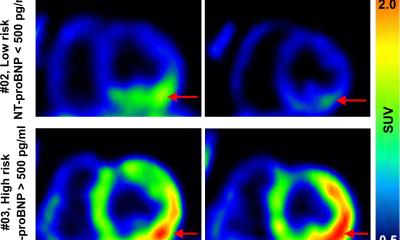
The researchers have developed a new PET method to monitor the effects of the treatment. Olof Eriksson, Professor of Drug Development at Uppsala University, has developed a tracer that makes it possible to visualise the active cells driving the scarring process using PET imaging. “For the first time, we can combine a treatment that targets the scarring process with an imaging technique that makes it possible to monitor how the patient’s heart is responding to the treatment. This paves the way for more personalised treatment after a heart attack,” says Karl-Henrik Grinnemo.
In an ongoing clinical trial, the researchers observed that some patients still had a high level of scarring two months after their heart attack, while others healed significantly faster. “Ultimately, we also hope to be able to use PET scans to identify patients in whom the scarring process remains active months after a heart attack. These patients could then receive this treatment at an early stage, which could slow the progression of heart failure. This would be of great benefit to patients.”
Survival rates among patients who suffer an ST-elevation myocardial infarction (i.e. a heart attack with complete blockage of a blood vessel) and are treated with balloon angioplasty have remained virtually unchanged since 2008, largely because current therapies cannot target the scarring process that is initiated after the balloon angioplasty and which leads to heart failure. By targeting this process, the researchers hope to reduce mortality in the long term. Due to its anti-inflammatory effect, the researchers see several potential applications for the treatment, even outside the field of cardiology.
“We see great potential for this treatment in conditions other than heart attacks as well. Stroke is an obvious example, but also acute inflammatory conditions such as acute respiratory distress syndrome. The same principle could also be applied to organ transplants. Transplants cause severe inflammation. If we can reduce this, we could protect the heart, lungs, kidneys and liver, thereby improving the function of these organs after a transplant.”
The study is the result of an extensive collaboration between researchers at Uppsala University, Uppsala University Hospital, Karolinska Institutet, the University of Gothenburg, SLU and several international partners.
Source: Uppsala University