
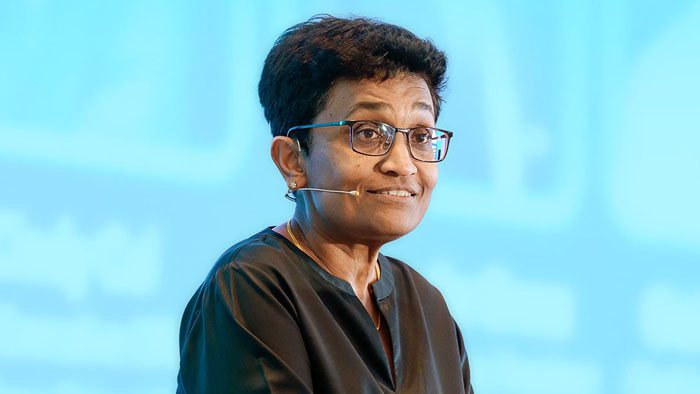
Held under the theme “Securing Health Through Innovation”, the 3rd Allianz Asia Health Summit brought together insurers, healthcare providers, regulators, policymakers and technology leaders to discuss how innovation can help improve health outcomes across Asia. Allianz Asia Pacific’s Ms Anusha Thavarajah called on stakeholders across the healthcare ecosystem to translate innovation into meaningful action, saying the industry’s shared responsibility is to help people not only live longer, but also live healthier, more independent and meaningful lives.
Asia’s healthcare sector must move beyond discussions and accelerate collaboration to tackle rising chronic disease, ageing populations and escalating healthcare costs, according to Allianz Asia Pacific Regional CEO Anusha Thavarajah.
Speaking in her welcome address at the 3rd Allianz Asia Health Summit, Ms Thavarajah said healthcare systems across the region are facing mounting pressure on affordability, accessibility and long-term sustainability, despite decades of investment and medical advances.
She stressed that improving healthcare access, affordability and outcomes cannot be achieved by any single stakeholder.
“It requires all of us; insurers, providers, regulators, policymakers, technology partners and healthcare leaders – working together towards a common goal,” she said.
Ms Thavarajah highlighted several trends reshaping Asia’s healthcare landscape, including rising obesity rates, the growing prevalence of non-communicable diseases such as cancer, cardiovascular disease and diabetes, increasing mental health concerns and one of the world’s fastest-ageing populations.
“Many of today’s biggest health issues are driven by lifestyle factors rather than acute illnesses, making prevention and early intervention increasingly important. Although healthcare expenditure has risen substantially over the decades, she said much of the investment continues to focus on treating illness rather than preventing it,” she said.
Slow pace of action is the biggest barrier
In a separate interview with Asia Insurance Review, Ms Thavarajah said, over the next five years, healthcare innovations expected to have the greatest impact on the insurance industry are AI, wearables and metabolic health solutions.
However, she said their success will depend on whether they can deliver measurable health outcomes and drive lasting behavioural change, rather than simply increasing the use of technology.
“The main barrier to large-scale adoption is not a lack of innovation but the slow pace of action and collaboration across the healthcare ecosystem. While technology is advancing rapidly, insurers, healthcare providers, regulators and other stakeholders need to move more quickly from discussion to implementation to realise meaningful outcomes,” she added.
When asked about the shifts needed to transform healthcare, Ms Thavarajah said the focus must move beyond simply extending life expectancy to improving healthy life expectancy.
“Our biggest health challenges today are no longer defined by acute illnesses but by lifestyle-related, non-communicable diseases such as cancer, cardiovascular diseases and diabetes. These challenges are shaped by how we live, the choices we make and how early we can prevent, detect and manage diseases. We need to invest in the right areas, focusing on prevention rather than just treatment,” she said.
Obesity as a chronic disease
Obesity should no longer be viewed as a lifestyle issue or cosmetic concern but recognised as a chronic disease that requires long-term management, with prevention and early intervention becoming increasingly urgent as prevalence rises across Asia, said Novo Nordisk Vice President BASEA Anand Shetty.
In Southeast Asia alone, about 200m people are currently living with obesity.
Mr Shetty said scientific understanding of obesity has evolved significantly over the past three decades, with research showing that biological and neurological factors, alongside genetics and environmental influences, play a major role in regulating eating behaviour and body weight.
The growing prevalence of obesity is also fuelling the rise of non-communicable diseases (NCDs), he said. Scientific evidence now links obesity to more than 200 medical conditions, including cardiovascular disease, type 2 diabetes, chronic kidney disease and fatty liver disease.
While new treatments, including GLP-1 therapies, have generated strong public interest and transformed obesity management, he cautioned that greater awareness is needed to ensure these therapies are understood for their clinical benefits rather than viewed primarily as weight-loss products.
Allianz China Life Insurance Company CEO Cindy Cui explained that in China, there’s very little prevention insurance, even though prevention is very important.
“Take GLP-1 or Ozempic or similar type of drugs that are designed for diabetes type two. If you are diagnosed with that disease, then it’s probably covered. But if you’re doing it for weight loss purposes, it’s not covered. So, I think the question for us is then, looking ahead, maybe how do we bring that element in?” Ms Cui said during a CEO panel discussion.
Longevity creates growing care gap
Rising life expectancy is creating a widening gap between how long people live and how long they remain healthy, increasing demand for senior care while exposing limitations in the insurance industry’s ability to cover longevity-related risks, according to RGA Senior Vice President for China, South Korea and Taiwan markets Jason Zhang.
Mr Zhang said improvements in life expectancy have not been matched by gains in healthy life expectancy, leaving many people spending a growing number of years living with disability or chronic illness.
He described the difference between lifespan and health span as the “care gap”, noting that it has widened from 8.7 years around 25 years ago to about 10 years today.
At the same time, he said the cost of healthcare is rising much faster than general inflation. While consumer inflation across Asian markets has averaged around 3% over the past five years, medical inflation has been about 10%, significantly increasing the long-term cost of care.
Mr Zhang also highlighted the challenge of insuring longevity-related risks. Unlike diseases such as cancer, which affect a smaller proportion of older adults, the likelihood of requiring long-term care increases substantially with age, making it difficult for insurers to provide comprehensive coverage through traditional insurance products.
He said the industry has therefore adopted a cautious approach, focusing on protecting against premature illness or disability while encouraging individuals to accumulate savings to finance the costs associated with longer life expectancy.
AI is the breakthrough
Further into his speech, Mr Zhang said AI is expected to accelerate breakthroughs in life sciences, drug discovery, disease management and preventive healthcare, enabling people to remain healthier and economically productive for longer.
He said AI-powered robotics could eventually perform many physical caregiving tasks, potentially shifting senior care costs away from labour-driven medical inflation towards technology costs, which have historically fallen over time.
“If senior care increasingly relies on AI and robotics, the inflation associated with care could become more closely linked to hardware costs rather than medical service costs,” he said, adding that this could help moderate or even reduce long-term care inflation.
Mr Zhang also highlighted the rapid emergence of AI-powered healthcare platforms, citing examples in China where AI applications can interpret health screening reports, provide preliminary medical consultations, recommend hospitals, schedule appointments and facilitate medicine purchases through integration with public health insurance systems.
He said such capabilities suggest that AI could become the primary interface connecting patients with healthcare providers, insurers and other participants across the healthcare ecosystem within the next three to five years.
Mr Zhang called on insurers and reinsurers to work more closely with technology companies, healthcare providers and other stakeholders to accelerate innovation while ensuring care becomes more accessible, efficient and affordable for ageing populations across Asia.
During a CEO panel discussion, PT Asuransi Allianz Life Indonesia President Director Alexander Grenz said, “The future is about giving the right care, the right amount of care, appropriate care at the right time, also in the right setting, which doesn’t always need to be the hospital. It is about improving the outcome for our customers”. A