

Network: GLAM Archive
Gallery / 19 images
Welcome to the Dazed Fashion Network, our black book of global creatives shaping the fashion industry online and IRL. Discover them all here.
It’s news to no one that the obsession with archive fashion has skyrocketed in the last five years. Having great style isn’t just wearing the latest pieces anymore – it’s about sourcing the rarest grails from the industry’s most iconic collections, especially those from the late 00s and early 2010s. So for Nick Varnier, the rare fashion dealer and GLAM Archive owner, the surge in interest couldn’t have come at a better time. “I’m just lucky that what I like is what’s actually popular,” he tells me of his love for that era. “My first designer piece ever was from Hedi Slimane’s last Saint Laurent collection. I was rocking Margiela futures when I was 17.”
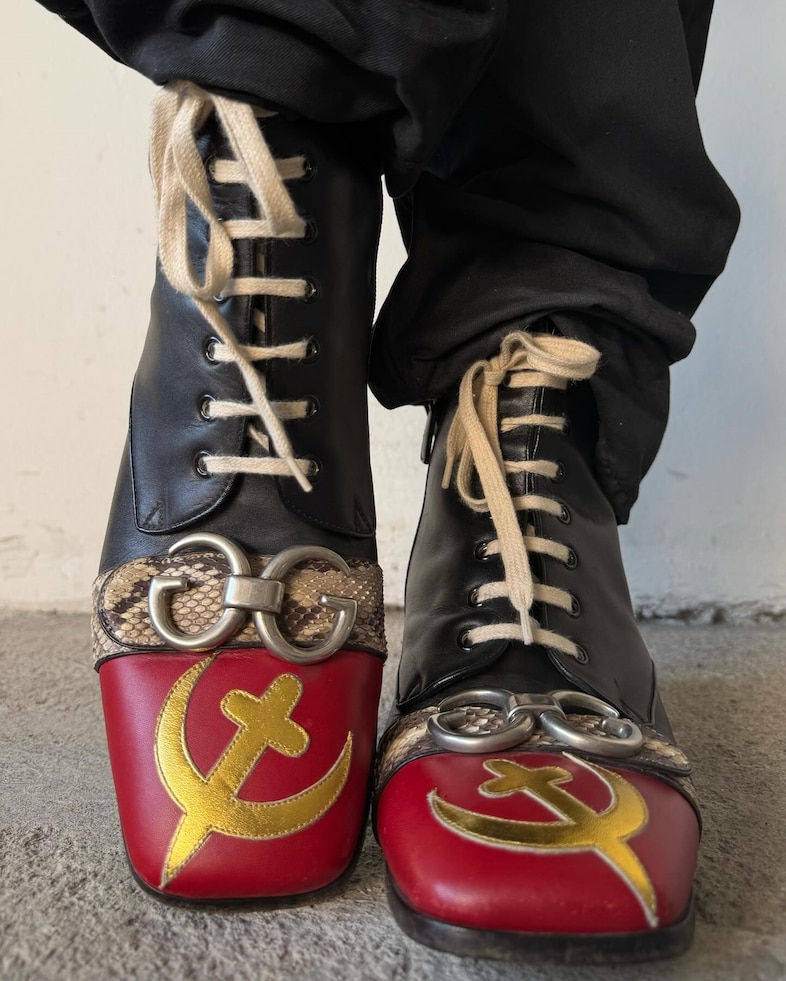
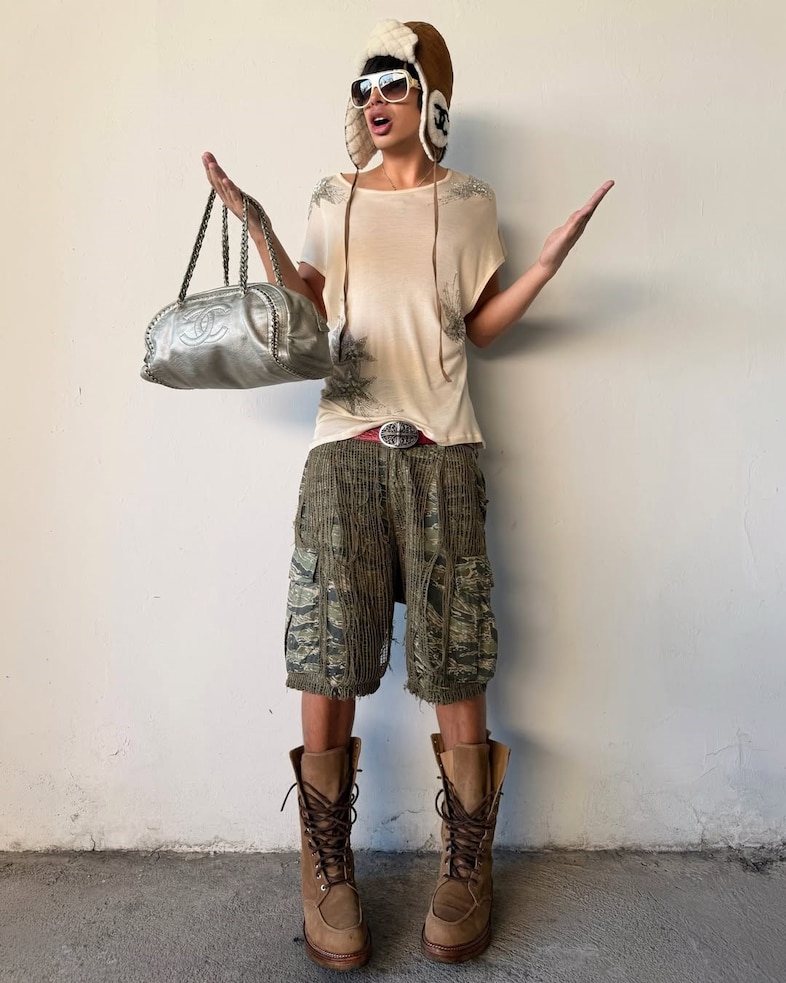
Now 27, Varnier has established himself as one of Instagram’s best dressed with his Bangkok-based archive, modelling his rare finds in fit pics on the grid, posting casually as you might on your IG story. The only difference is that he’s amassed a following of 75,000 doing so, and it’s all down to the tapped-in curation and inspired styling. Gucci’s communist inspired AW08 boots (complete with hammer and sickle) sit next to Chanel beanies and leopard print Celine. Christophe Decarnin’s Balmain is paired with a fur trapper and Chrome Hearts belt, while runway Rick Owens is a GLAM Archive mainstay. “Whatever I was fucking with back then is now popular again,” he says, “so it’s pretty easy for me to know what’s cool.”
Below we chat to Varnier about his unlikely path into fashion, where he sources his pieces from, and the advice he has for selling new to the archive game.

Hey Nick – we know you from your IG page, but do you have a physical store too?
Nick Varnier: I have a proper physical showroom, but the scene in Bangkok isn’t really developed enough yet for people to really notice what’s going on here. I feel like I’m more well known overseas than I am at home, which is kind of funny, actually.
What is it about the scene in Bangkok that is underdeveloped?
Nick Varnier: Maybe not underdeveloped – there’s a great fashion scene here and a lot of key players that are doing a really great job. I just think that maybe the taste that I have in my curation is not that popular yet. Or maybe it won’t be; I don’t know. I’m not exactly sure what it is, but I guess people haven’t really reached out here, which is interesting.
What made you want to start GLAM Archive?
Nick Varnier: I’ve always been into fashion since I was really young. I grew up on an island called Phuket, which was kind of away from the city, and no one was really into fashion. A lot of my inspiration came from spending a lot of time online listening to music and on Tumblr – checking out what the guys in the States were wearing and what the rappers were wearing. That developed my taste to be more skewed towards that scene in a way.
“Travelling, going to parties, seeing how people were dressed at raves… my curation is an amalgamation of that”
How has your taste developed since then
Nick Varnier: I would say, honestly, it’s the same! Everything in my store is stuff that I thought was cool growing up. I like this idea of ‘sophisticated ignorance’, where the looks seem ignorant but there’s intention behind it. You know the provenance of everything; you know the season and collection. The outfit might come off as brash, but there’s a lot of thought behind it.
Tell me more about ‘sophisticated ignorance’.
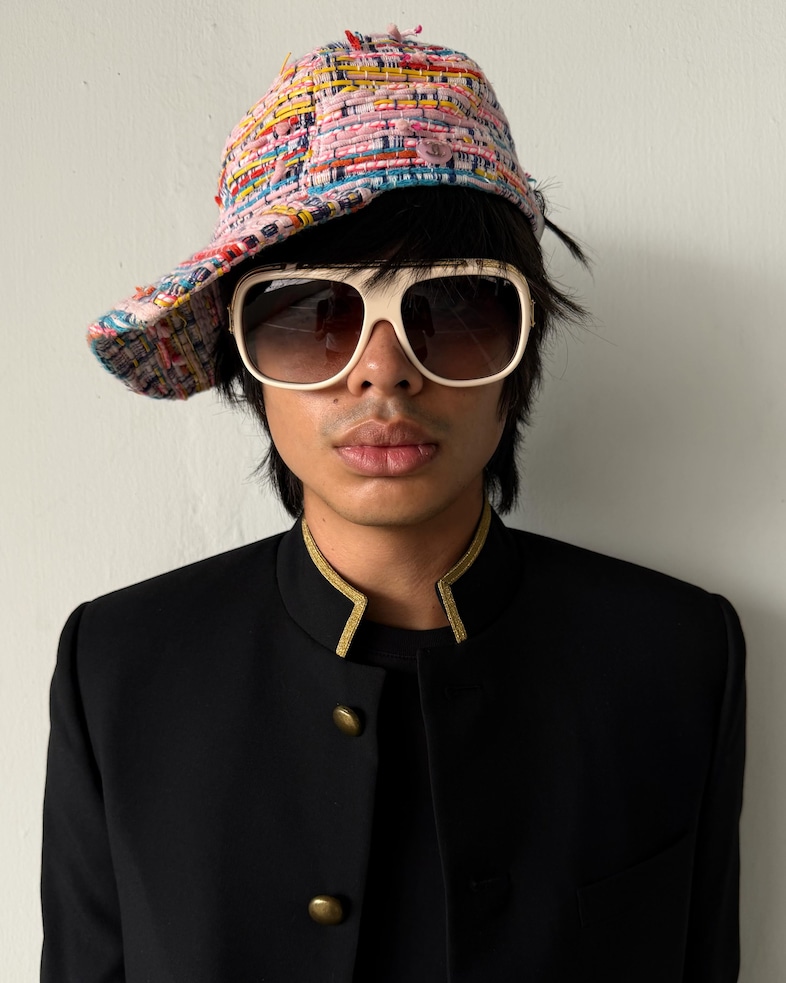
Nick Varnier: For example, it could be a Chanel women’s hat that you wear to the side and people are like, ‘man, does he even know he’s wearing?’ But you’re putting it on in your own way and presenting it in a context that doesn’t really make sense, but still looks fucking dope.
I guess fashion purists – maybe all the older people – might see it as ignorant, but for a lot of young people, I think that’s really cool. You’re presenting stuff that maybe wouldn’t be digestible for the youth in a way that is digestible
What’s your background in fashion?
Nick Varnier: I only started [GLAM Archive] two and a half years ago. Before I was working in hospitality, and that’s actually what I went to school for. But I feel like this whole process started when I was 12 – I’d actually say I’ve been in the game for 15 years! Travelling, going to parties, seeing how people were dressed at raves, listening to different kinds of music. My curation is an amalgamation of that.

What makes GLAM Archive different from other vintage stores?
Nick Varnier: For me it’s about giving a lighthearted take. If you see my curation, I try to keep it as informative as possible, but I also keep it light hearted. The way I style things is tongue-in-cheek, or at least like a little bit cheeky sometimes.
I like buying from a collection that isn’t popping right now, but presenting it in a way that makes sense for today, and then that pops off. That’s what I do it for. Recently I posted a bunch of Saint Laurent backpacks that no one really gave a fuck about, and then I put them up and all of a sudden it got some traction, and I see other people buying the same stuff, which is pretty cool.
I noticed a lot of military jackets, Celine by Hedi and also vintage Chanel – do you seek out pieces to fit in with current trends?
Nick Varnier: I buy based on feeling, so I’m just lucky that what I like is what’s actually popular. My first designer piece ever was a pair of trainers from Hedi Slimane’s last Saint Laurent collection. I was rocking Margiela futures when I was 17. Whatever I was fucking with back then is now popular again, so it’s pretty easy for me to know what’s cool. This whole archive thing is coming back, with all the young rappers like fakemink and Nettspend – they’re all kind of bringing that whole thing back.

Where do you source your pieces for the store?
Nick Varnier: It’s a bit of everywhere, to be honest. Wherever there’s a good deal, or wherever there’s something that I like, I’ll find it. I shop everywhere, from Russia to Hong Kong, to Singapore, to locally. A lot from the States, a lot from Europe. I’ve got my connections – my network. When you start looking at all these different marketplaces, you realise that certain things are cheaper in certain countries.
Any specific era you look out for?
Nick Varnier: I like stuff from the late 90s to the early 2000s and early 2010s. So anywhere from 1995 to 2015, I would say. There are some exceptions for recent collections, but for the most part that’s what I like.
Any advice for sellers new to the archive market?
Nick Varnier: For me, the core part of my business is having a collection that’s unique and presenting it in a way that’s more personal than traditional retail.
And who’s your favourite brand or designer?
Nick Varnier: I’ve always been a real Rick Owens fan, which might sound super cliché. Growing up and seeing how all my favourite rappers dress – not even just the clothes but the lifestyle – it was a whole universe that Rick built around the brand.
He started off as a pattern maker, so he used to rip off actual couture clothes in LA when he was younger, so that’s why he’s so great at making patterns, because that’s his background. Dark Shadow was his diffusion line, and a lot of the early stuff was more streetwear-oriented. That specific era of Dark Shadow, from about 2006 to 2010, is my favourite kind of stuff.