
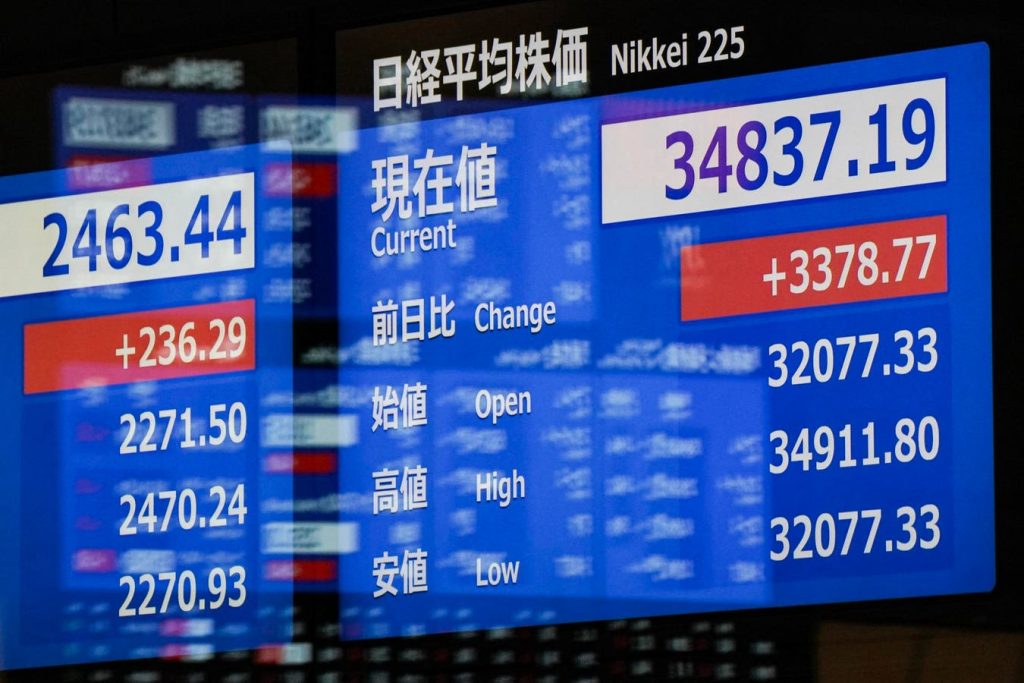

(Photo by Kazuhiro NOGI / AFP) (Photo by KAZUHIRO NOGI/AFP via Getty Images)
AFP via Getty Images
For decades, activist investing was viewed skeptically in Japan. Outside investors demanding asset sales, larger dividends or changes in management were often portrayed as short-term opportunists that are more interested in extracting cash than building enduring businesses.
That perception is changing. Japan’s capital markets are undergoing their most significant transformation in a generation, creating an opportunity for a more constructive model of activism: part McKinsey-style strategic consulting, part Blackstone-style operational and financial discipline.
The timing is particularly important. The Tokyo Stock Exchange (TSE) has asked companies listed on its Prime and Standard markets to operate with greater awareness of their cost of capital and stock price. Its guidance emphasizes sustained returns above the cost of capital, thoughtful allocation of management resources and restructuring of underperforming business portfolios—not simply one-time dividends or share repurchases.
The TSE’s reforms are frequently described as an effort to encourage companies trading below book value to improve their price-to-book ratios. But the broader objective is more fundamental. Companies are being asked to understand why their return on equity is inadequate, explain how they intend to improve it and continuously evaluate whether their balance sheets and business portfolios are creating value.
The TSE has specifically encouraged investment in research and development, human capital, intellectual property and productive assets, as well as the restructuring of business portfolios. Dividends and buybacks may be appropriate, but the exchange has made clear that companies should not treat one-time distributions as substitutes for sustained operational improvement.
At the same time, Japan is adjusting to a dramatically different macroeconomic environment. The weak yen has made many Japanese companies and assets relatively inexpensive for dollar-based investors, while also increasing the international competitiveness of major exporters.
Government bond yields and corporate financing costs are rising as Japan moves away from decades of extraordinarily loose monetary policy. The era in which cash could accumulate indefinitely, and capital appeared almost free is ending. Higher interest rates will place greater pressure on companies to justify the cash, real estate, cross-shareholdings and underperforming subsidiaries sitting on their balance sheets. These conditions have helped make Japan one of the world’s most important markets for shareholder engagement.
Several of the world’s largest and most prominent activist investors are increasingly active in the country. Elliott Investment Management has invested in companies including SoftBank Group, Toshiba, Toyota Industries, Daikin Industries and Mitsui O.S.K. Lines. ValueAct Capital has established a reputation for longer-term, relationship-oriented investments and has engaged with major Japanese companies including Olympus, JSR and Seven & i Holdings. Hong Kong-based Oasis Management has conducted campaigns involving companies such as Fujitec, Kao and Kyocera.
Elliott’s recent investments demonstrate the growing scale of the opportunity. In announcing its investment in Mitsui O.S.K. Lines, Elliott praised the quality of the company’s underlying businesses while arguing that its shares remained materially undervalued. More importantly, Elliott expressed a desire to work constructively with the company on a more ambitious medium-term strategy.
A broader group of specialists is also helping shape Japan’s activist ecosystem. Tokyo-based Strategic Capital has targeted companies with excess cash, cross-shareholdings and underutilized assets. Kaname Capital focuses on smaller and midsized Japanese businesses, frequently emphasizing governance, capital allocation and the interests of minority shareholders. Singapore-based Hibiki Path Advisors describes its approach as constructive engagement intended to unlock companies’ long-term potential.
3D Investment Partners, also based in Singapore, has become one of the most visible activists in Japan through investments including Fuji Soft. Together, these firms illustrate that Japanese activism is no longer dominated by a handful of large American funds. It is developing into a diverse investment discipline that includes global institutions, regional specialists and locally based investors with a deeper understanding of Japanese business culture.
The next stage of Japanese activism, however, should move beyond the traditional activist playbook.
The best activists should approach a company as McKinsey might: developing a rigorous, fact-based assessment of its markets, competitive position, organization and strategic alternatives. They should identify where the company possesses genuine competitive advantages, which divisions can become global leaders and where management should invest to accelerate growth.
This process should begin with listening. Activists need to understand the company’s history, relationships with employees and suppliers, competitive advantages and obligations to the communities in which it operates. Constructive engagement is more likely to succeed when investors distinguish between practices that merely preserve tradition and capabilities that represent a genuine source of long-term value.
Activists should then bring the ownership mindset of a leading private equity firm such as Blackstone. That means establishing measurable operating priorities, recruiting specialized executives where necessary, restructuring low-return divisions, improving procurement and pricing, pursuing disciplined acquisitions and holding management accountable for results.
Capital returns remain part of the equation, but they should follow strategy rather than replace it. Selling unnecessary cross-shareholdings, disposing of noncore real estate or repurchasing undervalued shares can create value. Yet the proceeds should also support research and development, automation, employee productivity, international expansion and acquisitions that strengthen the company’s long-term position.
This approach is especially well suited to Japan. Many Japanese companies possess trusted brands, exceptional engineering capabilities, loyal employees, valuable intellectual property and substantial financial resources. Their problem is frequently not the quality of the underlying business. It is that these assets have not been organized, measured or financed to produce competitive returns.
Constructive activists can help bridge that gap. They can respect Japanese corporate culture while still insisting on clearer strategy, stronger boards and better capital allocation. Successful activism increasingly depends on patience, private dialogue and a willingness to help management build a credible transformation plan.
Activism has already become more accepted as Japanese boards have added independent directors and placed greater emphasis on accountability. Investors are also learning that approaches tailored to Japanese culture are more effective than simply importing confrontational tactics developed in the United States. Japan does not need activists who merely demand that companies empty their balance sheets. It needs engaged owners willing to help companies build better businesses.
The winning model will combine the analytical depth of a global consulting firm, the operational discipline of private equity and the patience of a long-term shareholder. Done properly, investor activism can become not a threat to corporate Japan, but an important partner in its renewal.