
Singapore. Singapore is seeking a commercially viable green power trade with Indonesia by taking carbon credits and premiums into account in the ongoing pricing talks, according to a senior official.
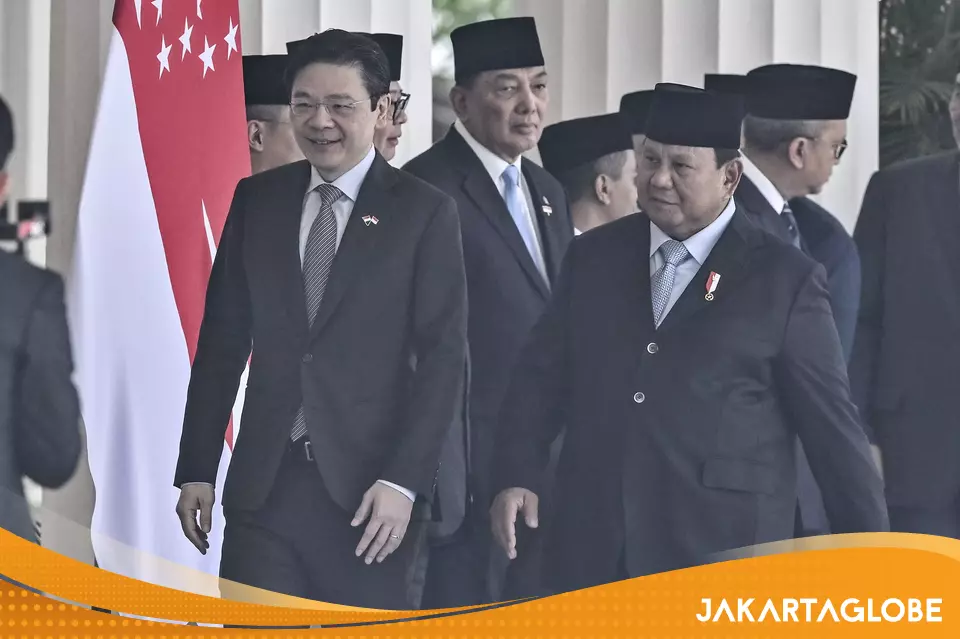
The recent leaders’ retreat saw the announcement of fresh deals on having the city-state import low-carbon electricity from Indonesia. Despite the latest progress, Energy Minister Bahlil Lahadalia revealed that both sides were still trying to agree on a price that satisfies all, citing that the numbers currently laid on the table were far from a “win-win”.
Speaking to Indonesian journalists, Gan Siow Huang, Singapore’s minister of state for trade, admitted that the pricing mechanism would have to bear in mind the premiums, namely the extra costs that reflect the green benefits compared to using brown electrons.
“We are looking at something that has to be commercially viable,” Gan said at a recent briefing in her office.
ADVERTISEMENT
“What we are looking at from a renewable energy [point of view] is maybe solar [power]. It’s considered a green electron, and it can command a premium. How much of a premium it commands is the question here.”
Asked what constitutes a win-win price for Singapore, Gan explained that the imported electricity should stay competitive relative to carbon credits.
In other words, the premiums shouldn’t be so high that it becomes more cost-effective for companies to go for carbon credits, namely the tradable permits that let businesses emit a certain amount of greenhouse gases.
“If we include the price of carbon credits in the market, that will give us a good gauge of what companies would be willing to pay here. Otherwise, you just go to the alternative or just buy more carbon credits,” Gan explained.
“The pricing [for electricity imports] will be guided by alternatives such as carbon credits. We have to be as transparent as possible.”
She went on to say that any agreed tariff would boil down to a “willing seller and a willing buyer”, although Gan avoided naming a price. Sellers will be looking at the various costs related to capital, production, regulations, licensing, among others, for the pricing. The Singaporean companies buying the green electrons “will similarly compare the price with the alternatives they can get to meet their sustainability targets.”
Unlike Indonesia’s state electricity monopoly via PLN, Singapore gives its households and businesses the option to stick to the government-owned SP group at a regulated tariff or with licensed retailers. These retailers buy the power in bulk from the wholesale electricity market to sell it to the end consumers.
At the moment, Singapore heavily relies on natural gas for power generation. The country is now pivoting to import 6 gigawatts of low-carbon electricity from its ASEAN neighbors by 2035, with some 3.4 gigawatts — of mainly solar power — about to be sourced from Indonesia.
Gan is optimistic that trade “starts within this decade”, suggesting the scheme start with smaller amounts “like 600 megawatts” before a full-scale 3.4 gigawatt.
Progress in the cross-border trade drive has fueled optimism in ASEAN’s long-time ambitions of connecting the region’s electricity networks, a plan better known as the “ASEAN Power Grid”.
“Maybe the first stage is for Indonesia to export electricity to Singapore. Then, through this node, you can export to other parts of Southeast Asia. There’s a lot of potential. It’s just a matter of getting all our policies and politics aligned,” Gan remarked.

Fabby Tumiwa, who helms the Indonesian energy think-tank IESR, sees the need to include premiums in the tariff talks.
“A fair price must reflect production costs, reasonable margins, and the cost of transmitting electricity to Singapore,” Fabby told the Jakarta Globe in a separate interview, not long ago.
President Prabowo Subianto has tasked sovereign fund Danantara to take care of the cross-border electricity trade. Danantara has also signed memoranda of understanding (MoUs) on the imported electricity offtake and its technical aspects with Keppel Electric, Sembcorp Utilities, and Singapore Energy Interconnections. In September 2024, Adaro and several other private companies clinched conditional licenses, a key building block for the transfers to proceed.
However, Fabby pointed out that recent regulatory changes in Indonesia have restricted the electricity trade to only be conducted by state-owned or government-appointed companies, hence creating uncertainty for the private developers.
Tags:
Keywords: