
BRAC Bank PLC, founded in 2001 under the leadership of Sir Fazle Hasan Abed to serve the “missing middle” — small and medium enterprises (SMEs) that had outgrown microfinance but lacked access to formal banking — has grown into one of Bangladesh’s leading financial institutions.
Over the past 25 years, the bank’s market capitalisation has surpassed $1 billion, and last year it became the first local private commercial bank to earn more than Tk 2,000 crore in annual profit.
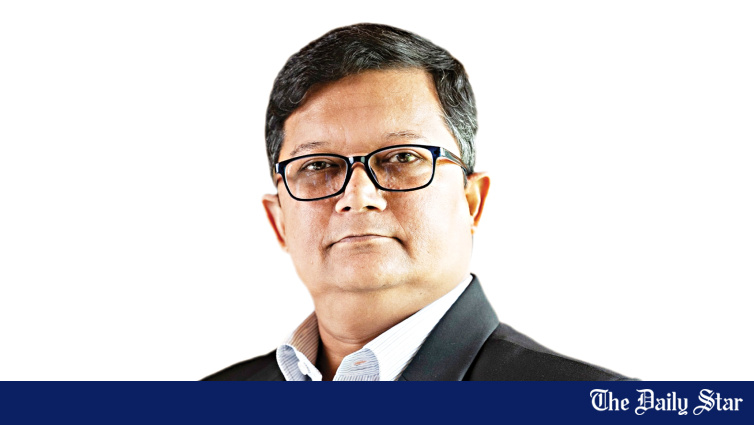
It has financed more than 20 lakh SME entrepreneurs, helping create over one crore jobs, according to Tareq Refat Ullah Khan, managing director and CEO of BRAC Bank PLC.
“The numbers show that BRAC Bank has not just provided banking services — it has helped build the economy,” Khan said in an interview with The Daily Star.
Today, the bank operates through more than 2,300 locations across Bangladesh. Its Astha app processes nearly Tk 25,000 crore in monthly transactions and supports a retail portfolio of more than Tk 52,000 crore.
Its subsidiary, bKash, serves around eight crore customers, while the CorpNet platform handles more than Tk 23,000 crore in corporate transactions every month.
The bank has also financed a $96 million standalone Aframax oil tanker, the largest single-bank financing in Bangladesh’s shipping sector.
“BRAC Bank aims to remain one of the country’s best-governed and most trusted banks by providing customer-focused financial services. It also aims to become Bangladesh’s most impactful bank and eventually the country’s first multinational bank with full-scale overseas banking operations,” Khan said.
GOVERNANCE, STABILITY AND DIGITAL TRANSFORMATION STRENGTHEN RESILIENCE
Explaining banking safety, Khan said rising concerns over liquidity, asset quality and governance have made customers more cautious about where they keep their money.
“In this environment, trust has become banking’s most valuable currency,” he said, adding that trust is built through governance, financial strength, regulatory compliance and consistent performance.
He noted that BRAC, one of the world’s largest development organisations, is the bank’s largest shareholder, while most of its directors are independent financial experts with no shareholder interests, ensuring objective oversight.
The bank is also the only one in Bangladesh with international credit ratings from both S&P Global and Moody’s.
At the end of 2025, Bangladesh’s banking sector non-performing loan (NPL) ratio stood above 30 percent, while BRAC Bank’s fell to 2.27 percent. Its advance-to-deposit ratio was 63 percent, reflecting strong liquidity.
The bank’s capital base crossed Tk 10,000 crore, and net profit after tax reached a record Tk 2,251 crore in 2025.
Customer confidence was reflected in deposit growth as well: while industry deposits rose 11.51 percent, BRAC Bank’s increased by nearly 27.5 percent, or more than Tk 21,000 crore.
Khan acknowledged early challenges in SME banking, saying, “In the beginning, SME banking was our biggest challenge because many of our employees came from the microfinance sector, while SME banking requires a different approach.”
The bank responded by strengthening credit assessment and monitoring systems, reducing SME NPLs to around 2 percent, and working with one of the Big Four consulting firms to further improve operations.
Nearly half of the bank’s 10,600 employees now work in SME banking. Although the segment has a high cost-to-income ratio, BRAC Bank built a strong retail business to support stable funding.
Alongside this, wholesale banking — including treasury, corporate, commercial and transaction banking — became a key growth driver after its expansion phase between 2017 and 2020, following entry into the segment in 2010.
Khan said the bank now operates an integrated model where SME, retail and wholesale businesses reinforce each other. “One client relationship creates multiple business opportunities and revenue streams,” he said.
Foreign investors hold 35.89 percent of the bank, while BRAC holds 46.16 percent. The bank has introduced collateral-free CMSME lending, built offshore banking assets worth $1.3 billion, and significantly expanded retail operations.
Around 30–35 percent of income comes from treasury operations. “Even without treasury income, we would invest in other assets,” he said, adding that investment opportunities remain limited due to Bangladesh’s underdeveloped capital market.
Foreign trade has also become a major business driver, rising from about $1.5 billion in 2017 to $7.12 billion last year, enabling financing of around 6 to 7 percent of Bangladesh’s annual trade.
Digital transformation has been central to growth, with the Astha app enabling most routine services without branch visits. The corporate digital platform, launched in 2019, processes Tk 23,000 to Tk 24,000 crore in monthly transactions.
More than 30 projects using artificial intelligence, machine learning, robotics and automation have improved efficiency, while staffing in operations has not increased in line with the balance sheet that expanded from Tk 50,000 crore to Tk 162,000 crore.
Its next focus is expanding financial inclusion by strengthening remote banking services, allowing customers in underserved areas to access banking through digital platforms, websites and call centres without visiting branches.
The bank also runs a strong agricultural lending programme through more than 3,000 service points, directly serving rural borrowers rather than relying heavily on microfinance institutions (MFI).
Khan said its agricultural loans are priced at about 14 percent compared to nearly 24 percent charged by many MFIs.
Sustainability remains central to strategy. BRAC Bank is Bangladesh’s highest-ranked bank in Bloomberg ESG ratings, with about 82 percent of lending supporting sustainable sectors and nearly 10 percent of its corporate portfolio in green finance.
As part of the Global Alliance for Banking on Values, the bank continues to emphasise responsible banking.
“Banking is not a one-year business. It is an institution that must endure for generations,” Khan said.
Looking ahead, BRAC Bank aims to become Bangladesh’s most impactful bank by delivering both financial and social value, targeting more than 10 percent market share while expanding convenient banking services to all economically active citizens, especially in underserved and unbanked communities.