
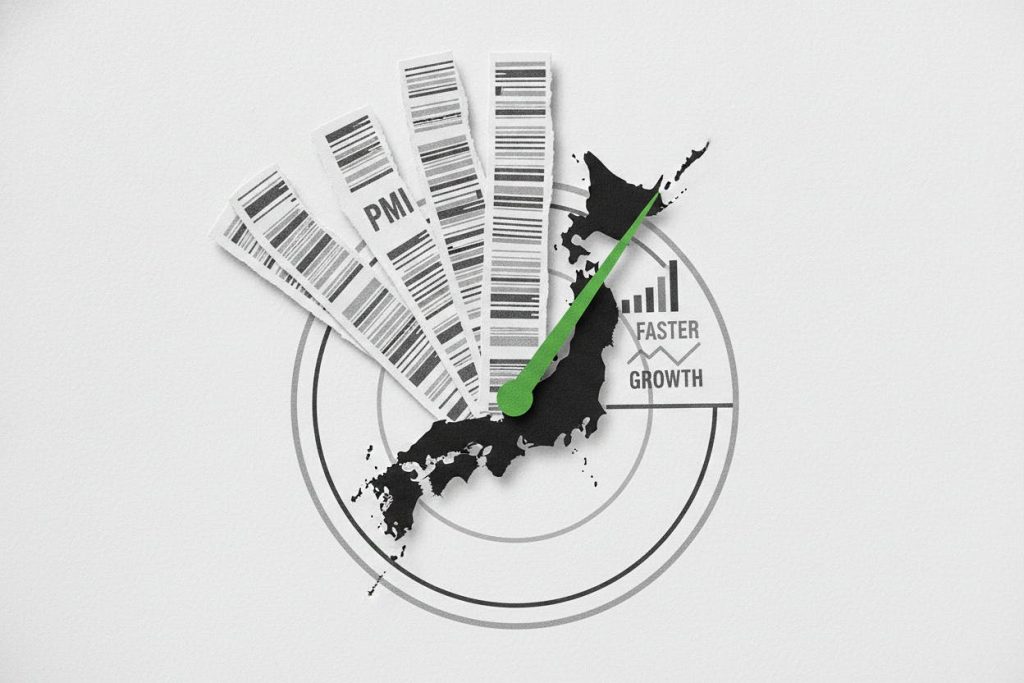
quickest rise in new orders since February, plus a faster buildup in unfinished work, which helped employment edge up as companies tried to keep up.
Why should I care?
For markets: A 52.8 composite PMI can matter before GDP does.
These surveys tend to lead “hard” data like industrial output and official economic growth, so a higher composite reading can quickly filter into economists’ near-term growth tracking and analysts’ revenue and profit forecasts. If that turns into upward earnings estimate revisions, Japanese shares can get a tailwind, especially companies that depend more on domestic demand than global exports. Japan’s market has often been sensitive to the direction of estimate changes, because revisions can reshape expectations well before quarterly results confirm the trend.