
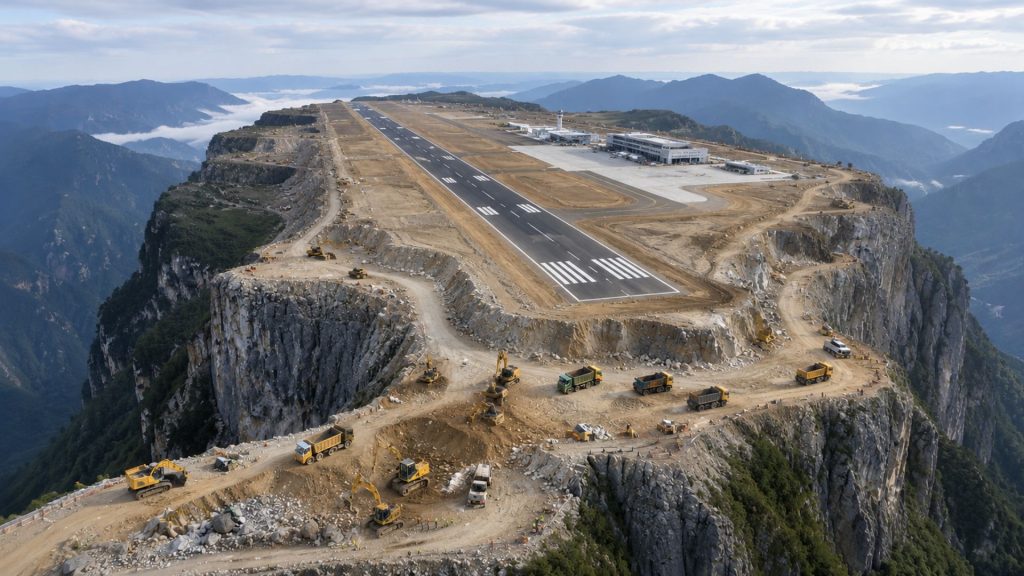
On August 16, 2019, China put the Chongqing Wushan Airport into operation, located in a mountainous area between the counties of Wushan and Fengjie, in the municipality of Chongqing, near the Three Gorges region.
Created to expand the air connection of northeastern Chongqing, the terminal began to serve an area marked by difficult terrain, where land travel used to depend on longer routes conditioned by the mountains.
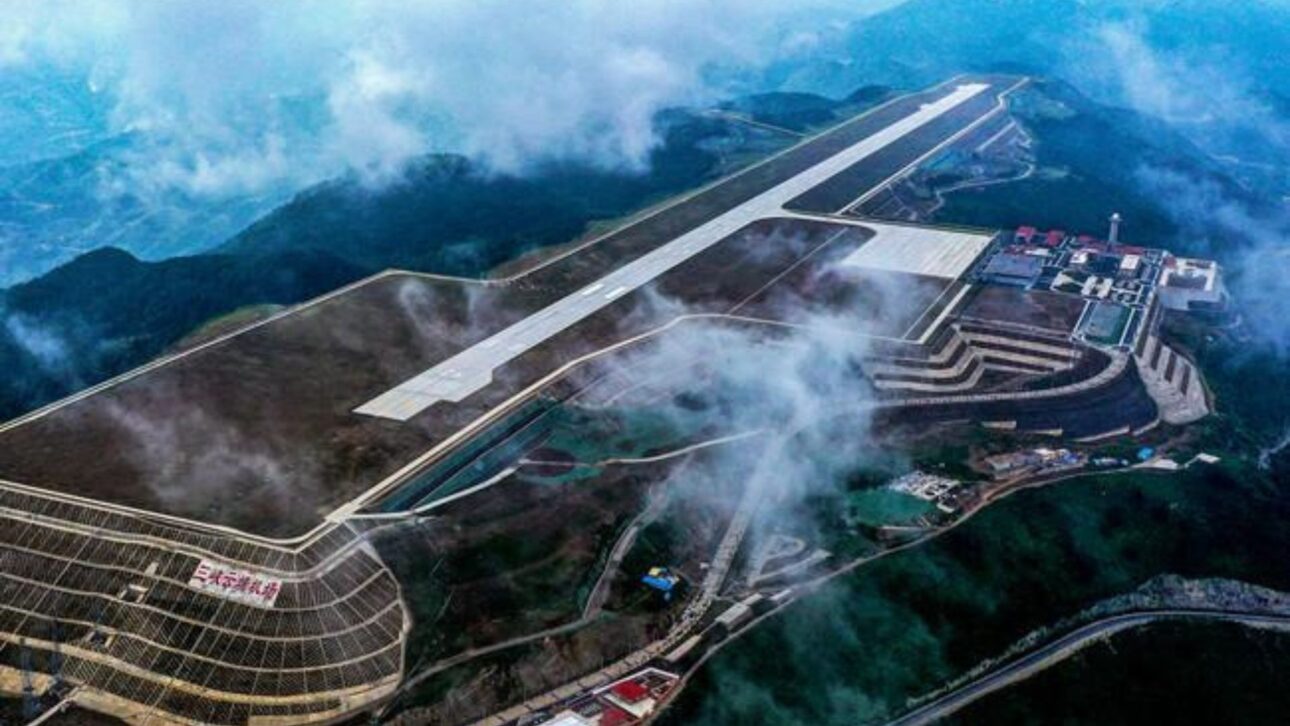
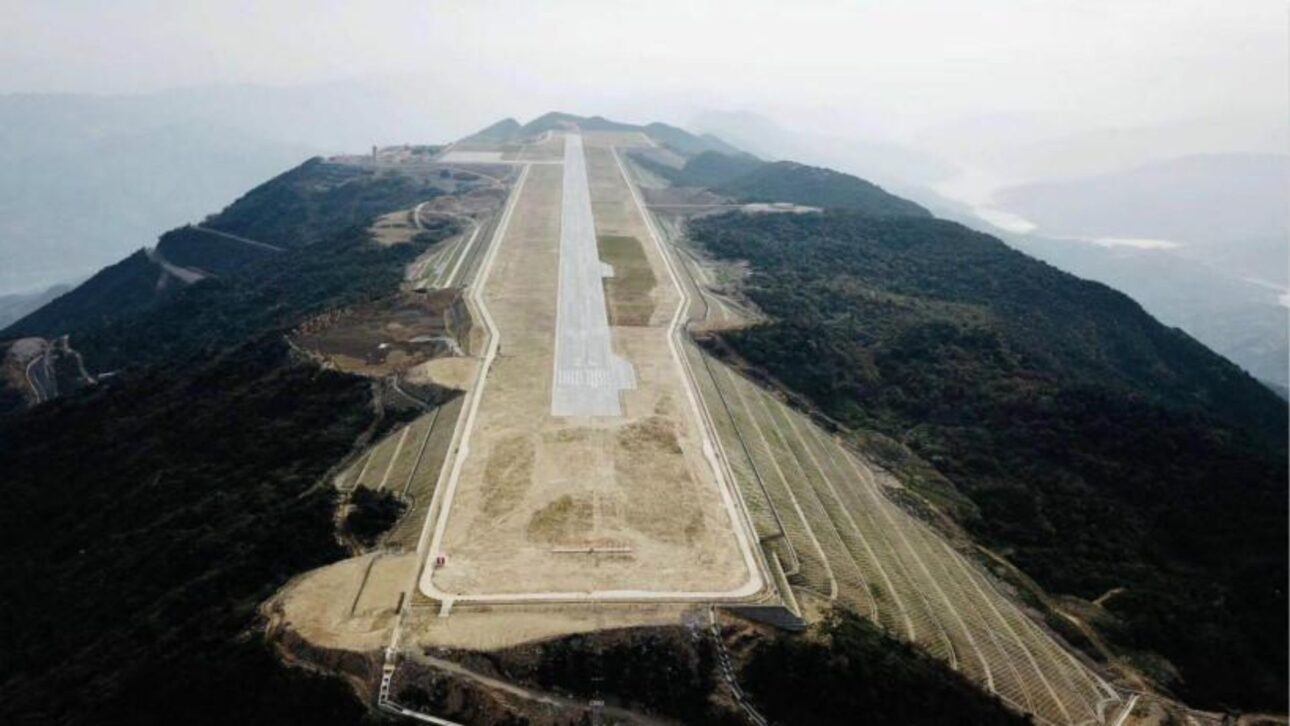
Situated at more than 1,700 meters above sea level, the airport was described in the Chinese press as a “cloud structure,” as it occupies a high plateau in one of the most challenging surrounding areas.
To accommodate the 2,600-meter runway, the project required significant intervention in the terrain and also received facilities to support navigation, airport operations, and passenger services.
Chongqing Wushan Airport was built in a mountainous area
The preliminary approval of the project occurred in May 2015, while the formal start of construction was recorded on October 17 of the same year, according to the Chongqing Municipal Government.
After the completion of construction in July 2019, the structure underwent sector inspection and received authorization in August to operate as a regional civil airport.
Within the implementation, a terminal of 3,500 square meters, a 2,600-meter runway, support areas, and systems necessary to sustain the routine of airport operations were built.
The investment reported by the local government reached 1.64 billion yuan, a value associated with the main infrastructure, complementary facilities, and the technical set planned for the airport’s operation.
Between Wushan and Fengjie, the chosen location is directly related to the region’s tourist and logistical role, especially due to its proximity to the Three Gorges area.
Planned to serve residents, visitors, and tourism-related flows, Chongqing Wushan Airport has become part of one of the most well-known landscapes along the Yangtze River.
2.6 km Runway Opened New Route to the Three Gorges
With 2.6 km in length, the runway was designed for regional civil aviation operations and is part of a set comprising a terminal, apron, control tower, and communication, navigation, and meteorology facilities.
The structure also includes refueling and emergency response systems, essential components for airports operating in areas with complex terrain and more variable weather conditions.
At the inauguration, the Civil Aviation Administration of China reported that an Airbus A320 from China Express Airlines landed in Wushan at 9:15 am on August 16, 2019.
This flight marked the official opening of the airport and initially connected the new terminal to Chongqing Jiangbei International Airport.
According to the same official source, the start of operations would help complete Chongqing’s network of civil airports and improve transportation conditions in the northeast of the municipality.
Within this strategy, the runway was also presented as a faster access axis to the Three Gorges reservoir region, an area of tourist and economic significance.
The capacity reported by the local government is 280,000 passengers per year, in addition to 1,200 tons of cargo and mail and 3,333 annual landings and takeoffs.
This data indicates that the structure was conceived as a regional airport, primarily aimed at internal connections and meeting local demand.
Construction Combined Terrain Leveling and Operation Systems
Building in an elevated area required specific solutions to adapt the terrain to aviation safety requirements, as runways and aprons need to have wide, stable, and regular surfaces.
The Municipal Government of Chongqing reported that the project sought a balance in land use, without relying on external soil removal or borrowing, and followed the terrain to reduce erosion impacts.
In this configuration, the complexity of the work was linked to the need to transform a mountainous area into an operational platform compatible with landings, takeoffs, and aircraft circulation.
In addition to the main runway, the infrastructure received components responsible for sustaining the daily operation of the airport, including technical systems aimed at communication, navigation, meteorology, and emergency response.
Provisions were also made for refueling, firefighting, and rescue, according to the list of works reported by the Chongqing government for the airport’s implementation.
Being at a high altitude, the operation requires constant attention to factors such as wind, low clouds, and visibility variations, conditions that can influence landings and takeoffs in mountainous regions.
Even so, the clearance for operation occurred after technical inspections and compliance with aviation sector standards, a necessary step to allow opening to civil traffic.
Air connection reduced access barriers to the tourist region
The opening of Chongqing Wushan Airport had a direct impact on regional connectivity, especially in an area where the terrain has always posed obstacles to land transportation.
According to the Civil Aviation Administration of China, the operation would help improve integrated transportation in northeast Chongqing and boost tourism and the economy of the Three Gorges reservoir area.
Before it became operational, access to the region relied more heavily on road, rail, or combined routes, all subject to the limitations imposed by the mountains.
With the new terminal, Wushan now has a regular air connection within Chongqing’s civil network, reducing travel time for passengers on regional trips.
The tourism strategy also influenced the design of the terminal, which sought to highlight cultural references of Wushan and elements associated with the nearby gorge landscapes.
According to the Chongqing government, the building incorporated visual references linked to the mountains, regional landscape, and views of areas near one of the most well-known scenic zones of the Yangtze River.
Although the construction is often described as a work of extreme engineering, the data confirmed by official sources focus on the start date, investment, runway, terminal, altitude, facilities, and opening to civil traffic.
Information about the exact number of machines, workers, and use of controlled explosions does not appear in the two official sources consulted.