
Published on
June 28, 2026
By: Jishnoo Banerjee

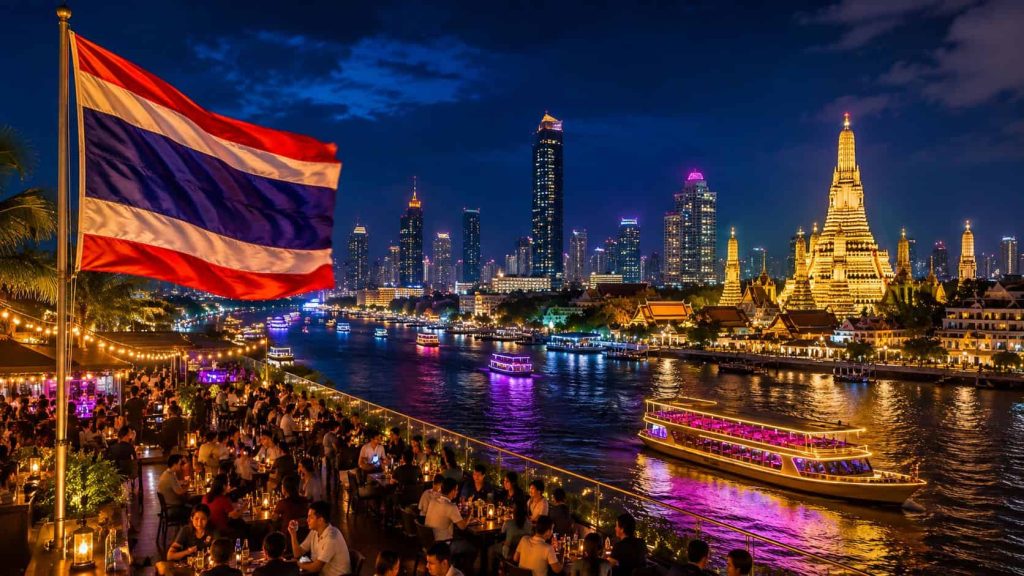
Image generated with Ai
Now, Malaysia overpowers China, Russia, the US, the UK, and others as the leading source market for Thailand tourism across Bangkok, Phuket, Pattaya, Krabi, Chiang Mai, and other luxury travel and medical tourism destinations in 2026. The shift reflects changing travel patterns across Asia, stronger regional connectivity, and Malaysia’s growing advantage as a nearby market with frequent cross-border travel by both land and air. While China remains one of Thailand’s largest visitor markets, a sharp decline in Chinese arrivals during 2025 allowed Malaysia to move into the top position, supported by robust demand for leisure holidays, shopping, medical tourism, business travel, and short-break vacations. At the same time, visitors from Russia, the US, the UK, India, and other international markets continue to play an important role in supporting Thailand’s tourism industry, helping sustain demand across major destinations including Bangkok, Phuket, Pattaya, Krabi, Chiang Mai, and other luxury travel and medical tourism hubs as the country strengthens its position as Southeast Asia’s leading tourism destination in 2026.
Thailand Tourism at a Glance in 2026
Thailand’s tourism industry remains one of the country’s largest economic drivers despite facing new market challenges.
| Tourism Indicator | 2026 Status |
|---|---|
| International visitors (2025) | 32.9 million |
| 2026 arrivals (through April 19) | 10.83 million |
| Year-on-Year Change (2026 YTD) | -3.34% |
| Forecast for 2026 | 30–34 million visitors |
| Global Tourism Ranking | 8th |
| Southeast Asia Ranking | 1st |
| Tourism Contribution to GDP | Approximately 12% |
| Tourism Employment | 4.19 million jobs |
| Average Length of Stay | 9+ days |
| Average Daily Tourist Spending | ฿5,690 (US$160) |
| Medical Tourism Revenue | US$578 million |
| JCI Accredited Hospitals | 61 |
| Destination Thailand Visa Applications | 35,000+ |
Thailand’s tourism authorities continue to focus on attracting higher-value travellers instead of relying solely on visitor volume. Luxury travel, wellness tourism, medical tourism, meetings and conventions, cultural tourism, digital nomads, and sustainable tourism have become major pillars supporting long-term industry growth.
Thailand’s Tourism Recovery Since the COVID-19 Pandemic
Thailand experienced one of the sharpest tourism declines during the pandemic due to its heavy reliance on international visitors. However, the country’s recovery has been among the strongest in Asia, with arrivals rebounding steadily as borders reopened and global travel resumed.
| Year | International Visitors | Status |
|---|---|---|
| 2015 | 29.9 million | Strong Growth |
| 2016 | 32.6 million | Continued Expansion |
| 2017 | 35.5 million | Tourism Boom |
| 2018 | 38.3 million | Record Growth |
| 2019 | 39.9 million | Pre-COVID Peak |
| 2020 | 6.7 million | Pandemic Impact |
| 2021 | 0.4 million | Border Closures |
| 2022 | 11.2 million | Recovery Begins |
| 2023 | 28.2 million | Strong Rebound |
| 2024 | 35.55 million | 89% Recovery |
| 2025 | 32.9 million | -7.23% YoY |
| 2026* | 10.83 million* | Through April 19 |
(*2026 figures represent arrivals through April 19.)
Thailand recovered nearly 90% of its pre-pandemic visitor volume by 2024 before experiencing its first annual decline since international travel resumed. The slowdown reflects broader changes in global tourism rather than weakening destination appeal. Economic uncertainty, geopolitical developments, changing airline capacity, softer Chinese outbound travel, and stronger regional competition have all contributed to slower growth during 2025 and early 2026. Nevertheless, the Ministry of Finance continues projecting between 30 million and 34 million international visitors for the full year, highlighting confidence in Thailand’s long-term tourism fundamentals.
Advertisement
Advertisement
Malaysia Overtakes China as Thailand’s Largest International Source Market
Perhaps the biggest shift in Thailand’s inbound tourism market has been the dramatic change in visitor source countries. For the first time in several years, Malaysia overtook China as Thailand’s largest inbound market, reflecting evolving travel patterns across Asia.
Top International Source Markets (2025)
| Rank | Country | Visitors |
|---|---|---|
| 1 | Malaysia | 4.50 million |
| 2 | China | 4.47 million |
| 3 | India | 2.49 million |
| 4 | Russia | 1.90 million |
| 5 | South Korea | 1.60 million |
| 6 | Japan | 1.10 million |
| 7 | Singapore | 980,000 |
| 8 | United States | 953,000 |
| 9 | United Kingdom | 850,000 |
| 10 | Australia | 780,000 |
These ten markets account for a substantial share of Thailand’s international arrivals and illustrate how the country’s tourism industry is becoming increasingly diversified. While China remains one of Thailand’s largest visitor markets, neighbouring Malaysia has emerged as the leading source thanks to strong cross-border travel, convenient land transport, frequent flights, shopping tourism, medical travel, and short leisure breaks. India has also become one of Thailand’s fastest-growing inbound markets, supported by expanding air connectivity, increasing disposable income, destination weddings, and rising demand for luxury holidays. Meanwhile, long-haul markets such as Russia, the United States, the United Kingdom, and Australia continue contributing significant visitor numbers, particularly to destinations such as Phuket, Krabi, Koh Samui, and Chiang Mai.
Advertisement
Advertisement
China Remains Critical Despite a Significant Decline
Although China remains Thailand’s second-largest international market, visitor arrivals fell sharply during 2025. Chinese arrivals declined from 6.73 million visitors in 2024 to 4.47 million in 2025, representing a 34% decrease. Several factors contributed to this slowdown, including China’s slower economic recovery, changing outbound travel preferences, isolated safety concerns, and traveller perceptions regarding pricing. This decline significantly reshaped Thailand’s tourism landscape and encouraged tourism authorities to broaden marketing efforts across India, Southeast Asia, Europe, North America, and the Middle East to reduce dependence on a single source market.
Malaysia Strengthens Its Position as Thailand’s Largest Tourism Market
Malaysia emerged as Thailand’s largest source market in 2025, sending 4.50 million visitors and narrowly surpassing China for the first time in several years. The neighbouring country’s strong performance reflects the advantages of geographical proximity, excellent road and air connectivity, and the growing popularity of short-haul leisure travel. Many Malaysian visitors enter Thailand through land border crossings for weekend getaways, shopping, medical treatment, gastronomy, and family holidays. Southern Thailand, Bangkok, Hat Yai, Phuket, Krabi, and Pattaya remain among the most visited destinations. Cross-border tourism has become one of Thailand’s most reliable visitor segments because travellers frequently make multiple trips each year. Tourism authorities are expected to continue strengthening regional partnerships and transport infrastructure to sustain this high-volume market in the years ahead.
India Emerges as Thailand’s Fastest-Growing High-Value Tourism Market
India continued to deliver impressive tourism growth, with 2.49 million visitors arriving in Thailand during 2025, representing a 17% increase compared with the previous year. The country has become Thailand’s third-largest inbound tourism market and one of its fastest-growing sources of high-spending visitors. Improved direct flights between major Indian cities and Bangkok, Phuket, Chiang Mai, and Krabi have significantly boosted travel demand. Indian travellers increasingly choose Thailand for luxury holidays, destination weddings, family vacations, wellness retreats, shopping, nightlife, and beach tourism. The Meetings, Incentives, Conferences and Exhibitions (MICE) sector has also benefited from growing business travel between the two countries. As India’s middle class continues expanding and outbound travel increases, tourism authorities expect India to remain one of Thailand’s strongest growth engines over the coming decade.
Russia Continues to Support Thailand’s Beach Tourism Economy
Russia remained Thailand’s fourth-largest international source market with 1.90 million visitors in 2025. Russian travellers continue favouring long-stay holidays, particularly during Europe’s winter months, making Phuket, Pattaya, Koh Samui, Krabi, and Hua Hin especially popular destinations. Many visitors spend several weeks in Thailand, contributing significantly to hotel occupancy, restaurants, entertainment, retail, and local tourism businesses. Russian tourists are also among the country’s highest-spending leisure travellers, supporting the recovery of Thailand’s luxury hospitality sector. Continued direct charter operations and expanding airline connectivity are expected to maintain Russia as one of Thailand’s most valuable long-haul tourism markets.
Advertisement
Advertisement
The United States, United Kingdom, and Australia Remain Important Long-Haul Markets
Long-haul tourism continues to play an important role in Thailand’s visitor economy. Approximately 953,000 visitors from the United States travelled to Thailand in 2025, making America Thailand’s eighth-largest source market and the country’s largest long-haul market outside Asia after Russia. American visitors typically spend between 9 and 14 days exploring Bangkok, Phuket, Chiang Mai, and Krabi while participating in cultural experiences, luxury travel, wellness tourism, and adventure activities. Meanwhile, the United Kingdom contributed 850,000 visitors, while Australia generated 780,000 arrivals, with travellers from both countries continuing to support premium beach tourism, island holidays, scuba diving, wellness retreats, and luxury resorts across southern Thailand. These mature markets remain essential for year-round tourism demand and higher visitor spending.
Bangkok Continues to Lead Thailand’s Tourism Industry
Bangkok remains the centrepiece of Thailand’s tourism economy and one of the world’s most visited cities. The capital welcomed approximately 32.4 million international visitors in 2024, outperforming many global tourism hubs through its combination of cultural heritage, modern attractions, shopping, gastronomy, nightlife, business travel, and luxury hospitality. Hotels achieved an average occupancy rate of 79%, rising to 84% during February and December, while the Average Daily Rate (ADR) reached ฿4,241, representing a 7.4% annual increase. Top international visitor markets for Bangkok include China, India, Japan, South Korea, and Malaysia. Continued investment in mass transit, airports, luxury hotels, convention facilities, and riverside developments ensures Bangkok remains Thailand’s primary tourism gateway and economic engine.
Thailand’s Leading Tourist Destinations Continue to Diversify Visitor Experiences
While Bangkok dominates international arrivals, several destinations continue driving Thailand’s tourism success by offering diverse experiences ranging from tropical islands and luxury resorts to cultural heritage and wellness tourism.
| Destination | Key Tourism Statistics | Main Source Markets |
|---|---|---|
| Bangkok | ~22 million annual visitors | China, India, Japan, South Korea |
| Phuket | 77–78% hotel occupancy | Russia, China, Australia, Europe |
| Chonburi (Pattaya) | Part of ฿843 billion tourism revenue trio | Russia, China, India, Middle East |
| Krabi | 1.2 million Railay Beach visitors (2024) | Scandinavia, Germany, UK, Malaysia |
| Chiang Mai | 11.2 million total visitors (2024) | China, South Korea, Japan, United States |
Phuket Continues to Dominate Thailand’s Luxury Beach Market
Phuket remains Thailand’s premier luxury island destination, attracting visitors with its white-sand beaches, five-star resorts, yacht marinas, wellness retreats, nightlife, and international dining scene. Hotel occupancy averaged 77–78%, while the island achieved an impressive 84% occupancy during the first half of 2024 and 86–90% during December, reflecting exceptionally strong seasonal demand. Hotels also reported an Average Daily Rate of ฿5,481, increasing by approximately 10% year-on-year, demonstrating Phuket’s continued strength in attracting premium international travellers.
Pattaya Expands Beyond Entertainment Tourism
Pattaya and the wider Chonburi province continue evolving into diversified tourism destinations that combine beaches, family attractions, luxury hotels, golf courses, international events, shopping, and business tourism. Together with Bangkok and Phuket, Pattaya contributed significantly to the ฿843 billion (approximately US$24 billion) tourism revenue generated by Thailand’s three leading destinations during the first half of 2024. The destination continues attracting visitors from Russia, China, India, and the Middle East while investing in infrastructure and higher-quality tourism experiences.
Krabi Continues Attracting International Nature Lovers
Krabi has strengthened its reputation as one of Thailand’s most scenic coastal destinations, drawing travellers seeking dramatic limestone cliffs, crystal-clear waters, island hopping, and eco-tourism experiences. Railay Beach alone welcomed approximately 1.2 million visitors during 2024, while Scandinavian countries, Germany, the United Kingdom, and Malaysia remained among its leading international markets. Adventure tourism, rock climbing, kayaking, diving, and sustainable island tourism continue driving Krabi’s popularity among international visitors.
Advertisement
Advertisement
Chiang Mai Reinforces Its Position as Thailand’s Cultural Capital
Northern Thailand’s largest city welcomed approximately 11.2 million visitors during 2024, including both domestic and international travellers. Known for its centuries-old temples, mountain scenery, wellness retreats, digital nomad community, and traditional festivals, Chiang Mai continues attracting visitors seeking experiences beyond Thailand’s beaches. The city has also gained international recognition after being named the safest city in ASEAN in 2026, further enhancing its appeal for long-stay travellers, retirees, remote workers, and wellness tourists. Peak tourism occurs between November and early February, while the annual smoke season during late February through April typically reduces visitor numbers.
Tourism Revenue Demonstrates Strong Recovery Despite Softer Arrivals
Although visitor numbers moderated during 2025, Thailand’s tourism revenue has remained remarkably resilient as travellers spend more on accommodation, luxury experiences, dining, wellness, and premium services.
| Year | Tourism Revenue (US$) |
|---|---|
| 2019 | $55.4 billion |
| 2020 | $13.4 billion |
| 2021 | $3.2 billion |
| 2022 | $26.5 billion |
| 2023 | $36.2 billion |
| 2024 | $48.5 billion |
| 2025 | $45.0 billion |
The figures show that although arrivals remain below the record levels achieved before the pandemic, visitor spending has recovered much faster. The recovery of premium tourism, luxury accommodation, wellness travel, and higher average daily expenditure has helped offset lower visitor volumes, creating a stronger value-driven tourism model for Thailand’s economy.
Now, Malaysia overpowers China, Russia, the US, the UK, and others as the leading source market for Thailand tourism across Bangkok, Phuket, Pattaya, Krabi, Chiang Mai, and other luxury travel and medical tourism destinations in 2026, driven by stronger regional travel demand.
In conclusion Malaysia overpowers China, Russia, the US, the UK, and others as the leading source market for Thailand tourism across Bangkok, Phuket, Pattaya, Krabi, Chiang Mai, and other luxury travel and medical tourism destinations in 2026 because strong cross-border travel, excellent air connectivity, and weaker Chinese arrivals have reshaped visitor flows. As Thailand continues diversifying its international markets while strengthening premium, luxury, and medical tourism, Malaysia’s leadership highlights the country’s growing importance in sustaining Thailand’s long-term tourism growth.
Advertisement
Advertisement
