
Close Menu
Simply Invest Asia
  • Home
  • About us
  • Explore industries/sectors
    • Automobile
    • Aviation
    • Banking
    • Biotechnology
    • Chemical & Fertilizer
    • Entertainment and Media
    • Food Processing
    • Healthcare
    • Iron and Steel
    • Leather
    • Mining
    • Oil and Gas
    • Pharmaceutical
  • Explore by countries
    • China
    • Dubai / UAE
    • Hong Kong
    • India
    • Indonesia
    • Japan
    • Malaysia
  • Explore cities
    • Bangkok
    • Beijing
    • Chongqing
    • Delhi
    • Dubai
    • Guangzhou
    • Jakarta
    • Kuala Lumpur
  • Why Asia
Facebook X (Twitter) Instagram Threads
Trending:
  • World in Brief: America accuses China of evading tariffs; Israel removes settlers from West Bank – The Economist
  • Bishops of the Pacific urge caution over deep-sea mining
  • FirstFT: The battle for control of India’s biggest conglomerate – Financial Times
  • Champion Iron (ASX:CIA) Advances as Global Steel and Iron Ore Themes Evolve
  • My Turn: Parking drives people away 
  • Dubai Fitness Challenge returns for another exciting edition – Dubai Eye 103.8
  • Malaysian Think Tank: ASEAN Synergy Can Transform Shared Resources into Joint Value | Global Vision
  • International location, multiple mule accounts and a physical property sale: police report on hybrid digital arrest scam in Delhi HC
  • UAE’s ADNOC: Two Vessels Attacked in Strait of Hormuz, No Injuries
  • Take Off with Pikachu: Japan’s Character-Themed Airports
  • World Humanoid Robot Games kicks off in Beijing with 2,056 robots competing
  • Indonesia Energy updates K-29 drilling progress | INDO SEC Filing
  • Potatoes ‘boil’ in the ground as record heatwave sweeps across swathes of Asia | Extreme weather
  • State Bank of India raises $500 million via bonds in overseas market; issue attracts $2.46 billion orders — TradingView News
  • UAE’s MGX co-leads Databricks strategic funding round
  • U.S. Chemical Safety Board releases update on deadly chemical emergency
  • HYROX craze hits Bangkok as elite athletes feel the burn
  • China’s air and water quality improved
Thursday, August 13
Facebook X (Twitter) Instagram
Simply Invest Asia
  • Home
  • About us
  • Explore industries/sectors
    • Automobile
    • Aviation
    • Banking
    • Biotechnology
    • Chemical & Fertilizer
    • Entertainment and Media
    • Food Processing
    • Healthcare
    • Iron and Steel
    • Leather
    • Mining
    • Oil and Gas
    • Pharmaceutical
  • Explore by countries
    • China
    • Dubai / UAE
    • Hong Kong
    • India
    • Indonesia
    • Japan
    • Malaysia
  • Explore cities
    • Bangkok
    • Beijing
    • Chongqing
    • Delhi
    • Dubai
    • Guangzhou
    • Jakarta
    • Kuala Lumpur
  • Why Asia
Simply Invest Asia
Home»Explore by countries»Hong Kong»A Taste of History: Why Hong Kong’s Last Dai Pai Dong Stalls Are Essential Travel
Hong Kong

A Taste of History: Why Hong Kong’s Last Dai Pai Dong Stalls Are Essential Travel

By IslaJune 28, 20265 Mins Read
Share
Facebook Twitter Pinterest Threads Bluesky Copy Link


Home » ASIA » A Taste of History: Why Hong Kong’s Last Dai Pai Dong Stalls Are Essential Travel

Published on
June 28, 2026

Dai-pai-dong

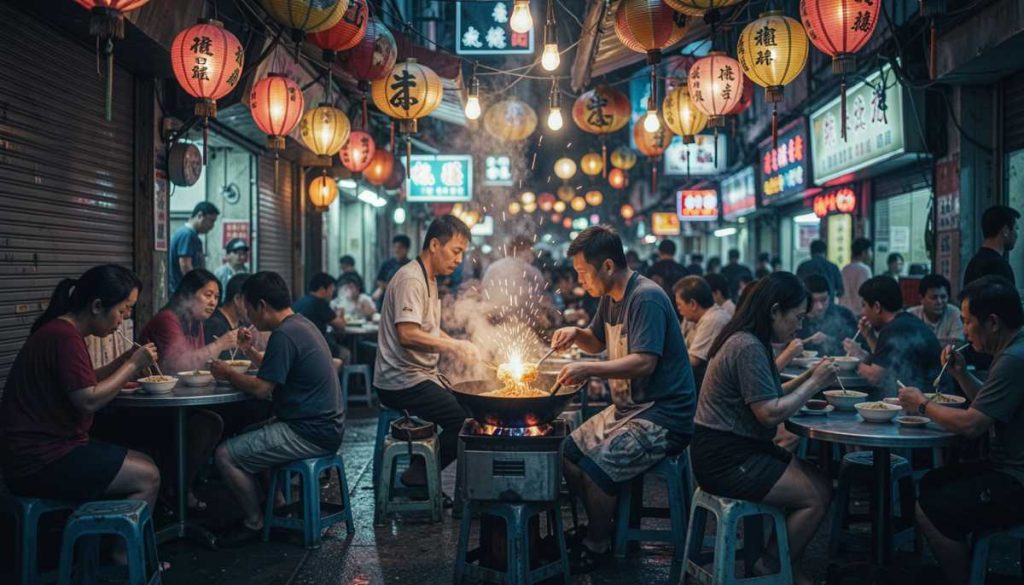
Image generated with Ai

The bustling, smoky streets of Hong Kong are much like its historic Dai Pai Dong, legendary open-air food stalls that have shaped the city’s culinary identity for generations. They are humble, makeshift kitchens, filled with chaotic energy and clattering woks, the air thick with the aroma of stir-fry specialities served out in the open. The stalls were once on every corner and the social heart of local neighbourhood life. But there has been a marked decline over the last several decades. Today, fewer than 20 such iconic establishments remain open throughout the territory. This disappearance has given rise to an important debate on the preservation of intangible cultural heritage versus the rapid modernisation of urban spaces.

A Legacy Under Regulatory Pressure

For decades, the expansion of these family-run businesses was severely constrained by municipal authorities. Policies enacted in the 1970s led to a permanent cessation in the issuance of new licenses, driven by persistent concerns regarding hygiene, public safety, and the congestion of thoroughfares. Under these strict, long-standing regulatory frameworks, the continuation of these businesses has been permitted only through the direct transfer of existing licenses to immediate family members. Consequently, the natural attrition of ageing operators has resulted in a precarious, thinning future for the trade. The struggle of sustaining these businesses is often felt by second or third-generation owners who manage the stalls with a deep sense of familial duty, often navigating decades of operational hardship and financial instability before achieving a fragile sense of success.

The Digital Resurgence and Growing Tourism Appeal

In recent years, a strategic shift has been made toward digital engagement to ensure the survival of these businesses. Marketing efforts on social media platforms have been utilized by modern operators to reach an international audience, resulting in increased interest from travelers originating from Southeast Asia, the Republic of Korea, and beyond. This shift in patronage is supported by recent government-led tourism campaigns, which have highlighted these stalls as quintessential components of the authentic Hong Kong experience. International travelers are frequently drawn to these sites by the promise of an unscripted, sensory-rich encounter with local life. The visceral nature of the dining experience—characterized by noise, heat, the scent of charcoal, and communal seating—is precisely what is being sought by modern tourists desiring an escape from sanitized, homogenized culinary environments found in shopping malls.

The Call for Policy Evolution

Greater flexibility in licensing and institutional support is being requested by those within the industry. It has been argued that the current rigid structure, which effectively limits innovation and prevents the opening of new stalls, is stifling the potential for this culture to survive. Comparisons are frequently drawn to successful models seen elsewhere, such as the hawker centres in Singapore or the night market districts in various cities on the Chinese mainland, where street food culture is integrated into urban planning through the establishment of managed areas or the temporary closure of streets to vehicular traffic. It is suggested that if similar adaptive strategies were implemented by local policymakers, the vitality of the street food scene could be rejuvenated and protected for the long term.

Prioritizing Culture Over Economic Utility

A strong case is being made by cultural advocates and former legislators that a fundamental shift in perspective is required by the government. Rather than assessing these stalls solely through the narrow lens of economic contribution or strict hygiene metrics, it is proposed that they be viewed as vital pieces of living history. If the cultural significance of the Dai Pai Dong is not prioritized, it is predicted by industry experts that this entire heritage could be lost within the next five years. The sentiment is shared by many local operators, who are committed to maintaining these spaces as long as administrative and regulatory burdens allow them to remain open.

Navigating the Future of Street Dining

The big problem is how to modernise a global financial centre and keep its gritty, historic roots. Tourism campaigns may create a temporary spike in visibility and social media buzz, but long-term viability rests largely on substantive, top-down policy reform. If we had better access to utilities, better management of the waste, more flexible zoning and other infrastructure supports, then concerns that prompted the harsh restrictions on these stalls in the first place could be addressed. By shifting the regulatory environment to one that encourages rather than discourages, the city could make sure the unique, smoke-filled charm of the Dai Pai Dong remains a defining feature of the Hong Kong experience for generations to come.

Until then, travellers are invited to experience these ruins of history, as each plate served is an homage to a vanishing but resilient tradition. It’s not only about the food but also about witnessing the resilience of a culture that won’t be entirely erased by the march of progress. Whether it’s a plate of late-night stir-fried noodles or a steaming bowl of congee, the Dai Pai Dong is a poignant reminder of the time when the streets of Hong Kong were shaped by the people who lived, ate and connected in them.

Advertisement

Advertisement

Advertisement

Advertisement

Advertisement

This content is protected under the Copyright Act. Unauthorized scraping, AI extraction, reproduction, or republication is strictly prohibited. Read our Copyright Policy.


Source link

Related Posts

Potatoes ‘boil’ in the ground as record heatwave sweeps across swathes of Asia | Extreme weather

August 13, 2026

Hong Kong is turning its AI ambitions into reality

August 13, 2026

China’s Tax Crackdown Erodes Edge For Hong Kong Insurers

August 13, 2026
Add A Comment
Leave A Reply Cancel Reply

Top Posts

China Scraps 12,000 Degrees in Biggest Academic Overhaul in Years

June 14, 2026

Chinese Wall may stem India tech flows for electronics and automobile

June 1, 2026

Guangzhou airport unveils replica of China’s first airplane

April 12, 2026
Don't Miss

World in Brief: America accuses China of evading tariffs; Israel removes settlers from West Bank – The Economist

By IslaAugust 13, 2026

World in Brief: America accuses China of evading tariffs; Israel removes settlers from West Bank The…

Bishops of the Pacific urge caution over deep-sea mining

August 13, 2026

FirstFT: The battle for control of India’s biggest conglomerate – Financial Times

August 13, 2026

Champion Iron (ASX:CIA) Advances as Global Steel and Iron Ore Themes Evolve

August 13, 2026
SUBSCRIBE TO OUR NEWSLETTER

Get our latest downloads and information first. Complete the form below to subscribe to our weekly newsletter.


I consent to being contacted via telephone and/or email and I consent to my data being stored in accordance with European GDPR regulations and agree to the terms of use and privacy policy.

Stay In Touch
  • Facebook
  • YouTube
  • TikTok
  • WhatsApp
  • Twitter
  • Instagram
Top Trending

Potatoes ‘boil’ in the ground as record heatwave sweeps across swathes of Asia | Extreme weather

By IslaAugust 13, 2026

State Bank of India raises $500 million via bonds in overseas market; issue attracts $2.46 billion orders — TradingView News

By IslaAugust 13, 2026

UAE’s MGX co-leads Databricks strategic funding round

By IslaAugust 13, 2026
Most Popular

Costs, careers and choice: Why Indians are having fewer children | Health News

June 14, 2026

Crowds gather at Great Wall for Lululemon yoga festival

June 1, 2026

A Complete Retrospective on Hong Kong’s Largest Crypto Collapse: Multiple JPEX Members Now on Red Notice

May 28, 2026
Our Picks

Indonesia chooses PIRIOU to build two research vessels

June 12, 2026

Central Asia is another proving ground for Hong Kong as a superconnector

June 8, 2026

Liuzhou Iron & Steel Adjusts Valuation Amid Mixed Financi…

April 23, 2026
SUBSCRIBE TO OUR NEWSLETTER

Get our latest downloads and information first. Complete the form below to subscribe to our weekly newsletter.


I consent to being contacted via telephone and/or email and I consent to my data being stored in accordance with European GDPR regulations and agree to the terms of use and privacy policy.

© 2026 Simply Invest Asia.
  • Get In Touch
  • Cookie Policy
  • Privacy policy
  • Terms & Conditions

Type above and press Enter to search. Press Esc to cancel.

SUBSCRIBE TO OUR NEWSLETTER

Get our latest downloads and information first.

Complete the form below to subscribe to our weekly newsletter.


I consent to being contacted via telephone and/or email and I consent to my data being stored in accordance with European GDPR regulations and agree to the terms of use and privacy policy.