
BullFrog AI is a public biotechnology and digital biopharmaceutical company founded in 2017 in Gaithersburg, Maryland. Pulse 2.0 interviewed BullFrog AI Chairman and CEO Vin Singh to learn more.
Vin Singh’s Background
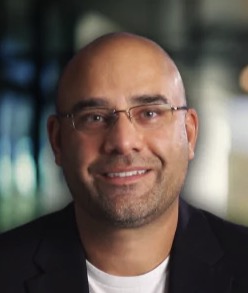
Could you tell me more about your background? Singh said:
“I’ve spent most of my career at the intersection of life sciences, engineering, and entrepreneurship, but my training is primarily technical. My background is in electrical and biomedical engineering, and early on in my career, I became interested in how data and technology could be applied to some of the most challenging problems in healthcare. Over the last 25 years, I’ve founded and helped build several companies across consumer health, cell therapy, and techbio, including MaxCyte, Next Healthcare, and now BullFrog AI.”
“What ties all of that experience together is a focus on translation. I’ve always been drawn to technologies that have the potential to move from concept to real-world impact. At BullFrog AI, this means applying sophisticated AI and machine learning tools in a practical way to enhance the discovery and development of drugs. As Founder, Chairman, and CEO, my role has been to build the company from the ground up, assemble the right team, secure the core technology, and focus on a strategy that will guide the company toward becoming a platform that can meaningfully improve outcomes for patients.”
Formation Of The Company
How did the idea for the company come together? Singh shared:
“BullFrog AI was born out of a seemingly obvious and costly problem in the drug development ecosystem. Despite massive advances in biology and data generation, drug development success rates remain stubbornly low. Too often, promising therapies fail late in development because earlier decisions were made with incomplete or misleading insights.”
“The idea was to use AI and Machine Learning to change that equation. Rather than relying solely on correlations or traditional statistical approaches, we wanted to build a system that could analyze high-dimensional, multi-modal biological data and uncover the underlying drivers of disease and corresponding treatment response. That thinking ultimately led us to bfLEAP, an AI platform originally designed at the Johns Hopkins Applied Physics Lab.”
“We then invested heavily in innovation and have built a very powerful proprietary capability in causal AI, which moves us beyond correlations and enables us to identify the drivers of disease. From the start, the vision was to help life sciences companies make better decisions earlier, reduce wasted capital, and ultimately bring more effective therapies to patients.”
Core Products
What are the company’s core products and features? Singh explained:
“Our core platform is bfLEAP, a proprietary causal AI system designed to analyze complex biological and clinical data sets. What makes bfLEAP different is its ability to work with incomplete, messy, and multi-modal data, which is the reality of drug development data. Instead of simply identifying correlations, it builds graph-based models that reveal causal relationships, allowing researchers to understand not just what is happening, but why, with explainable AI, not your typical black box AI.”
“Supporting bfLEAP is bfPREP, our proprietary data preparation solution. One of the largest barriers to using AI in life sciences is data readiness. Many organizations struggle with scattered, inconsistent, or error-prone data. bfPREP is designed to clean, harmonize, and structure biological and clinical data so it can be effectively used by AI systems. Together, bfPREP and bfLEAP form an end-to-end solution that helps companies identify new therapeutic targets, optimize clinical trial design, explore drug repurposing opportunities, and reduce reliance on animal models, all while maintaining transparency and explainability. This solution is not limited to drug development either; it has applications across all industries and data types.”
Challenges Faced
Have you faced any challenges in your sector of work recently? Singh acknowledged:
“One of the biggest challenges in this space is adoption. AI has enormous potential in drug development, but many organizations are still early in their AI journey. They may not have the infrastructure, data practices, or internal alignment needed to fully leverage these tools. That’s why we place so much emphasis on explainability and data preparation. Trust is essential, especially in regulated industries like healthcare.”
“Another challenge is the broader biotech market environment. Capital has become more selective, and companies are under increasing pressure to demonstrate efficiency and capital discipline. At the same time, this environment actually highlights the value of our platform. When success rates are low and resources are constrained, tools that help teams make better-informed, faster decisions become even more critical.”
Evolution Of The Company’s Technology
How has the company’s technology evolved since launching? Singh noted:
“When BullFrog started, the focus was on validating the core causal AI approach and proving it could deliver insights that traditional methods could not. Over time, we’ve significantly expanded the platform’s capabilities, improved performance, and refined how insights are delivered to end users.”
“We’ve also deepened the platform’s biological focus, ensuring it is purpose-built for life sciences rather than adapted from general analytics tools by customizing and focusing our AI models and associated tools. Strategic partnerships, particularly with institutions like, the Johns Hopkins Applied Physics Lab and the Lieber Institute for Brain Development, have played a key role in that evolution. These collaborations provide access to unique, high-quality datasets, allowing the platform to learn and improve continuously.”
“Innovation is the heart of the company, and our team is constantly evolving and improving our capabilities.”
Significant Milestones
What have been some of the company’s most significant milestones? Singh cited:
“Building the company from inception in 2017 to the publicly traded, multi-faceted organization it has become is a major milestone. Along the way, acquiring and commercializing the bfLEAP technology was foundational, as well as establishing partnerships with leading research institutions like Johns Hopkins and the Lieber Institute, which have validated both the science and the platform’s real-world applicability.”
“On the data side, identifying novel targets in neuropsychiatric disease using large-scale datasets was a meaningful proof point. It demonstrated that the platform uncovers insights that were previously hidden, even in well-studied disease areas. Each of these milestones has reinforced our belief that causal AI can materially improve drug development outcomes. Our work with Eleison, where we analyzed phase 3 pancreatic cancer data to identify biomarkers that extend survival, was a very significant accomplishment for the company and a beacon of hope for pancreatic cancer patients around the world.”
Differentiation From The Competition
What differentiates the company from its competition? Singh affirmed:
“There are a lot of companies talking about AI in drug development, but none have our core platform from Johns Hopkins Applied Physics Lab, and very few, if any, have our causal inference capabilities. Our bfLEAP platform is designed to uncover disease drivers and pathways, not just patterns. That distinction matters because it leads to insights that are more actionable and trustworthy.”
“Another key differentiator is our end-to-end approach. With bfPREP and bfLEAP working together, we are tackling one of the biggest pain points in AI adoption: data readiness. We also prioritize transparency and explainability, which is essential for ethical research and informed decision-making. Finally, our ability to service everyone from small and mid-sized biotech companies to big pharma gives us a clear niche where our platform can effortlessly scale and have an outsized impact with teams of any size, enabling them to use the insights to do more with less.”
Future Company Goals
What are some of the company’s future goals? Singh concluded:
“Looking ahead, our goal is to continue innovating and expanding the impact of the bfLEAP platform across drug discovery and development. That includes deeper engagement in central nervous system (CNS) disorders, where unmet needs are high, and success rates are low, as well as expanding into additional therapeutic areas.”
“We also see opportunities to apply our platform and causal AI capabilities to the challenges facing the pharmaceutical industry. We are being recognized as an AI innovator with unique know-how and capabilities that should translate into AI partnerships across the entire drug discovery and development workflow, disease categories, and drug modalities. Ultimately, the long-term goal is to help improve drug development success rates, reduce costs, and bring better therapies to patients faster, saving and extending lives through better treatment. That mission continues to guide every strategic decision we make.”