
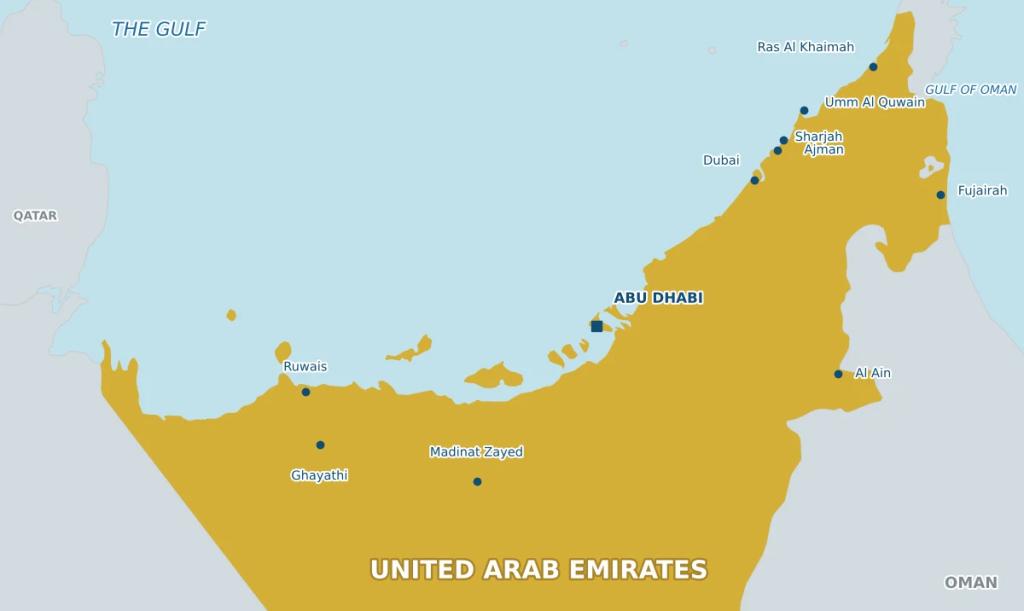
The UK Foreign, Commonwealth and Development Office removed the UAE, Qatar, Bahrain and Kuwait from its no-go list on Thursday June 18, restoring travel insurance validity for British nationals travelling to those countries. Australia made an identical move on June 17-18, downgrading the same four countries plus Israel from Level 4 “Do Not Travel” to Level 3 “Reconsider Your Need to Travel.” Both governments cited a US-Iran peace agreement reached this week as the trigger.
Neither move has been matched in mainland Europe. Italy, France, Sweden, Norway and Portugal all continue to advise against non-essential travel to the UAE, with no downgrade confirmed as of June 18. The reason is structural rather than political: European aviation risk assessment runs through a single EU-wide gate that the UK, outside the bloc since Brexit, does not have to wait for.
The EASA Bottleneck
The European Union Aviation Safety Agency has maintained a Conflict Zone Information Bulletin covering Gulf airspace since the conflict began on February 28. The bulletin, jointly reviewed by EASA, the European Commission and EU member states, currently sits at revision R12, extended on June 10 to run until June 24. It covers all altitudes across eleven jurisdictions including the UAE and Saudi Arabia, and the June 10 update added language flagging additional risk in the Persian Gulf rather than easing it.
Foreign ministries in EU member states calibrate non-essential travel advice closely to EASA’s aviation risk position. With the bulletin still active and EU carriers still required to maintain heightened risk assessments for Gulf routes, there has been no aviation-safety basis for Italy, France, Sweden, Norway or Portugal to downgrade their advisories, regardless of the diplomatic progress between the US and Iran.
The UK Civil Aviation Authority sets its own risk assessments independently of EASA. That gave the FCDO room to act on the diplomatic signal alone, without waiting for a 27-member bloc to complete a joint review. Australia, with no EASA equivalent of its own, moved on the same logic.
What This Means for Powerboat Racing
The winter cluster of powerboat racing in the Gulf involves three series across five events, all running in November and December.
UIM F1H2O has its Grand Prix of Jeddah in Saudi Arabia on November 27-29, followed by a Grand Prix of the Middle East with location to be confirmed on December 11-13, and the Road to Sharjah Grand Prix of Sharjah on December 18-20 at Khalid Lagoon.
XCAT has three rounds in the region: a Middle East round with a location still to be confirmed running November 27-29, the Dubai World Championship round on December 11-13, and a Fujairah round with dates still to be confirmed.
The UIM-ABP Aquabike Circuit World Championship visits Doha, Qatar on November 19-21 and a Middle East location to be confirmed on December 1-5.
British and Australian teams, officials and media now have a clearer insurance position for the UAE rounds at Sharjah, Dubai and Fujairah than they did a week ago. Teams and media from Italy, France, Sweden, Norway, Portugal and the rest of the EU do not, and will not until EASA’s bulletin is eased or allowed to lapse. As established when the conflict first disrupted Gulf racing in March, standard travel insurance is invalidated once a government advises against travel to a destination.
Jeddah sits outside this week’s improvements altogether. Saudi Arabia was not included in the UK or Australian downgrades, and the US has held it at Level 3 since March.
June 24 Is the Date to Watch
The EASA bulletin’s current expiry, June 24, is the next point at which the European picture could shift. If the bulletin is eased or not renewed, EU member state foreign ministries would have the aviation-safety basis to follow the UK and Australia in downgrading their own advisories. Fuel costs, elevated since the Hormuz closure, would also be expected to ease further if Gulf airspace risk assessments are formally relaxed.
Dubai International Airport is operating at near-full capacity and Emirates has restored 137 destinations across its network, though EU carriers remain more constrained by the EASA bulletin than UAE-registered airlines. Sharjah, host of the F1H2O season finale on December 18-20, sits approximately 15 kilometres from Dubai International.
Whether the ceasefire holds through to the Gulf season finale in December remains the underlying question. This week’s advisory changes are a first step, not a complete one.