
Published on
June 17, 2026
By: Tuhin Sarkar

Image generated with Ai
Pittsburgh joins Guangzhou Baiyun, Frankfurt, Lokapriya Gopinath Bordoloi and more in the new France-based Prix Versailles airport terminal selection, while last year’s winner Yantai Penglai International Airport watches as the world waits to see who will ultimately triumph in 2026.
Pittsburgh joins Guangzhou Baiyun, Frankfurt, Lokapriya Gopinath Bordoloi and more in the new list of France-based Prix Versailles airport terminal selection. Meanwhile, Yantai Penglai International won last year, and now all eyes are on who will win in 2026. The prestigious architectural recognition has immediately attracted worldwide attention because seven airports across the United States, China, Germany, India and Cambodia are competing for the year’s highest honours. Moreover, this selection reflects how airport terminals are evolving into global tourism attractions. Consequently, travellers, architects, airlines and destinations are closely monitoring the final decision.
Prix Versailles, the prestigious France-based architecture and design award associated with UNESCO, has unveiled its 2026 list of the World’s Most Beautiful Airports. Seven airport projects across the United States, Germany, China, India and Cambodia were selected for transforming aviation infrastructure into cultural, sustainable and passenger-centric destinations that will shape the future of global travel and tourism
Pittsburgh International Airport has been named among the world’s most beautiful airports by France-based Prix Versailles, a globally respected architecture and design award associated with UNESCO. The recognition places Pittsburgh alongside leading aviation hubs in China, Germany, India, Cambodia and the United States, highlighting its innovative terminal design, sustainability credentials, passenger experience and strong connection to local identity.
| Year | Airport | Country | Terminal | Signature Design Element | Why It Was Recognised |
|---|---|---|---|---|---|
| 2026 | Pittsburgh International Airport | USA | New Terminal | Mountain-inspired undulating roof, forest-inspired steel columns | Regional identity, biophilic design, sustainability, passenger comfort |
| 2026 | San Diego International Airport | USA | Terminal 1 | Open-air terraces, immersive art, abundant daylight | Human-centric design and indoor-outdoor integration |
| 2026 | Frankfurt Airport | Germany | Terminal 3 | City-inspired concept with streets, squares and art galleries | Creates an urban experience inside an airport |
| 2026 | Guangzhou Baiyun International Airport | China | Terminal 3 | Flower-inspired architecture and rooftop gardens | Regional symbolism and large-scale greenery |
| 2026 | Lokapriya Gopinath Bordoloi International Airport | India | Terminal 2 | Bamboo-inspired interiors and indoor sky forest | Indigenous craftsmanship and local storytelling |
| 2026 | Navi Mumbai International Airport | India | Terminal 1 | Lotus-inspired forms and green landscapes | Sustainability and passenger-centric planning |
| 2026 | Techo International Airport | Cambodia | Main Terminal | Giant lightweight canopy and numerous skylights | Climate-responsive architecture and energy efficiency |
| 2025 | Yantai Penglai International Airport | China | Terminal 2 | Coastal-inspired roof and mountain references | Passenger flow optimisation and regional identity |
| 2025 | Marseille Provence Airport | France | Terminal 1 | Skylit central hub using recycled materials | Circular construction and heritage integration |
| 2025 | Roland Garros Airport | France | Arrivals Terminal | Tropical bioclimatic architecture | Natural ventilation and adaptive design |
| 2025 | Kansai International Airport | Japan | Terminal 1 | Natural materials and streamlined security flows | Efficient redesign ahead of Expo 2025 |
| 2025 | Portland International Airport | USA | Main Terminal | Massive timber roof and forest-inspired interiors | Sustainability and local identity |
| 2025 | San Francisco International Airport | USA | Harvey Milk Terminal 1 | Museum-quality spaces and social storytelling | Reduced carbon footprint and inclusive design (San Francisco International Airport) |
From Regional Gateway to Global Icon: How Pittsburgh Earned This Elite Honour
Pittsburgh International Airport has officially entered an elite global club after being selected by Prix Versailles as one of the World’s Most Beautiful Airports for 2026, reinforcing the airport’s growing reputation as a modern aviation landmark rather than simply a transport facility. The recognition celebrates the airport’s remarkable transformation and places Pittsburgh alongside some of the most architecturally significant airport developments completed in recent years.
France-based Prix Versailles announced its annual list featuring seven exceptional airports and terminals that demonstrate excellence in design, sustainability, cultural integration and passenger experience. The award programme operates in association with UNESCO and is widely regarded as one of the highest honours in architecture and design globally.
Advertisement
Advertisement
More Than a Transit Hub: Why This Recognition Matters for Global Aviation
The award signals an important shift in how airports are being perceived across the world, as they are increasingly becoming symbols of regional identity and gateways that define first impressions for millions of international visitors. Instead of focusing solely on operational efficiency, airports are now expected to deliver memorable experiences that blend technology, environmental responsibility and community values.
Pittsburgh International Airport represents this new generation of airport development because its new terminal was intentionally designed to reflect western Pennsylvania’s heritage, natural landscape and economic ambitions. Industry experts increasingly believe airports will become central pillars of tourism competitiveness and economic growth over the next several decades.
Advertisement
Advertisement
“This Prix Versailles recognition fills all of us Pittsburghers with immense pride. Pittsburgh is a city of extraordinary history: it produced much of the steel that built the modern world, gave rise to cultural institutions of global significance, and, along with the region, has repeatedly reinvented itself with remarkable resilience,” said Luis Vidal, founder and President, luis vidal + architects. “Our task was to honor this legacy and translate it into architectural form. The new terminal blends seamlessly into Pittsburgh’s landscape, celebrating it. From the very first day, we designed the terminal to belong equally to the city and to the natural territory surrounding it, becoming a two-way extension – an extension to the city and an extension to the landscape. We created an elegant, transformative home for everyone in Pittsburgh, guided by NaTeCo (Nature, Technology, and Community), the values that define Pittsburgh and shaped every decision we made.”

Image generated with Ai
Why Is 2026 Becoming a Landmark Year for Airport Architecture?
The modern airport is no longer merely a transit facility because it has evolved into a destination that shapes travellers’ first and last impressions of a city, country and culture. Prix Versailles’ 2026 selections demonstrate that airports are increasingly becoming symbols of national identity, sustainability and human-centred innovation.
The prestigious award, presented annually in association with UNESCO, recognises projects that successfully combine architectural innovation, environmental performance, local heritage integration and passenger wellbeing. This year’s list spans four continents and reflects a global shift towards creating airports that people genuinely enjoy experiencing rather than simply passing through.
For the global travel, tourism and airline sectors, these projects represent a new era where every airport terminal becomes an attraction in itself.
Advertisement
Advertisement
Why Is Guangzhou Baiyun International Airport Emerging as China’s New Architectural Showcase?
Guangzhou Baiyun International Airport Terminal 3 has become one of China’s most ambitious airport developments, with designers embracing the identity of Guangzhou as the City of Flowers. The airport terminal integrates floral-inspired structural forms alongside extensive rooftop gardens that soften the traditional industrial appearance associated with airports.
Architects Artelia and Guangdong Architectural Design & Research Institute developed a facility that prioritises both scale and tranquillity by combining large open spaces with greenery throughout the airport terminal. The project demonstrates China’s growing emphasis on turning infrastructure into cultural assets capable of elevating international tourism experiences.
This airport also strengthens China’s position as a leader in future-focused travel infrastructure.
Why Is Frankfurt Airport Terminal 3 Being Compared to an Entire City?
Frankfurt Airport’s newly opened Terminal 3 was designed to feel more like an urban destination rather than a conventional airport terminal. Streets, public squares, immersive installations and art galleries create an environment where passengers experience movement similar to exploring a modern city centre.
Germany invested approximately €4 billion into creating a future-proof aviation hub that balances efficiency with emotional engagement. This humanised approach acknowledges that today’s travellers seek memorable experiences during every stage of their travel journey.
The airport also reinforces Germany’s commitment to sustainable tourism and innovative airline connectivity.
Advertisement
Advertisement
How Is Guwahati Airport Showcasing India’s Cultural Heritage to the World?
Lokapriya Gopinath Bordoloi International Airport Terminal 2 in Guwahati has become a global ambassador for Assam’s indigenous identity through bamboo-inspired architecture and natural materials. The airport terminal embraces regional craftsmanship and creates a strong sense of place that immediately connects visitors with northeastern India.
An indoor sky forest further strengthens the airport’s biophilic identity while simultaneously reducing passenger stress and improving overall comfort. Its selection signals India’s emergence as one of the fastest-growing innovators in airport architecture.
The airport is expected to boost tourism and strengthen airline networks across northeastern India.
Why Is Navi Mumbai International Airport Setting New Standards for India’s Future Aviation Network?
Navi Mumbai International Airport Terminal 1 has become one of India’s most anticipated infrastructure projects and one of only seven airports globally recognised this year. Lotus-inspired architectural elements blend with green spaces to create a visually calming and culturally significant environment.
The airport represents India’s broader ambition to create next-generation transportation ecosystems capable of supporting long-term economic growth, tourism expansion and improved travel experiences. Sustainability, passenger comfort and intuitive navigation remain central pillars of its design philosophy.
This airport will also support increasing airline demand across India’s rapidly expanding aviation market.
Advertisement
Advertisement
How Is Cambodia’s Techo International Airport Redefining Climate-Friendly Airport Design?
Techo International Airport near Phnom Penh has attracted global attention for its climate-responsive architecture and environmental efficiency. The massive lightweight canopy combined with thousands of skylights reduces dependence on artificial lighting while maintaining comfortable interior temperatures.
Cambodia has effectively demonstrated that emerging aviation markets can compete with established global hubs through intelligent design rather than sheer size. The airport positions the country as an increasingly important player in Southeast Asian tourism infrastructure.
The project also strengthens Cambodia’s appeal for international travel and airline expansion.
Why Is San Diego International Airport Changing America’s Airport Experience?
San Diego International Airport Terminal 1 has reimagined the traditional passenger journey by embracing openness and accessibility. Outdoor terraces, abundant natural daylight and immersive public art installations create an atmosphere that feels closer to a waterfront destination than a conventional airport terminal.
The airport also reflects California’s broader commitment to wellness, sustainability and community integration within public infrastructure projects. Travellers are encouraged to slow down and engage with their surroundings rather than rushing through functional spaces.
This airport is becoming a benchmark for future tourism and travel developments across the United States.
Advertisement
Advertisement
How Did Pittsburgh International Airport Become America’s New Aviation Icon?
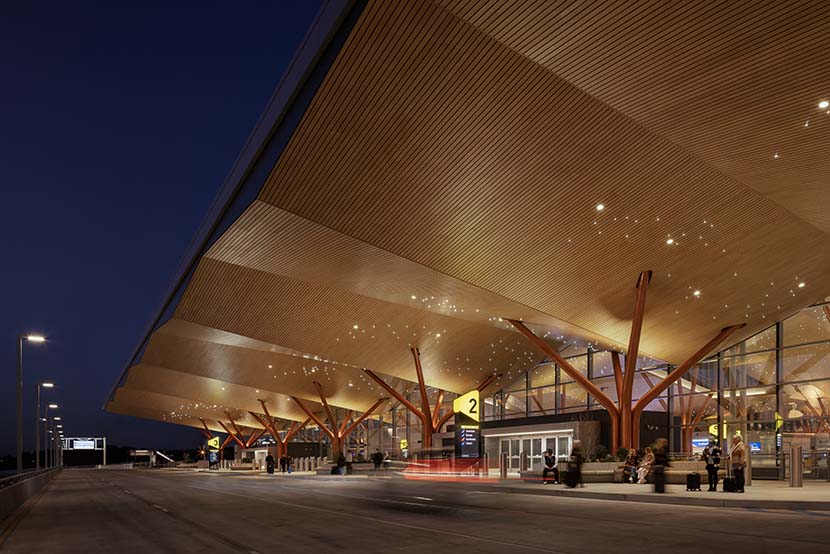
Pittsburgh International Airport has rapidly become one of North America’s most celebrated airport transformations following the opening of its new terminal in late 2025. Its sweeping roofline draws inspiration from western Pennsylvania’s mountains while tree-inspired columns create a forest-like atmosphere inside the building.
The airport successfully blends innovation, sustainability and regional identity to create a welcoming gateway for visitors arriving in Pittsburgh. Its recognition demonstrates that airports deeply rooted in local communities can achieve global acclaim.
US Airport Pittsburgh has become a symbol of how infrastructure can support tourism, airline growth and regional economic development simultaneously.
US Airport Pittsburgh also showcases how modern airport design can create emotional connections with travellers while improving operational efficiency.

Image generated with Ai
What Global Trends Are Emerging From the 2026 Winners?
Several major trends unite all seven airports despite their different geographical contexts and architectural identities. Biophilic design, natural light integration, regional storytelling and sustainability have become universal pillars of modern airport development.
Passengers are increasingly demanding experiences that reduce stress, promote wellbeing and create meaningful emotional connections with destinations. Airports that successfully deliver these experiences are now setting new international benchmarks for the entire aviation industry.
Advertisement
Advertisement
The airport of the future will increasingly serve as a destination that supports tourism, travel and airline competitiveness.
Which Countries Are Leading the Airport Design Revolution?
Asia dominates the 2026 list with four of the seven recognised airports located across China, India and Cambodia. This reflects the region’s enormous investment in next-generation infrastructure designed to support rapidly expanding tourism markets.
Meanwhile, Europe and North America continue investing heavily in human-centric airport redevelopment projects that prioritise sustainability and emotional engagement. The convergence of these global trends suggests airport architecture is entering a transformative era.
US Airport Pittsburgh stands alongside global leaders as an example of how airport investments can reshape regional identities.
US Airport Pittsburgh further demonstrates how strategic airport planning can strengthen tourism and airline partnerships.
US Airport Pittsburgh is now attracting worldwide attention for its innovative approach to passenger wellbeing.
Advertisement
Advertisement
US Airport Pittsburgh also highlights how local culture can become a defining feature of a globally recognised airport.
Anup Kumar Keshan, Travel Industry Tycoon, Founder and Editor-in-Chief, Travel And Tour World “Prix Versailles 2026 sends a powerful message to the global travel industry that airports are no longer just transportation assets but strategic tourism destinations in their own right. The selected airports brilliantly demonstrate how sustainability, local identity, cultural storytelling and human wellbeing can coexist with operational excellence. This global movement will fundamentally reshape traveller expectations over the next decade. Destinations that continue investing in emotionally engaging and environmentally responsible airport experiences will gain a significant competitive advantage in attracting international visitors, business investments and long-term tourism growth.”
Mountains in Motion: The Architectural Magic Behind Pittsburgh Airport
The most recognisable feature of the new terminal is its sweeping undulating roofline, which takes inspiration from the rolling mountains surrounding Pittsburgh and creates a distinctive visual identity. The terminal was designed to blur the boundaries between interior and exterior spaces while allowing travellers to feel connected to the region’s natural environment.
Architectural firms Gensler, HDR and luis vidal + architects collaborated on the project to create a facility that combines aesthetics with functionality in equal measure. The result is an airport terminal that feels warm, accessible and unmistakably local rather than resembling a generic international transit hub.
Bringing the Outdoors Inside: How Nature Shapes Every Journey
Biophilic design principles have become central to modern airport development, and Pittsburgh International Airport has embraced this concept throughout its terminal environment. The project incorporates natural light, open spaces and materials that foster emotional wellbeing and reduce passenger stress.
Thirty-eight steel columns designed to resemble trees create an impressive canopy throughout the terminal, giving visitors a sense of walking beneath a forest landscape. More than 100,000 square feet of glass walls flood the building with daylight and create uninterrupted views of the surrounding environment.
Green by Design: Sustainability Powers the Airport’s Future
Environmental responsibility was integrated from the earliest stages of planning rather than being added as a secondary feature after construction began. Airport leaders wanted to ensure the facility would become an international model for sustainable aviation infrastructure.
Advertisement
Advertisement
The terminal integrates energy-efficient systems, sustainable construction methods and operational improvements that reduce passenger walking distances while improving overall movement efficiency. These measures collectively support lower energy consumption and create a better experience for both travellers and airport employees.
Pittsburgh’s Soul on Display: A Terminal That Celebrates Local Identity
One of the strongest aspects of the project is its deep connection to local culture and regional pride, which separates it from many contemporary airport developments around the world. The terminal deliberately showcases Pittsburgh’s industrial history, artistic creativity and resilient spirit.
Public spaces feature works from local artists, while the Skybridge and tunnel design draw inspiration from the iconic Fort Pitt Tunnel that has become synonymous with entering the city itself. These elements ensure visitors immediately understand they have arrived somewhere distinctive and authentic.

Image generated with Ai
Built by Pittsburgh for Pittsburgh: Leadership Celebrates the Achievement
Christina Cassotis, Chief Executive Officer of Pittsburgh International Airport, described the honour as a celebration of local talent and community collaboration that brought the ambitious vision to reality. She emphasised that the terminal was created by Pittsburghers for Pittsburgh and was intended to reflect the city’s innovation, hospitality and pride.
Her comments underline a broader trend within global aviation where airports are increasingly being developed as community assets rather than isolated transportation projects. Successful airports today must serve both local residents and international visitors simultaneously.
The New Face of Cities: Why Airports Are Becoming Global Symbols
According to Prix Versailles officials, contemporary airports have evolved into emblems of social, economic and cultural transformation that shape the future of societies around the world. Airports are no longer merely transitional spaces because travellers increasingly expect memorable experiences during every stage of their journey.
Advertisement
Advertisement
As tourism continues expanding globally, airports are becoming strategic assets that influence competitiveness among cities and regions. Destinations that invest in world-class airport experiences may gain substantial advantages in tourism growth, investment attraction and international visibility.
Meet Pittsburgh’s Prestigious Peers: The Other Airports on the 2026 List
Pittsburgh joined six other airports selected by Prix Versailles from across multiple continents, demonstrating the increasingly international nature of architectural innovation in aviation. Each selected airport showcases unique cultural characteristics while embracing sustainable development principles.
The 2026 World’s Most Beautiful Airports list includes:
- Guangzhou Baiyun International Airport Terminal 3, China
- Frankfurt Airport Terminal 3, Germany
- Lokapriya Gopinath Bardoloi International Airport Terminal 2, Guwahati, India
- Navi Mumbai International Airport Terminal 1, India
- Techo International Airport, Cambodia
- San Diego International Airport Terminal 1, United States
India Takes Centre Stage: Why Two Indian Airports Made the Cut
India secured two places on the prestigious list, highlighting the country’s rapidly evolving aviation infrastructure and growing emphasis on architectural excellence. Both Guwahati and Navi Mumbai demonstrate how India is investing heavily in passenger-centric airports designed for long-term growth.
The recognition also reflects broader trends across Asia where airports are becoming national showcases for technological innovation and sustainable urban development. Indian airports increasingly compete with established global aviation hubs on design quality and passenger experience.
A $1.7 Billion Transformation: Inside Pittsburgh’s New Terminal Era
Pittsburgh officially opened its new terminal in November 2025 after completing a $1.7 billion modernisation project that transformed the airport experience from arrival to departure. The 811,000-square-foot facility was designed to simplify navigation while creating a welcoming gateway to western Pennsylvania.
Advertisement
Advertisement
The project balanced operational requirements with emotional experiences, recognising that airports significantly influence travellers’ perceptions of a destination. Every design decision sought to create efficiency without sacrificing comfort and human connection.
Nature, Technology and Community: The Vision Redefining Airport Design
Luis Vidal, founder and president of luis vidal + architects, said the project was driven by the concept of NaTeCo, which stands for Nature, Technology and Community. These three principles guided every aspect of the airport’s development and ensured balance between innovation and local identity.
The architectural vision centred around creating a building that belonged equally to the city and its surrounding landscape. This approach produced a terminal that feels integrated with its environment rather than imposed upon it.
Pittsburgh’s Global Moment: What This Means for the City’s Future
The recognition significantly elevates Pittsburgh’s international visibility at a time when cities worldwide are competing to attract tourists, businesses and investment opportunities. Having one of the world’s most beautiful airports provides a powerful branding advantage for the entire region.
Pittsburgh has already reinvented itself from an industrial powerhouse into a centre for healthcare, education, technology and innovation, and the airport now serves as a physical representation of that transformation. Every arriving passenger will encounter a modern city proud of its heritage while embracing its future.
A Blueprint for Tomorrow: Can Pittsburgh Inspire Airports Worldwide?
Industry experts increasingly believe Pittsburgh International Airport could become a blueprint for future airport developments because it successfully balances functionality, sustainability and emotional engagement. Many airports have prioritised scale and efficiency while overlooking cultural identity and human comfort.
Advertisement
Advertisement
Pittsburgh demonstrates that large-scale infrastructure projects can simultaneously deliver environmental responsibility, operational excellence and a strong sense of place. That combination may influence airport design strategies globally for years to come.
Anup Kumar Keshan, Travel Industry Tycoon, Founder and Editor-in-Chief, Travel And Tour World says, “Pittsburgh International Airport has delivered something exceptionally rare in global aviation by proving that airports can become emotional destinations rather than merely transit facilities. This recognition from Prix Versailles is not only a victory for Pittsburgh but also a lesson for the entire travel industry that authenticity, sustainability and local storytelling are now essential pillars of future airport development, and destinations that invest in people-centric infrastructure will define the next era of global tourism competitiveness.”
The cause behind the growing global interest is simple because airports are no longer just transport facilities. The answer is that Prix Versailles recognises projects that combine sustainability, local identity, passenger comfort and architectural innovation. The reason these airports have captured worldwide attention is that they now influence tourism competitiveness, economic growth and destination branding. Pittsburgh, Guangzhou Baiyun, Frankfurt, Lokapriya Gopinath Bordoloi, Navi Mumbai, Techo and San Diego all represent the future of aviation infrastructure. However, unlike last year, no overall winner has been announced yet, making the 2026 race highly anticipated.
Pittsburgh joins an elite global group that now includes Guangzhou Baiyun, Frankfurt, Lokapriya Gopinath Bordoloi, Navi Mumbai, Techo and San Diego in one of architecture’s most prestigious selections. At the same time, Yantai Penglai International Airport’s 2025 victory provides a benchmark for what excellence looks like. As a result, anticipation will continue building throughout the year. Ultimately, Prix Versailles is reshaping how the world views airports because travellers increasingly expect sustainability, comfort and emotional experiences. The final 2026 announcement will not simply crown a winner; it will define the future direction of global airport design.

Advertisement
Advertisement
