
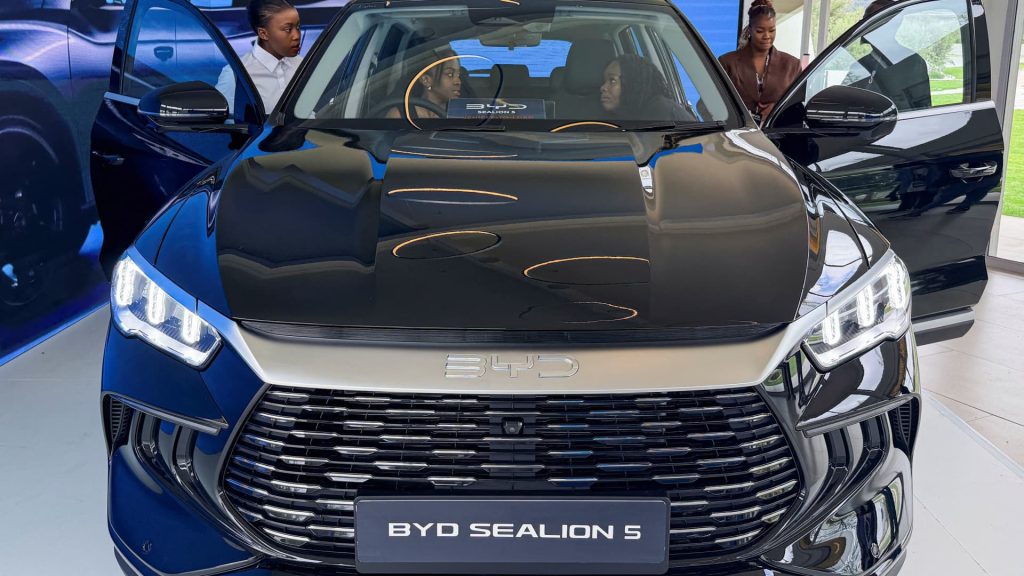
A BYD Sealion 5 plug-in hybrid SUV is displayed at the launch event by the Chinese electric vehicle maker in Muldersdrift, South Africa December 4, 2025.
Nqobile Dludla | Reuters
China is “strongly dissatisfied” with a U.S. move to add several large Chinese companies to the Pentagon’s list of firms it says are aiding China’s military, the commerce ministry said on Saturday.
The foreign ministry has also expressed concern about the U.S. Defense Department’s long-awaited update to its list on Monday, which included such top technology names as e-commerce giant Alibaba, internet search provider Baidu and automakers BYD and NIO.
The list also includes the world’s largest solar panel makers: Trina Solar and JA Solar Technology.
The list includes a broad swathe of China’s top technology firms key to advancing Beijing’s military and industrial prowess, reflecting Washington’s security concerns amid intense geopolitical competition between the countries.
“China is strongly dissatisfied and firmly opposes this,” the commerce ministry said in a statement. “China urges the U.S. to immediately stop its erroneous practices, immediately withdraw relevant measures and return to the correct track of building a constructive strategic and stable China-U.S. relationship.”
If Chinese firms are not treated fairly, it said, Beijing will “inevitably retaliate resolutely and forcefully”.
The Pentagon update supersedes a list from early 2025 and comes a month after Presidents Donald Trump and Xi Jinping met in Beijing and maintained a delicate trade-war truce.
The ministry statement said the Pentagon’s move “ignored the consensus” reached between the two leaders.
Under U.S. law, the Defense Department will be prohibited from contracting directly with companies on the list and restricted from buying their products or services through third parties from 2027.