
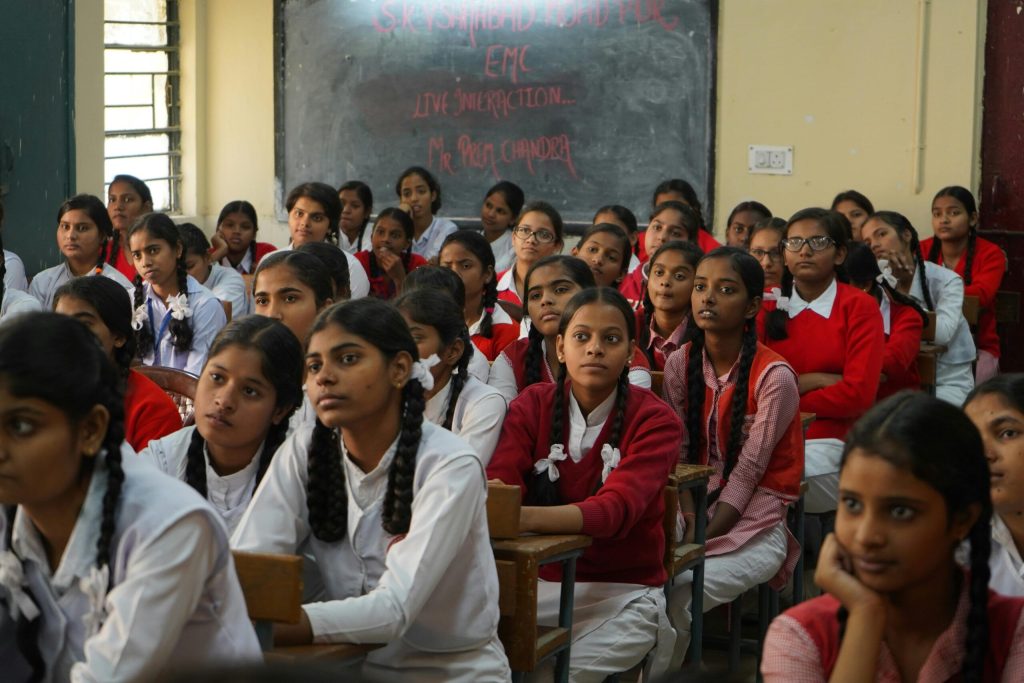
History education helps to shape how students understand the past, but also shapes how they relate to others in the present. Textbooks and educational materials influence which groups are seen as victims, heroes, or perpetrators in contexts of war and conflict. In societies recovering from violence, the stories taught in classrooms can deepen divisions, or contribute to reconciliation and peacebuilding.
For this reason, collaborative cross-border history education initiatives have gained increasing attention. In these projects, educators and historians from countries connected by conflict work together to develop teaching materials about their shared histories. Because historical events are often interpreted differently across borders, these initiatives aim to include multiple perspectives and encourage dialogue, rather than reinforcing nationalist narratives.
Creating such educational resources is not easy. We spoke with 14 experts involved in cross-border history education projects across the world, including Bosnia and Herzegovina, and India and Pakistan. Their experiences reveal both the challenges and the potential of creating educational materials that support peace.
Politics and Government Influence, and Challenging nationalist narratives
One of the strongest influences on cross-border history projects is the political climate, as governments control history education. In many countries, school history focuses heavily on celebrating the nation-state and promoting exclusive national identities. In cross-border projects, history educators often seek to undo this “us versus them” thinking among students by exposing students to multiple interpretations of historical events.
Though some governments can support cross-border projects, many governments do not see the value of perspectives that question official narratives, and will hinder or even ban educational materials. An expert from Bosnia and Herzegovina explained that a resource their team had created was “forbidden to use because we did not receive permission for the content from the pedagogical authority.” Naturally, this led to frustration within the development team. Currently, history education in Bosnia and Herzegovina is very sensitive and full of conflict, especially around the 30th anniversary of the genocide in Srebenica.
The Emotional Challenge of Collaboration
Many of the educators involved in these projects shared goals that motivated them: transforming history education. However, creating educational materials about conflict and violence is emotionally demanding work. Experts spoke openly about the personal toll of engaging deeply with traumatic histories. One expert reflected that difficult topics “require a lot. It kind of drains you out emotionally. You go deeply into that. When I was working on war topics, to be honest, I was depressed for months.”
Successful collaboration requires openness to different perspectives and a willingness to listen. However, in contexts of recent conflict, disagreements can be personal, and painful. Despite these challenges, many participants emphasized that dialogue itself was valuable. The process of working together across divides often became an act of peacebuilding in its own right.
The Importance of Support Networks
Because cross-border peace education work can be politically sensitive and emotionally exhausting, support systems are essential. Financial and institutional support often determined whether projects could continue. In some cases, governments provided funding and backing. In many others, non-governmental organizations played a crucial role. Organizations such as EuroClio offered financial assistance and conceptual guidance, training, and international networks that helped sustain collaboration.
Language also emerged as a major challenge. Some teams shared a common language, while others relied heavily on translation throughout the project. In the India–Pakistan initiative Partitioned Histories, English became the main working language because it was widely spoken by participants. However, English can have negative associations, as it is “a gift from our colonisers,” and the legacy of colonialism was part of the conflict that the project team was working to undo.
Even when translation was available, agreeing on terminology was often difficult. Words connected to borders, conflict, or identity carried sensitive political meanings, and terms with small differences in meaning could create significant disagreements.
At this moment history education is under pressure in India and Pakistan due ongoing border conflicts between the countries directly connected with their colonial pasts. In both countries history education is still heavily shaped by nationalism and tells widely different stories about the past with biases against the so-called other. Showing the need for cross-border peacebuilding.
Finding Common Ground
Despite the obstacles, experts identified several approaches that helped overcome differences. One important strategy was focusing on the experiences of ordinary people rather than political or military leaders. Everyday experiences of conflict, migration, loss, and survival were often easier for participants and students to empathise with. As one expert explained, these are stories that connect, not divide.
Many projects also adopted what participants described as a “soft approach” to controversial topics. Rather than attempting to resolve the most contested issues immediately, they focused first on changing teaching methods and encouraging dialogue. One developer explained: “Our mission was not to solve recent history. Our mission was to train teachers in a different way of teaching, and slowly to come to the difficult topics”. This “soft approach” also applied to visual textbook content. Borders and territorial disputes could often provoke disagreement, so project teams developed creative compromises, such as using different names in different editions or adjusting map legends, to avoid inflaming tensions.
Peace Education as a Long-Term Process
When it comes to implementation and the use of materials in different countries, the situation is often challenging. Most developers we spoke with described this as a major pain point, as the materials they invested significant time and effort into creating are rarely used in practice. In some cases, governments may ban the resources, but even when this is not the case, they are still not frequently adopted. Teachers often prefer to follow the official curriculum and experience time pressure, leaving little room to incorporate new materials. The developers therefore recommend creating single lessons or smaller activities that can be integrated more easily, rather than developing entire books that require a great deal of time and energy to produce.
Yet even when projects face political obstacles, their influence can spread beyond borders. Participants noted how peace education initiatives often inspire one another. The Israeli–Palestinian cross-border project, for example, drew inspiration from earlier cooperation between France and Germany after the Second World War. In turn, projects between India and Pakistan were influenced by the Israeli–Palestinian experience. These connections demonstrate how peacebuilding efforts in education can resonate internationally.
The experiences of these cross-border initiatives show that peace-oriented history education is not about erasing disagreement or creating a single shared narrative. Instead, it is about creating space for dialogue, empathy, and critical reflection. These projects demonstrate that cooperation across borders is possible. By encouraging students and teachers to engage with multiple perspectives and human experiences, cross-border history education can contribute to building cultures of peace.
Keywords: cross-border, history, history education, peacebuilding, lessons, Bosnia, India, Pakistan

Bjorn Wansink
Bjorn Wansink is an associate professor at educational science at Utrecht University in the Netherlands. His research interests center on civics and history education, multicultural education, critical thinking, sensitive topics and peace education. He has worked as researcher and teacher trainer in different post-conflict societies.

Eleanor Rowan
Eleanor Rowan is a PhD candidate at the Department of Education and Pedagogy, Utrecht University. Her research interests include out-of-school learning, interest development, postcolonial literature, and belonging.