
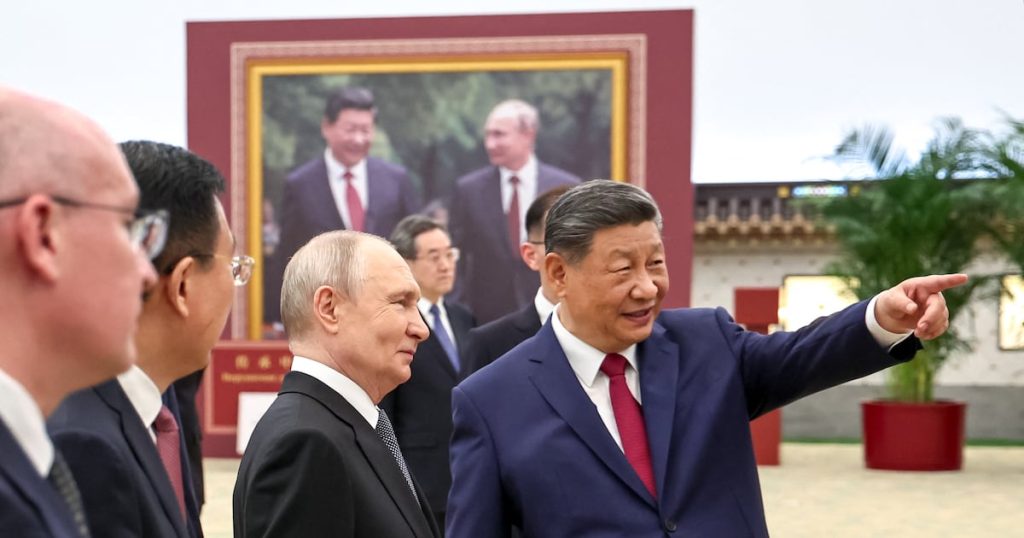
Back-to-back visits to Beijing by Donald Trump and Vladimir Putin over the past week revealed an emerging reconstitution of the relationship between the great powers that has major implications for the global order. And although Xi Jinping gave the American and Russian presidents an almost identical reception in terms of pomp and circumstance, the tone of the two visits was starkly different.
Trump’s visit was about stabilising the relationship between the United States and China and extending the truce in their trade war. Although Xi and Trump have met a number of times over the years, their meetings in Beijing last week had something of the character of a wooing.
Xi flattered Trump with special treatment, including a rare visit to the Communist Party leadership compound at Zhongnanhai, while the US president praised him as a great leader. They agreed to reposition their relationship based on “constructive strategic stability”.
But Xi warned Trump that one issue that could derail the relationship was Taiwan, urging him to block a $14 billion weapons package for the self-governing island and to declare that the US opposed Taiwanese independence. Trump obliged on the second demand, telling the US media that he did not want to go halfway around the world to fight a war because Taiwan’s leadership felt confident enough to declare independence.
Xi’s body language with Putin was warmer. Their lengthy joint statement underscored their mutual interest in reshaping the global order in a way that overturns what they called “the logic of hegemony and neocolonial thinking”.
Putin and Xi explicitly asserted the right of each country to pursue its own developmental path, condemning western sanctions and any attempt to impose liberal values.
The same approach was implicit during Trump’s visit, during which he expressed admiration for China’s success under Communist Party leadership and Xi said that Chinese rejuvenation was compatible with Making America Great Again.