
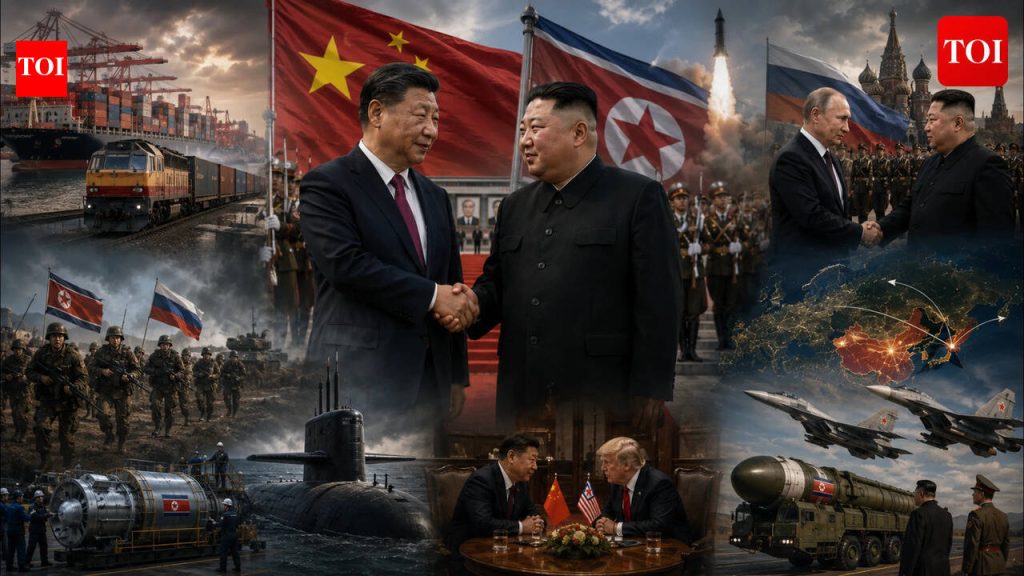
Chinese President Xi Jinping has landed in North Korea for his first overseas trip of the year.While global leaders are making a beeline for Beijing — Xi has hosted 17 world leaders in just the first 4 months of 2026 — the Chinese president is personally courting Kim Jong Un during a two-day state visit starting June 8. The visit marks Xi’s first trip to Pyongyang since 2019.And there is a deeply strategic reason: Beijing is growing increasingly uncomfortable with Pyongyang’s warming ties with Moscow.Experts believe Xi’s visit is driven by China’s desire to weaken the deepening Russia-North Korea alliance while protecting Beijing’s own strategic interests in northeast Asia.The timing is particularly significant — Xi arrives in Pyongyang just weeks after hosting US president Donald Trump and Russian President Vladimir Putin for separate, nearly back-to-back visits in Beijing, presenting himself as a geopolitical power broker with direct lines to a diverse cast of counterparts.Observers will be watching closely how Xi’s welcome and his meeting with Kim compare with the North Korean leader’s welcome of Putin during a 2024 visit to Pyongyang.
The Kim-Putin alliance that worries Beijing
Xi’s visit coincides with the 65th anniversary of the two countries’ 1961 Treaty of Friendship, Cooperation and Mutual Assistance, China’s only mutual defence treaty with any country. The treaty was signed less than a decade after Chinese troops fought with North Korea in the Korean War and guarantees mutual support if either is attacked.Xi’s choice of Pyongyang for his first overseas trip of 2026 is “a deliberate visual rebuttal to the prevailing read in Western capitals that Pyongyang had quietly migrated into Moscow’s orbit,” said Seong-Hyon Lee from the George H.W. Bush Foundation for US-China Relations.
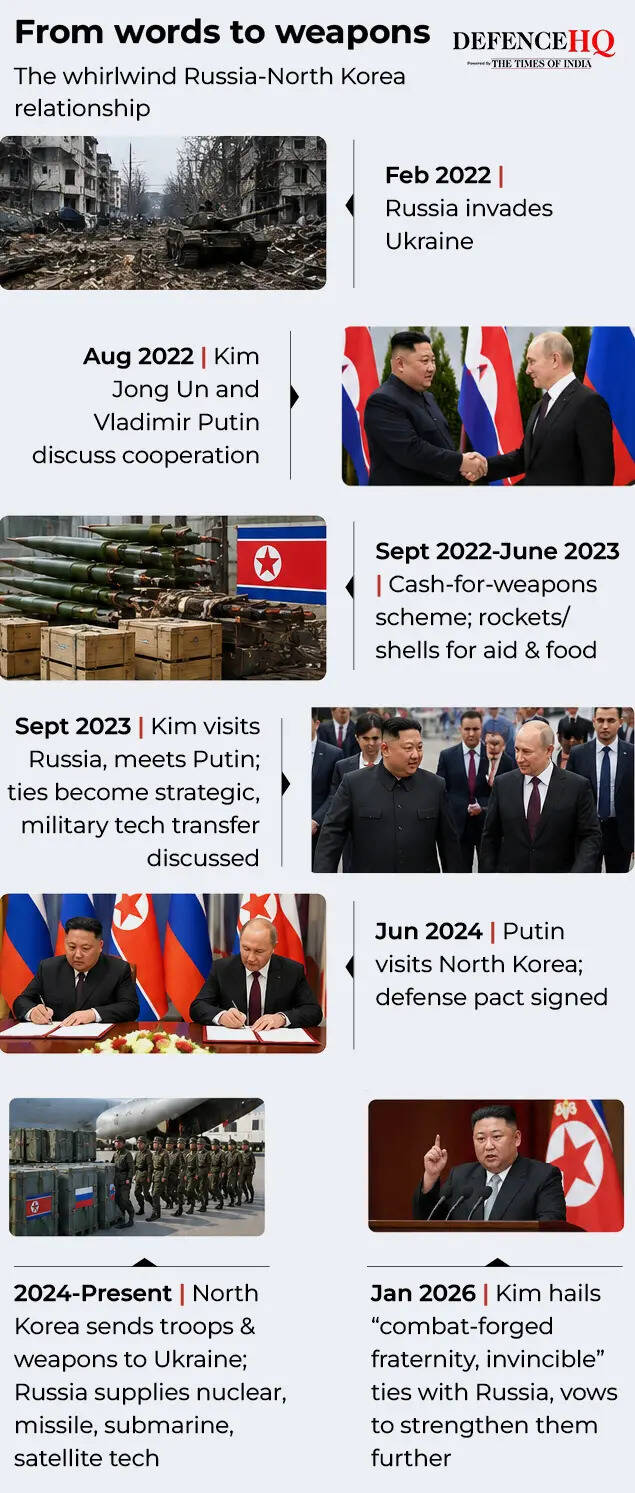
The core of Xi’s anxiety stems from Kim Jong Un’s train trip to Vladivostok in September 2023 to meet Putin — a gesture that validated intelligence inputs of deepening ties between the two autocratic leaders ever since the Ukraine war started in 2022.By June 2024, that axis hardened. During Putin’s trip to Pyongyang — his first in nearly a quarter-century — the two leaders drove each other around in a Russian-built Aurus limousine and inked a landmark mutual defence pact in a pomp-filled affair.The treaty pledged military support if either is attacked. Some analysts suggest that this clause basically elevates North Korean and Russian ties to the same level as the US-South Korea or Nato alliance.
From treaty to troops
The alliance immediately moved beyond symbolic gestures into concrete military cooperation.North Korea has sent more than 10,000 troops and conventional weapons to support Russia’s war efforts in Ukraine, sustaining thousands of casualties in the Kursk region.According to South Korea’s National Intelligence Service, as of February 2026, approximately 11,000 North Korean troops were deployed on Russia’s frontline in Kursk Oblast, with 10,000 being combat troops and 1,000 engineer troops.The death toll has been staggering.By April 2026, intelligence data indicated that 7,058 North Korean servicemen have been killed or wounded, with 2,251 killed in action and 4,807 wounded. Ukrainian sources have provided higher estimates, claiming around 4,000 North Koreans killed.In his New Year message, Kim Jong Un praised troops fighting alongside Russia in Ukraine, a move observers said pointed to Pyongyang’s intention to sustain and deepen military cooperation with Moscow.Last month, senior Moscow officials attended the inauguration of a war memorial complex in Pyongyang, where soldiers fighting for Russia were honoured and a message from Putin was read aloud in which he hailed the North’s “heroic” dispatch of troops to support Russia’s war.
Weapons for military tech
In return for troops and conventional weapons, it is widely believed that Russia is providing or has promised to furnish North Korea with advanced technology for nuclear submarines, nuclear warheads, and intercontinental ballistic missiles (ICBMs).This clandestine military exchange represents a dramatic escalation in the Russia-North Korea alliance, transforming what began as battlefield cooperation into a high-stakes technology transfer deal that could fundamentally reshape the strategic balance in Asia.In a sign of just how close the ties have become, South Korean intelligence has indicated that Russia handed over two to three nuclear submarine modules to Pyongyang in the first half of 2025. These modules included a nuclear reactor, turbine, and cooling system—the core components of a nuclear propulsion unit essential for powering a nuclear submarine.This technology transfer is particularly alarming because nuclear submarines represent one of the most sophisticated military platforms, capable of launching nuclear missiles while remaining undetectable beneath the ocean for months.Another Russian ship, the Ursa Major, reportedly carrying two additional reactors was allegedly sunk under mysterious circumstances in December 2024, just months after the two countries signed their landmark defense pact.
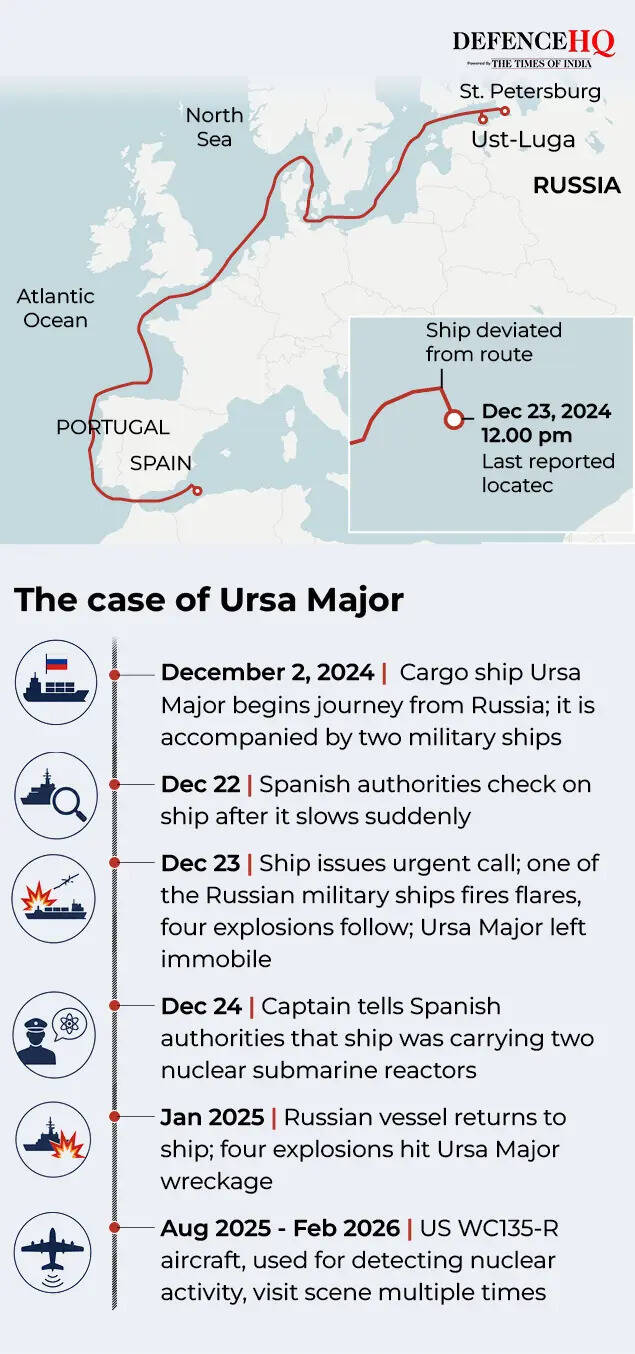
Whether this was sabotage, accident, or military strike remains unclear, but the incident underscores the covert nature of this sensitive technology transfer.Pyongyang had persistently requested nuclear submarine technology and advanced Sukhoi Su-35 fighter jets from Russia since 2024.Russia was initially reluctant but appears to have agreed to provide them in 2025, marking a significant shift in Kremlin policy toward North Korea.South Korea’s military chief has indicated that Russian technology possibly contributed to North Korea’s latest intercontinental ballistic missile development.
Xi’s unease
China remains North Korea’s top economic lifeline, accounting for the vast majority of the country’s foreign trade, and has long ranked as Pyongyang’s most important diplomatic partner.China’s trade with North Korea in 2025 reached $2.8 billion — a 26 per cent year-on-year increase.Two-way trade value in 2025 rose 25% from a year earlier to $2.7 billion, according to data from China’s General Administration of Customs.
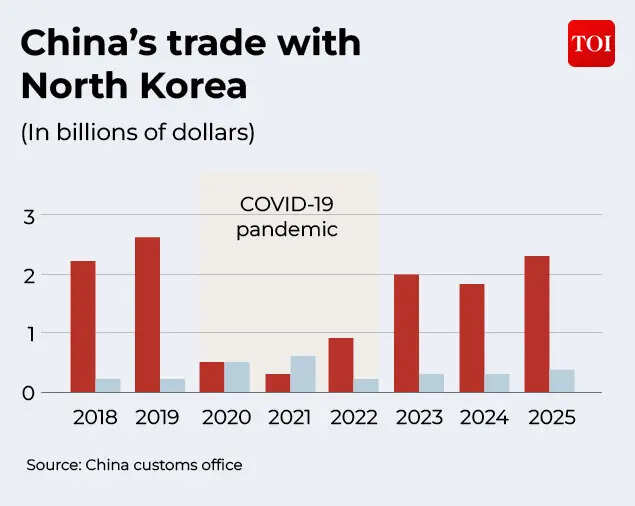
Despite Beijing’s close ties with both Pyongyang and Moscow, Xi is wary of the burgeoning military and economic alliance between Kim and Putin.The concern is multifaceted: Beijing is reluctant to lose its influence over North Korea to Russia, is wary of a destabilising nuclear power on its border, and does not wish to see European conflicts spill over into Asia.While some in Beijing might view the Russia-North Korea alliance as a means of countering US dominance, there exists considerable unease in China.Apart from irritation over Putin’s intrusion into what most Chinese consider their sphere of influence, the real cost to China is that Russia’s embrace gives North Korea greater impunity and room to maneuver without consideration to Beijing’s interests, said Danny Russel, who was the top US diplomat for Asia in the Obama administration.
The nuclear cloud
Xi will arrive in Pyongyang against a backdrop of escalating nuclear tensions.On June 3, Kim inspected a new plant that makes weapons-grade nuclear material.During his inspection Kim emphasised that over the past five years, the nation’s production capacity for weapon-grade nuclear material has surpassed twice the previous level and that Pyongyang plans to “beef up the state’s nuclear forces at an exponential rate,” according to state-run media.This implies expanded capabilities in producing highly enriched uranium (HEU) and plutonium, both critical for manufacturing nuclear warheads.The timing of this disclosure is particularly pointed.The idea that North Korea is rolling out a brand-new nuclear facility right before Xi’s arrival is “incredibly annoying to our Chinese friends,” according to former US ambassador to Malaysia Edgard Kagan.While China is North Korea’s primary partner — currently accounting for over 90% of its total trade — it does not support the development of North Korea’s nuclear programme.This is evidenced by China’s repeated condemnations of Pyongyang’s nuclear tests and its backing of UN Security Council Resolution #1718, which imposed sanctions on North Korea for its nuclear activities.Unlike China, Russia has shown a willingness to assist North Korea’s nuclear and military ambitions, making Russia a more favorable partner for Kim Jong-un.
Xi’s mediation gambit: Trump-Kim diplomacy
The timing of Xi’s trip has raised speculation about whether the Chinese leader is aiming to act as a mediator between Trump and Kim.Trump met with the North Korean dictator three times during his first term—part of a fanfare-filled bid to disband North Korea’s nuclear program that ultimately stalled.Trump has repeatedly expressed interest in restarting that diplomacyThe Korean peninsula was among issues discussed between Xi and Trump during the US president’s three-day visit to Beijing in mid-May. A White House readout said the two leaders have a “shared goal to denuclearise North Korea”.Trying to get Trump and the North Koreans together again may be a way to try to attenuate the DPRK-Russia relationship to try to pull them away a little bit, American political scientist Victor Cha suggested. “That sounds like a very Chinese way to deal with it because it’s low-cost. You don’t have to put a lot of skin in the game. It doesn’t cost them materially, and if they are able to attenuate this tie that way without hurting their relationship with Russia, this might be the way to do it,” Cha said.Beijing is widely seen as wary of North Korea’s illegal nuclear program and weapons testing, which heighten American focus on the region – a scenario China wants to avoid considering its recent overt statements of ‘reunification’ with Taiwan.
The great balancing act
Xi’s Pyongyang visit isn’t just a diplomatic outreach; it exposes a fundamental shift in how China must now manage its “buffer” against the US.North Korea is no longer the dependent proxy Beijing once relied on — through Moscow’s arms, reactor modules, and troop deployments in Ukraine, Kim has gained operational autonomy that erodes China’s leverage.What Xi is really wrestling with is a paradox: the more Russia strengthens Pyongyang, the less Beijing can dictate North Korea’s behavior, yet confronting Russia outright risks fracturing China’s own great‑power balancing game.The visit’s deeper analytical point is that China’s traditional coercion toolkit — developmental aid, food, sanctions, trade, diplomatic isolation, military tech — has diminishing returns on a nuclear‑armed neighbour that now has an alternative patron willing to bypass UNSC constraints.Xi’s gambit therefore hinges on a low‑cost, high‑symbolism signal: re‑anchor North Korea’s economic lifeline in Beijing while quietly offering Pyongyang a path to US diplomacy that Moscow can’t provide.Whether this works depends on whether Kim values Chinese market access over Russian military tech, and whether Trump credibly re‑engages.The more likely outcome is a fragile equilibrium where China accepts a more autonomous DPRK, manages nuclear risk through crisis containment, and quietly prepares for a scenario where North Korea acts as a semi‑independent spoiler rather than a controlled buffer.