
JAKARTA – Ahead of Eid al-Adha, the health of sacrificial animals is again a concern for the public. One of the diseases that is most watched is anthrax, a serious infection in livestock that can be transmitted to humans or be zoonotic.
Therefore, supervision of sacrificial animal traffic is usually tightened to ensure that livestock sold in healthy and safe conditions are consumed.
The DKI Jakarta Provincial Government (Pemprov) said anthrax is one of the main threats that need to be anticipated ahead of Eid al-Adha 2026. Supervision is carried out from document inspection to the physical condition of sacrificial animals entering Jakarta.
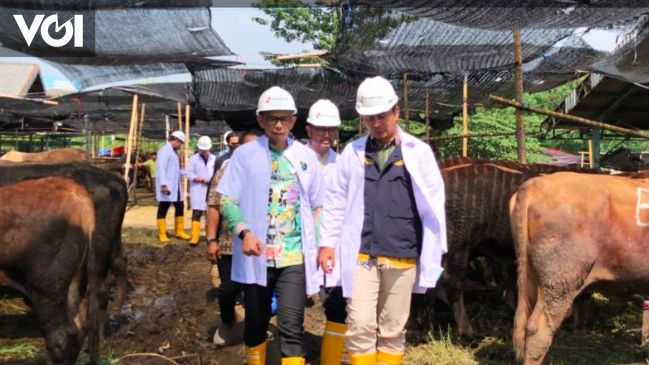
“Anthrax is a major concern because it is a zoonosis or can be transmitted to humans,” said Head of the DKI Jakarta Food, Marine, and Agriculture Directorate (KPKP), Hasudungan A. Sidabalok, while checking sacrificial animals at Perumda Dharma Jaya, East Jakarta, Thursday, May 21.
To prevent the entry of animals suspected of having infectious diseases, the DKI Provincial Government requires that every livestock from outside the area is equipped with a Certificate of Animal Health (SKKH) and an official veterinary certificate. These documents are a requirement before animals are marketed in Jakarta.
Supervision is carried out through the iSIKHNAS system which is used to monitor the movement of livestock from various regions in Indonesia. In addition to administrative checks, veterinary and paramedic teams also conduct physical checks directly on sacrificial animals.
“If anyone is suspected of being sick, we will conduct laboratory examinations at facilities owned by the DKI Jakarta Provincial Government,” said Hasudungan.
He ensured that all sacrificial animals entering Jakarta were also required to have been vaccinated, especially for Foot and Mouth Disease (FMD) and anthrax. The vaccination program is part of the national policy implemented at the livestock center.
Not only that, the DKI Provincial Government also verifies the authenticity of animal health documents to prevent the forgery of letters.
“We clarified whether the document was true or false, then matched it with the clinical condition of the animals in the field,” he said.
In addition to animal health supervision, the DKI Jakarta KPKP Office has also intensified education for the public and business actors regarding the slaughter procedures and handling of hygienic sacrificial meat.
According to Hasudungan, various trainings and socialization have been carried out to ensure that the sacrificial process is safe, healthy, and in accordance with Islamic law. The materials provided include the competence of halal butchers, procedures for the entry of sacrificial animals, how to choose healthy animals, to the standards of cleanliness of the sale and cutting locations.
The education is considered important so that the slaughter process not only meets religious provisions, but also maintains food safety and public health.
Officers also continue to remind the public to pay attention to the way sacrificial meat is stored and processed so that it remains hygienic and safe to consume.
The English, Chinese, Japanese, Arabic, and French versions are automatically generated by the AI. So there may still be inaccuracies in translating, please always see Indonesian as our main language.
(system supported by DigitalSiber.id)