
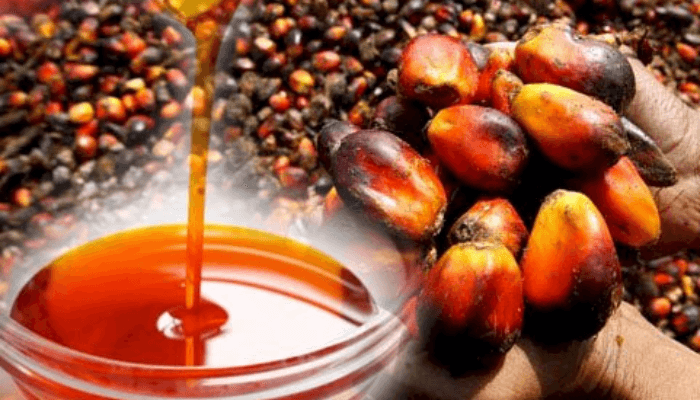
…opens market opportunities for Nigerian palm oil exporters
Russia has expressed interest in expanding palm oil imports from Nigeria as part of efforts to diversify its supply chain and strengthen economic cooperation with Africa’s largest economy.
The Russian Trade Mission in Nigeria said the growing demand for palm oil in Russia presents significant export opportunities for Nigerian producers, processors and exporters.
Speaking at the 2026 BusinessDay International Oil palm Summit held on Tuesday in Abuja, Peter Arseniev, representing Max Petrol, Trade Commissioner of the Russian Trade Mission in Nigeria, said Russia sees Nigeria as a strategic partner with strong agricultural and industrial potential.
According to him, available market estimates indicate that Russia’s palm oil market could reach up to one million tonnes annually, with most of the demand currently met through imports.
Read also: Nigeria is the only major palm oil producing country without a replanting plan – OPGAN President
“In the palm-oil sector, Nigeria has a historic foundation, favorable agricultural conditions and a clear ambition to move from primary production to deeper processing and industrial leadership. For Russia, Nigeria’s bio-oil sector may represent a promising area of cooperation.
“Russia has a large food and industrial market, including development of food processing, confectionery and bakery industries, cosmetics and household chemicals production, as well as potential demand in food production and bio-based industrial solutions.
“Available market estimates indicate that the capacity of the Russian oil markets may reach up to 1 million tons annually and potentially even above this level. Since Russia does not produce oil domestically, this demand is largely covered by imports. This means that the Russian market has a stable and significant demand for palm oil and related products,” he said.
Arseniev noted that palm oil remains economically attractive because of its relatively low production cost, high yield per hectare and broad industrial applications across food processing, cosmetics, household chemicals and bio-based industrial products.
He explained that Russia is actively working to diversify its foreign trade and develop more resilient and reliable supply chains, creating opportunities for Nigerian exporters to access the Russian market.
“For Nigerian companies, this cooperation could open additional access to the Russian market and create opportunities not only for commodity exports but also for investment, processing, technology transfer and industrial modernisation,” he said.
The Russian trade official identified direct trade partnerships, quality assurance, investment in infrastructure and technology transfer as key areas for collaboration between both countries.
According to him, stronger cooperation could lead to investments in processing facilities, storage systems, logistics, packaging and export-oriented industrial capacity in Nigeria.
He added that Russia has expertise in agricultural machinery, industrial equipment, food processing technologies, fertilisers and engineering solutions that could support the growth of Nigeria’s palm oil value chain.
Arseniev stressed that sustainable cooperation would require improved quality standards, proper certification, sanitary compliance and reliable export logistics.
“These are not formalities but essential conditions for sustainable international trade,” he said.
He further noted that palm oil cooperation could become part of a broader agricultural partnership between Nigeria and Russia covering fertilisers, grain supplies, food processing technologies and industrial equipment.
The Russian Trade Mission, he said, remains open to facilitating business connections between Nigerian palm oil producers and Russian importers, investors and technology providers.

