
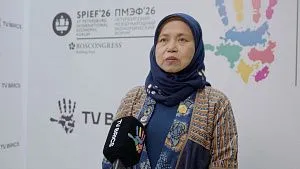
Technology sharing and knowledge exchange should become key drivers of development within BRICS, according to Tri Mumpuni, Member of the Steering Committee of Indonesia’s National Research and Innovation Agency.
Speaking in an exclusive interview at the TV BRICS studio in the Roscongress International Cooperation Area at the St. Petersburg International Economic Forum (SPIEF), Mumpuni said Indonesia sees significant opportunities for cooperation among BRICS countries in innovation, energy and food security.
According to Mumpuni, BRICS member states possess different levels of technological and economic development, making cooperation and the exchange of expertise particularly important.
“What we need to work on is creating an enabling environment within BRICS itself so that all member countries can gradually improve. In the end, they should achieve welfare and benefit from the technologies that we share among member countries,” Mumpuni said.
Mumpuni emphasised that the group should create conditions that allow all member countries to benefit from technological progress and innovation. She added that technologies already developed by some BRICS members could help strengthen resilience and sustainable development across the group.
“Every country has its own learning curve, and this journey should encourage BRICS member countries to share technologies with one another so that we can grow together, create prosperity and welfare, and advance technological invention and innovation,” she said.
At the same time, she stressed that Indonesia’s priority is the development of downstream technologies that can create added value from the country’s extensive natural, agricultural and maritime resources.
According to Mumpuni, stronger cooperation in innovation, energy and food security can help BRICS countries achieve sustainable growth while creating new opportunities for their populations.