
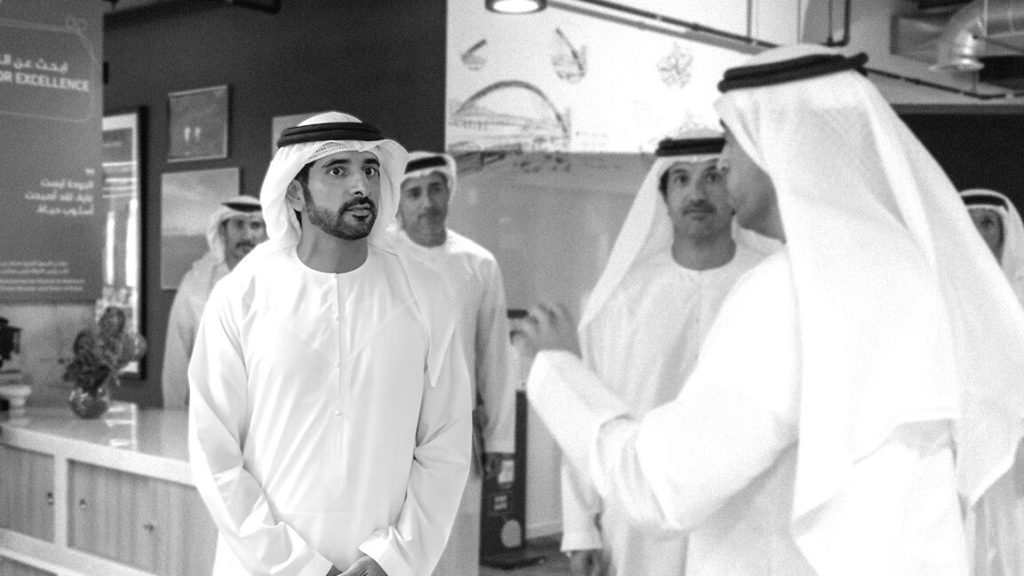
H.H. Sheikh Hamdan bin Mohammed bin Rashid Al Maktoum, Crown Prince of Dubai, Deputy Prime Minister of the UAE, and Minister of Defense, reviewed the operations and future plans of the Dubai Department of Economy and Tourism (DET) on Tuesday, reaffirming the government’s commitment to strengthening economic resilience, supporting key sectors, and sustaining growth momentum.
During the visit, Sheikh Hamdan was briefed on initiatives aimed at accelerating economic expansion and enhancing Dubai’s ability to navigate evolving regional and global conditions.
He directed officials to continue implementing measures that reinforce the emirate’s economic resilience while strengthening its position as a leading global hub for trade, tourism, and investment.
In a statement posted on X, Sheikh Hamdan underscored the importance of public-private sector collaboration in driving investment, economic growth, and global competitiveness.
He said the Dubai Government remains committed to supporting the economy and tourism sector through practical measures, enhanced facilitation, and innovative solutions that strengthen the emirate’s future readiness and adaptability. He also expressed confidence in Dubai’s ability to transform challenges into opportunities and advance sustainable development through collaboration with international partners.
The review included updates on ongoing and planned DET-led initiatives designed to support economic activity and strengthen key sectors.
Helal Saeed Almarri, Director General of the Dubai Department of Economy and Tourism, outlined a range of initiatives the department is implementing and highlighted its role in supporting the city’s response to the impact of the conflict involving Iran, including measures related to food security and the hospitality sector.
The meeting comes as Dubai continues to introduce economic support measures to maintain business activity and strengthen market confidence.
Last month, Sheikh Hamdan approved an additional $410 million package of economic incentives, bringing the total value of support measures introduced over the previous two months to $680 million.
The latest package includes 33 initiatives offering facilitation measures across sectors, including tourism, trade, education, and customs services, for periods ranging from three to 12 months. The measures follow an earlier AED1 billion ($272 million) package announced in March and implemented from April.
The support package includes exemptions from tourism-related fees, reductions in business and customs charges, deferred payments for selected sectors, and regulatory facilitations for educational institutions, construction projects, and cultural activities.
The incentive packages form part of Dubai’s broader strategy to enhance economic flexibility, strengthen preparedness, and enable a rapid response to evolving economic conditions.
During a meeting of Dubai’s Executive Council earlier this year, officials reviewed the emirate’s economic performance in 2025, when growth reached 5.4% and gross domestic product exceeded $255 billion.
Sheikh Hamdan said Dubai’s leadership remains focused on responding to the needs of society while relying on experienced teams capable of managing emerging challenges and sustaining economic growth.
He added that the emirate has consistently demonstrated its ability to turn challenges into opportunities and expressed confidence that Dubai would emerge stronger and more competitive, further consolidating its position as a leading global economic center.