
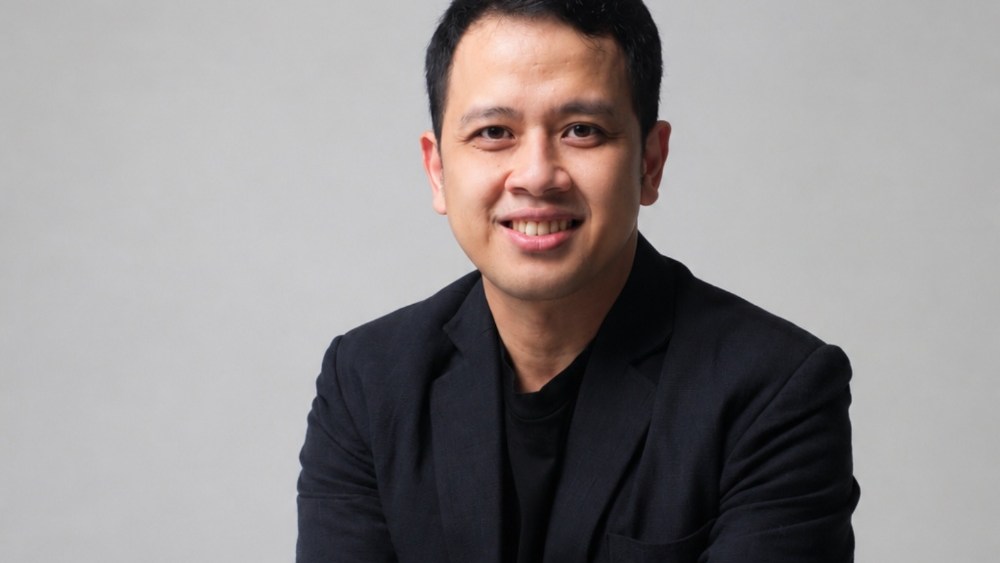
Fauzan Zidni is at Cannes this year as the newly elected chair of the Indonesian Film Agency (BPI) with a program already in Critics’ Week and the agency making its first institutional appearance at the festival.
“Next Step Studio Indonesia” — four short films by Indonesian directors made alongside peers from Malaysia, Singapore, the Philippines and Myanmar and produced by Yulia Evina Bhara and Amerta Kusuma at KawanKawan Media and co-produced by Dominique Welinski, the program’s originator and curator — premieres at Critics’ Week. It is the first Cannes project drawn entirely from Indonesian financing .
“That is not a debut,” Zidni tells Variety. “That is a thesis.”
The thesis, as Zidni frames it, is that Indonesian cinema’s next phase cannot rely on individual producers’ persistence. “Indonesia is one of the few film markets in the world where local films now routinely outperform Hollywood,” he says. “We have the audience. What we have not yet built is the bridge between that audience and the international industry. That is the work for the next four years.”
Local productions took roughly 67% of the Indonesian box office in 2025, with 2026 tracking at a similar rate. The structural mismatch Zidni is determined to close is the gap between that local dominance and persistent international invisibility — a gap he attributes to the absence of financing frameworks, legal infrastructure and distribution architecture.
“We do not yet have a CNC, a KOFIC or an IMDA,” he says, naming the respective French, Korean and Singaporean public film bodies. “Public film bodies whose architecture pre-finances ambition rather than rewarding it after the fact. Until we do, ambitious projects are assembled from dozens of small pieces. That is exhausting, and more importantly, it is not scalable.”
BPI is pursuing bilateral co-production treaties with France and Korea, building on an audiovisual co-production agreement signed with the Netherlands at JAFF Market in 2024. “A treaty is not paperwork,” Zidni says. “It changes how costs are shared, how rights are structured, and which national funds Indonesian projects qualify for.”
The agency is also backing a matching-fund mechanism recently relaunched by the Indonesian Ministry of Culture, under which projects that secure international financing qualify for matched government support. Zidni expects the measure to accelerate both the number and scale of outbound co-productions within two to three years.
On the local side, the structural picture is complicated. Indonesia has approximately 2,200 screens for a population of 287 million, concentrated largely in Java, with a single exhibitor controlling around 60% of the network. “Even our biggest local hits leave money on the table,” Zidni says. “And our smaller films — the ones that build slowly on word of mouth — often do not get a fair window at all.”
His time at the Walt Disney Company, where he led original production in Indonesia between 2022 and 2024, sharpened a conviction he now applies at a national level. “The honest lesson I took with me, particularly after the global streamers stepped back from commissioning Southeast Asian originals in early 2024, is that we cannot outsource our distribution layer to anyone.”
Zidni is equally direct about the legislative work he considers the agency’s most consequential long-term task. BPI is advocating for a revision of Indonesia’s Film Law, which he expects the Ministry of Culture to bring to parliament during the current term. “The policy work we are doing now will not produce results next year,” he says. “What it will do, if we get it right, is give Indonesia for the first time a clear legal and financing architecture for international co-production, a stronger institutional role for BPI along the lines of the CNC, a defined role for a national film fund and a regulatory environment that treats the industry as a strategic creative sector rather than a licensing problem.”
For Cannes 2026 specifically, Zidni is targeting a mapped-out Cannes Film Market footprint for future delegations and the groundwork for international scholarship and residency partnerships. “If Cannes 2026 produces two or three real co-production conversations, a Marché du Film footprint we can build on, and the beginning of a credible institutional relationship with European and Asian funds, that is the right outcome,” he says. “The deals we want will close in 2027 and 2028.”