
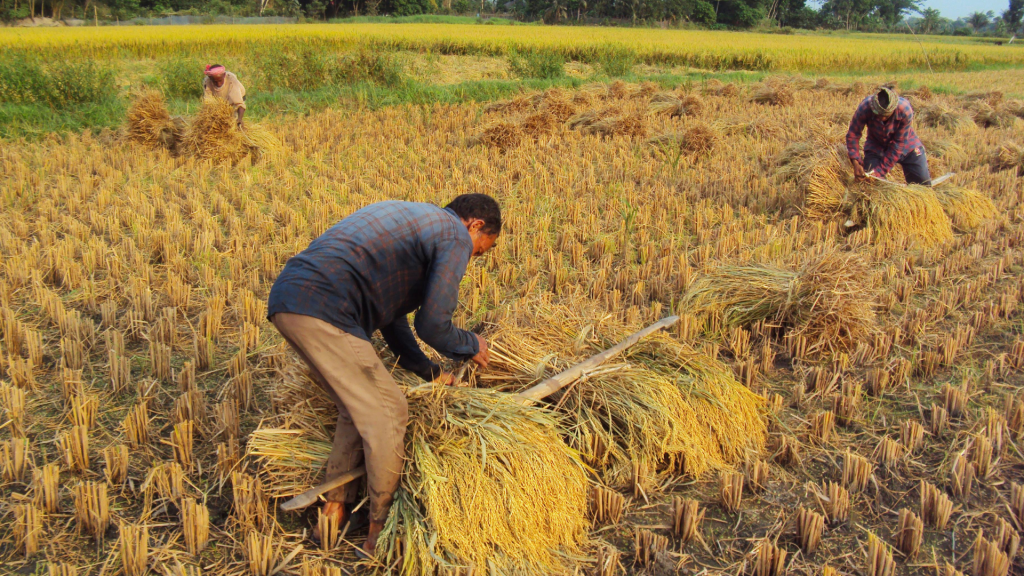
A new study by Climate Trends found that shifting climate patterns like winter warming, rising nighttime temperature, and more frequent unseasonal rainfall are threatening wheat production across India’s major growing regions raising concerns about the country’s food security and farmers’ livelihood.
The research comes at a time when India Meteorological Department (IMD) revised the 2026 monsoon forecast down to 90% from the earlier 92% of the long period average, placing the kharif outlook in the below-normal category. With global meteorological agencies tracking what could be the strongest El Nino event since 2015-16, India’s food systems are entering a period of compounding climate-induced stress.
India is the second-largest wheat producer in the world, accounting for 14% of global output with annual production of about 107 million tonnes. The study warned that rising temperature during critical growth stages, particularly flowering and grain filling, are shortening crop cycles and reducing productivity.
Warming Winters Reshape India’s Wheat Belt
The report analysed five major wheat producing states, Punjab, Haryana, Uttar Pradesh, Madhya Pradesh, and Gujarat, and found that winter warming has accelerated across the country’s wheat belt, with Haryana and Punjab recording the fastest temperature increases during wheat- growing season between 2011 and 2025.
According to the report, Haryana experienced the highest warming at 0.56°C per decade, followed by Punjab at 0.53°C per decade. In comparison, Madhya Pradesh recorded the slowest warming rate at 0.24°C per decade.
Rising Night-time Temperatures Emerge As a Hidden Threat
The report also noted a sharp increase in night-time temperatures. Minimum temperatures increased faster than maximum temperatures across all major wheat-producing regions, suggesting that warming is being driven more by hotter nights than hotter days.
Uttar Pradesh recorded one of the sharpest increases in minimum temperatures, while Gujarat’s night-time temperatures rose nearly three times faster than daytime temperatures, the report stated.
“Warming in February and March is shortening the grain-filling window. This accelerates maturity, resulting in shrivelled kernels, lower grain quality and reduced yields. What we are witnessing is not simply hotter weather, it is the gradual alteration of seasonal patterns that made India’s wheat systems productive and predictable,” said Dr Palak Balyan, Research Lead, Climate Trends and lead author of the study.
The report cited that estimated wheat yield in North India declined by 2.26% with every unit increase in terminal stage temperature.
The study found that rainfall is increasingly shifting from traditional winter months to the harvest period between March and May. Punjab received around 154 mm of rainfall during March-May in 2023, while Uttar Pradesh recorded around 111 mm in 2021. Researchers linked the trend to delayed and intensified western disturbances that are now extending into spring months.
Farmers Struggle to Adapt as Vulnerabilities Deepen
The report stated that farmers reported poor germination due to warmer winters, reduced tillering, premature crop maturity and increasing pest attacks. In Gujarat, farmers said wheat that could previously be stored for one to two years now often spoils within six months because of rising humidity and pest infestations.
The report also highlighted growing socio-economic vulnerabilities among farmers. Small and marginal farmers in Gujarat face rising irrigation costs, declining groundwater availability and limited access to storage and institutional support, making them particularly vulnerable to climate shocks.
“There is an urgent need for course correction in our agricultural paradigm and food security approach. We must move from input-intensive, yield-centric systems towards soil-centric, climate-resilient farming,” said Umendra Dutt, Executive Director, Kheti Virasat Mission. “Farmers who are adopting ecological and natural farming practices are, in fact, contributing to climate mitigation and long-term food security. They must be actively supported through policy measures, including a restructuring of MSP and the broader agricultural subsidy regime to incentivize soil regeneration, crop diversification, and sustainable farming systems. If we are serious about securing the future of wheat and food systems in India, supporting such transitions is not optional—it is essential.”