
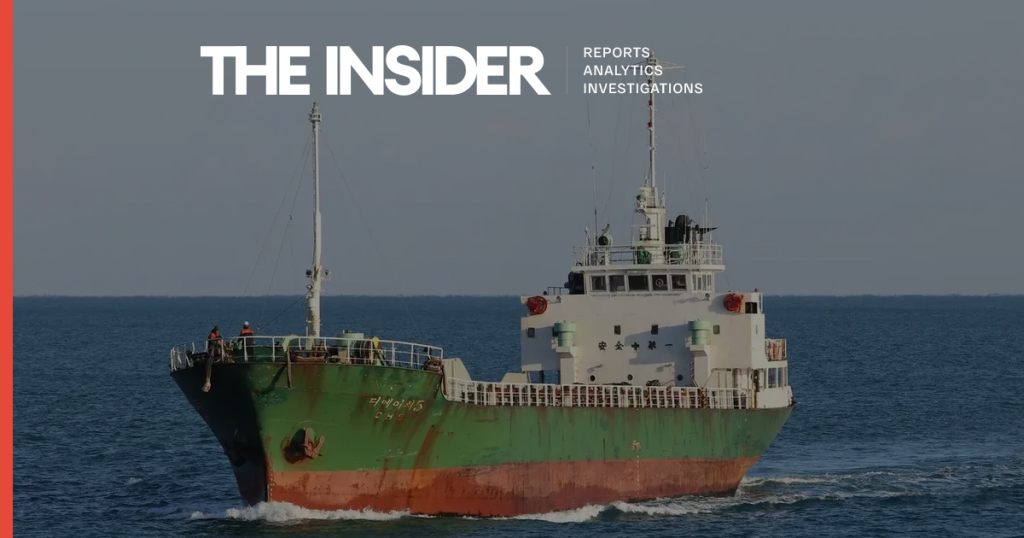
The U.S. military struck a cargo vessel that Washington said was trying to violate a U.S.-imposed blockade of Iranian ports, according to a report issued by U.S. Central Command (CENTCOM) on May 30.
According to the U.S. military, the Gambia-flagged cargo ship LIAN STAR (IMO 9072692) ignored more than 20 warnings and continued moving toward an Iranian port. “A U.S. aircraft disabled the vessel by firing a Hellfire missile into the ship’s engine room after Lian Star’s crew failed to comply. The ship is no longer transiting to Iran,“ CENTCOM’s statement read.
A U.S. official told The Associated Press that the vessel was left drifting in the Gulf of Oman after the strike. U.S. forces did not board the ship.
CENTCOM said U.S, forces attacked the vessel May 29. According to Starboard Maritime Intelligence, on May 25 LIAN STAR was traveling through the Gulf of Oman when its AIS signal was turned off.
The vessel’s owner is MASHINI S, a company registered in Dubai. MASHINI S is also listed as the ship’s commercial and technical manager.
The specialized maritime database MagicPort lists a company with a similar name, MASHINI SM & CHAPI H, as being linked to another dry cargo vessel with a carrying capacity of about 1,600 tons. The vessel’s contact information lists the Iranian city of Bushehr, and the company is identified as the vessel’s owner and commercial manager.
CENTCOM said the LIAN STAR was the sixth vessel stopped during the naval blockade of Iran. Another 116 ships were forced to change course, while one vessel was allowed to continue sailing.
The United States announced the blockade April 17 after Iran effectively restricted shipping through the Strait of Hormuz amid the war in the Middle East. Washington says the blockade is aimed at limiting Iranian oil exports and reducing revenue flowing into the country’s budget.
Iran, meanwhile, insists that passage through the Strait of Hormuz must take place only with Tehran’s approval. On Saturday, Iran’s military command warned that any warships that try to interfere with enforcement of the new shipping rules could become targets.
Tehran has also introduced a fee for passage through the strait that media reports say could reach $2 million per vessel. Some experts consider the fees a violation of the principle of freedom of international navigation.