
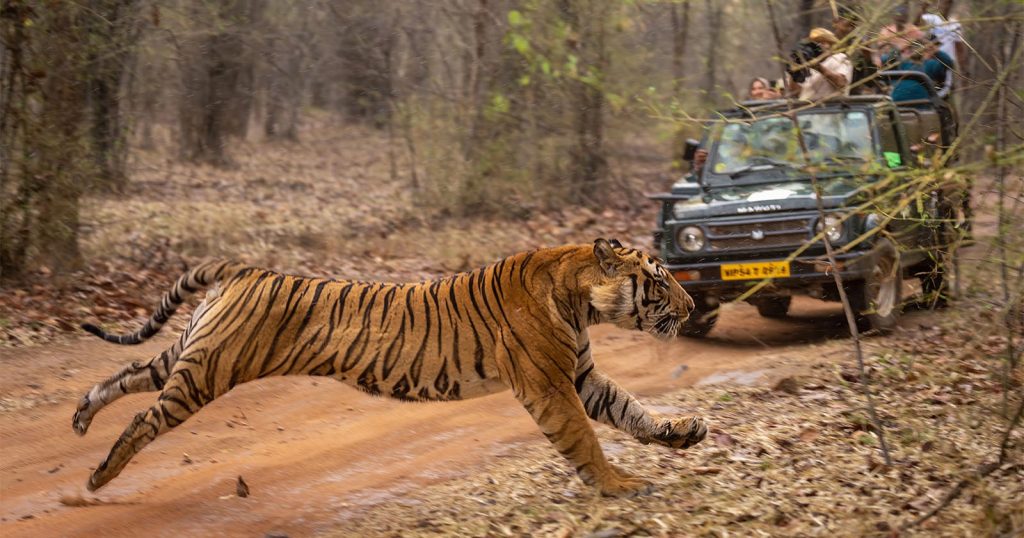
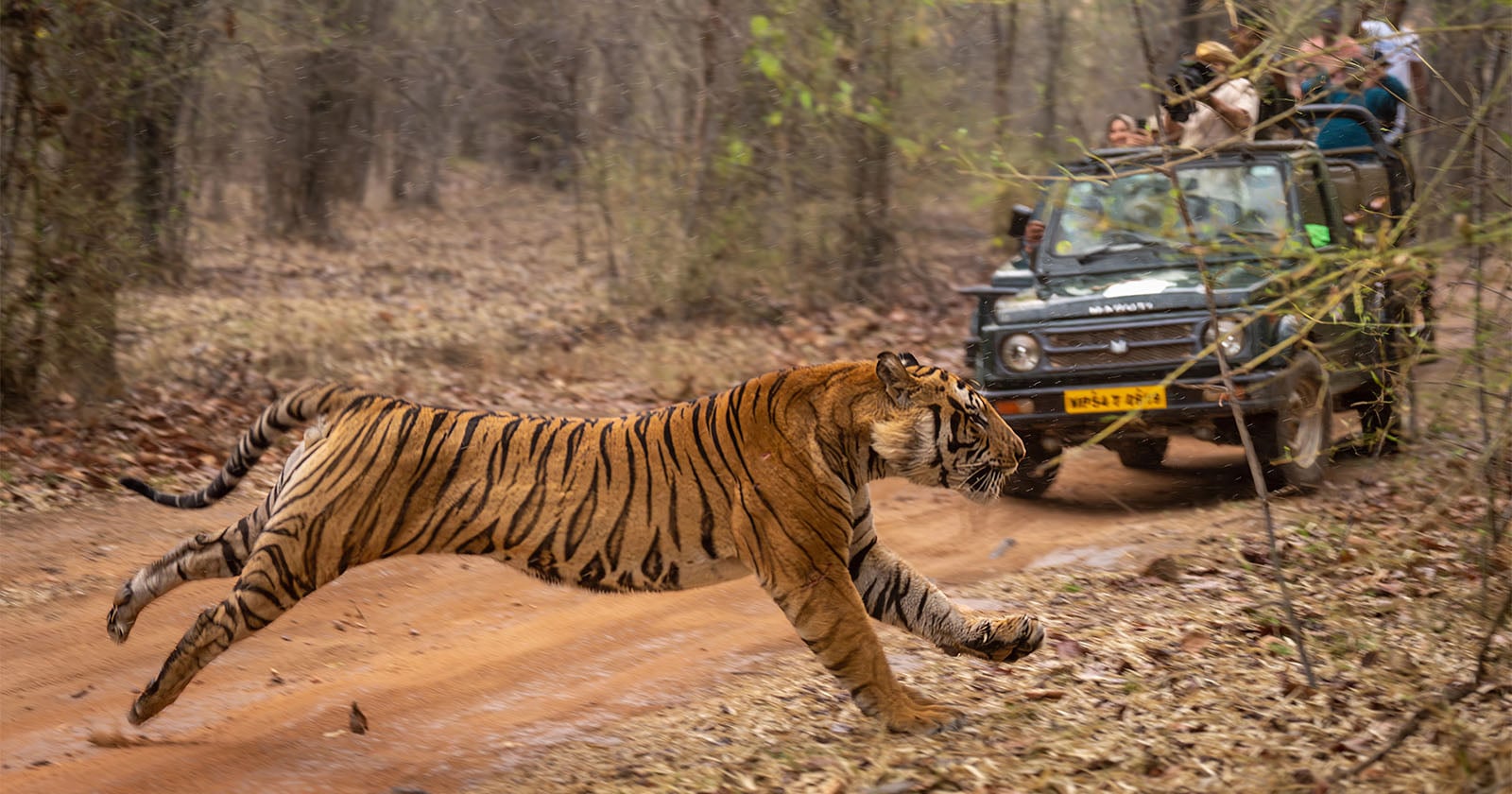
India’s tiger reserves are beginning to ban mobile phones during safaris as wildlife tourism faces growing concerns over overcrowding, unsafe tourist behavior, and the impact of social media-driven content creation on endangered animals and fragile ecosystems.
Wildlife Photography May Need a Reset
For years, the dream safari image has increasingly become less about the animal itself and more about proving you were there beside it. A tiger emerges from the forest, a tourist lifts a phone, and the moment is uploaded before the safari vehicle has even driven away. Across India’s tiger reserves, however, that behavior is now facing a major crackdown.
As reported by the BBC, following a 2025 ruling from India’s Supreme Court, mobile phones are being banned inside the core tourism zones of several tiger reserves, including some of the country’s best-known safari destinations. Visitors are now being asked to either store phones before entering reserves or keep them switched off and packed away during safaris.
The move follows years of mounting concerns over overcrowding, reckless tourist behavior, and increasing pressure on endangered wildlife habitats. For photographers, conservationists, and safari operators alike, the restrictions are also sparking a broader conversation about what wildlife tourism has become and whether the pursuit of content is beginning to overwhelm the experience itself.
When Wildlife Viewing Turns Into a Traffic Jam
The tipping point for many came earlier this year after footage from Rajasthan’s Ranthambore National Park went viral online. The video showed a tiger boxed in by multiple safari vehicles while tourists shouted, photographed, and filmed from only a short distance away. The animal appeared visibly stressed as it attempted to move back toward the forest through the crowd of jeeps.
These so-called “safari jams” have become increasingly common in India’s tiger reserves, fueled in part by instant messaging between guides and drivers who rapidly share tiger sightings in real time. Geotagged social media posts have only intensified the issue. Once a specific watering hole or tiger route becomes associated with viral images online, visitors and guides often converge on that location, hoping to recreate the shot.
The result is a safari experience that can sometimes feel more like a traffic bottleneck than a wildlife encounter.
The New Rules Aim to Protect Both Tigers and Tourists
The restrictions introduced under the Supreme Court ruling go beyond simply silencing phones. Mobile use inside core tiger tourism zones is now prohibited, with some reserves introducing secure phone storage systems before guests enter safari vehicles, while others require devices to remain switched off and inside bags throughout the experience.
The legislation also limits road access between dusk and dawn, restricts certain developments around tiger reserves, and places greater emphasis on sustainable tourism models tied to local communities and conservation efforts. Officials say the changes are not simply about reducing distractions, but also about improving safety for both wildlife and visitors.
Reports from reserves have described tourists leaning dangerously out of vehicles for photos, dropping phones near wildlife, and even stepping off safari vehicles to retrieve devices. In one incident described by guides, a child reportedly fell from a jeep while family members attempted to photograph a nearby tiger.
India is home to more than 3,600 wild Bengal tigers, representing roughly 75% of the global wild tiger population, and conservation efforts have helped the species rebound significantly over the last decade. But increased tiger numbers have also driven growing demand for safari tourism, placing new pressure on reserves and infrastructure.
Dedicated Cameras Are Still Allowed
Importantly for photographers, the restrictions are not aimed at photography itself. Dedicated cameras, DSLRs, and video equipment are still generally permitted within reserves, often subject to registration procedures. According to operators and conservation groups, the issue is less about photography and more about the culture surrounding constant connectivity and social media-driven behavior.
Part of that concern stems from how smartphones often encourage people to move physically closer to wildlife to capture selfies, short-form video clips, or dramatic close-up footage. Unlike wildlife photographers using long telephoto lenses that allow subjects to be photographed from a safer and more respectful distance, phone users frequently attempt to shrink that distance entirely, creating unnecessary stress for animals and increasing risks for both visitors and guides.
That distinction matters because wildlife photographers have long debated the balance between documenting animals and disturbing them. In India, the current conversation suggests the problem may no longer be professional photography, but the pressure created by selfies, livestreaming, viral content, and geotagged wildlife encounters.
Some safari guides argue that large telephoto setups can be just as intrusive as smartphones if photographers push too hard for close-up images. Others believe the deeper issue lies in expectation management and the growing belief that every safari must deliver dramatic, cinematic encounters.
Wildlife Tourism Is Facing Global Pressure
India is not alone in tightening wildlife tourism rules. Kenya recently introduced stricter behavioral standards for safari operators after footage showed tourists blocking the path of migrating wildebeest during the Great Migration. In Norway’s Svalbard region, new polar bear viewing regulations now require greater distances between wildlife cruises and bears.
Across Sri Lanka and other heavily visited safari destinations, operators have also called for stricter controls on overcrowding inside national parks. The trend reflects a broader shift in wildlife tourism, in which governments and conservation groups are increasingly questioning whether models built around guaranteed sightings and viral moments are sustainable in the long term.
Photographers May Need to Rethink What Makes a Great Safari
For many wildlife photographers, the conversation may ultimately shift from restrictions to perspective. Safari culture in recent years has often prioritized the singular trophy encounter: the tiger crossing the road, the predator staring directly into the lens, or the perfectly framed close-up ready for Instagram.
But many guides and conservation advocates argue that the best wildlife experiences are often quieter and less predictable. That could mean paying greater attention to ecosystems rather than just headline species, or valuing birdlife, landscapes, behavior, and atmosphere rather than simply chasing a single dramatic sighting.
Perhaps most importantly, it may require travelers to accept that the privilege of wildlife photography is not ownership of the moment, but respectful access to it in the first place.
Image credits: Header photo licensed via Depositphotos.com.