
Close Menu
Simply Invest Asia
  • Home
  • About us
  • Explore industries/sectors
    • Automobile
    • Aviation
    • Banking
    • Biotechnology
    • Chemical & Fertilizer
    • Entertainment and Media
    • Food Processing
    • Healthcare
    • Iron and Steel
    • Leather
    • Mining
    • Oil and Gas
    • Pharmaceutical
  • Explore by countries
    • China
    • Dubai / UAE
    • Hong Kong
    • India
    • Indonesia
    • Japan
    • Malaysia
  • Explore cities
    • Bangkok
    • Beijing
    • Chongqing
    • Delhi
    • Dubai
    • Guangzhou
    • Jakarta
    • Kuala Lumpur
  • Why Asia
Facebook X (Twitter) Instagram Threads
Trending:
  • Bank Of America Opens New Malaysia Office
  • Hard Rain SoloistEnsemble presents ‘Beijing to Belfast’ | The Journal of Music in Ireland
  • HONG KONG CHINA WOMEN’S XVs 26-26 KAZAKHSTAN
  • Wealth, Private Banking Contributes Larger Slice Of OCBC’s Profit In Q1 2026
  • Pure Biologics S.A. stock (PLPURE000013): Biotech firm eyes growth in dermatology and oncology marke
  • The Blogs: What the Abraham Accords Mean for India | Ankit Gawande
  • Hong Kong Customs Seizes 7 kg of Suspected Cannabis at Airport, Arrests 20-Year-Old Passenger from Bangkok
  • Wittchen S.A. stock (PLWTMTN00015): Polish luxury leather goods maker eyes US expansion
  • Dubai Creek boat fire unrelated to drone interception
  • The Pilot Shortage In 2026: Is It Still Real, And What Is Actually Being Done About It?
  • Chinese ambassador urges UK to stop anti-China political manipulation and emboldening anti-China elements
  • Indonesia Online Gambling Arrest – Journal-News.com
  • ‘Forfeiture of rights’: Hong Kong villagers slam Northern Metropolis evictions
  • MetMalaysia: Thunderstorms, heavy rain in KL, Putrajaya, eight states till 9pm
  • Belo Sun Mining stock (CA11776U1066): Begins trading on OTCQX in the US
  • Indonesia’s Jakarta Targets Invasive Suckerfish amid Ecological, Health Concerns
  • Japan’s recent policy changes to escalate tensions in East Asia: lawyer
  • Non-binary Indian migrant elected member of Scottish Parliament
Sunday, May 10
Facebook X (Twitter) Instagram
Simply Invest Asia
  • Home
  • About us
  • Explore industries/sectors
    • Automobile
    • Aviation
    • Banking
    • Biotechnology
    • Chemical & Fertilizer
    • Entertainment and Media
    • Food Processing
    • Healthcare
    • Iron and Steel
    • Leather
    • Mining
    • Oil and Gas
    • Pharmaceutical
  • Explore by countries
    • China
    • Dubai / UAE
    • Hong Kong
    • India
    • Indonesia
    • Japan
    • Malaysia
  • Explore cities
    • Bangkok
    • Beijing
    • Chongqing
    • Delhi
    • Dubai
    • Guangzhou
    • Jakarta
    • Kuala Lumpur
  • Why Asia
Simply Invest Asia
Home»Explore by countries»India»What is India’s first orbital data centre satellite?
India

What is India’s first orbital data centre satellite?

By IslaMay 10, 20265 Mins Read
Share
Facebook Twitter Pinterest Threads Bluesky Copy Link


The story so far:

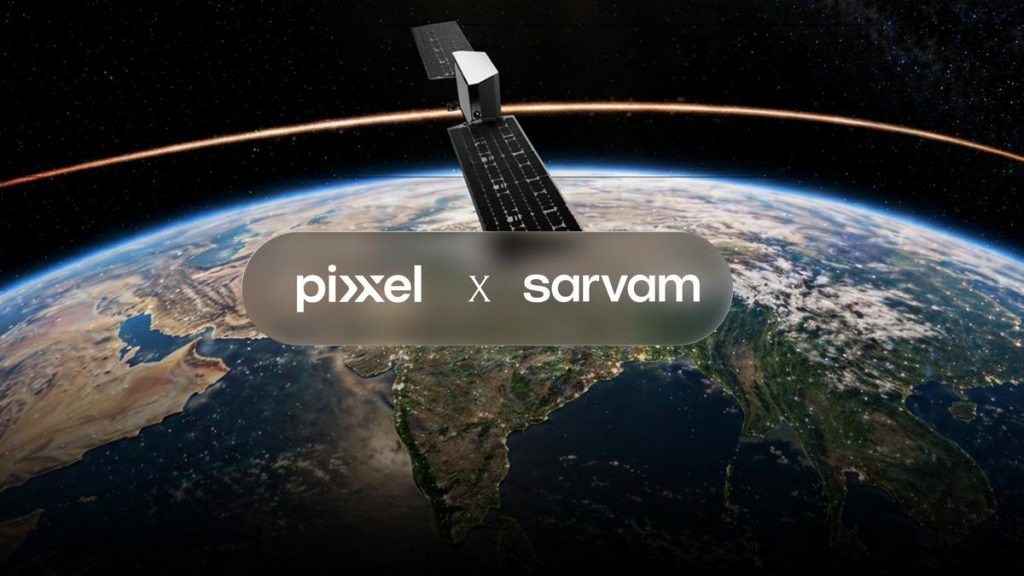
On May 4, Pixxel, a Bengaluru-based imaging satellite company, said that it would partner with the AI firm Sarvam to launch what is being described as India’s first ‘orbital data centre’ satellite, named Pathfinder. This is expected to be a 200 kg class satellite scheduled for orbit by the fourth quarter of 2026. It will carry datacentre-class GPUs (graphics processing units) alongside Pixxel’s hyperspectral imaging camera, the company’s bread-and-butter business.

What is an orbital data centre?

It is a constellation of satellites carrying the same kind of GPUs found in terrestrial data centres. It can train and run AI models in orbit rather than only relaying data to ground stations. Such a centre can do more demanding work than the low-power “edge” processors that conventional satellites use for tasks like signal compression. Edge computing on earth refers to the practice of running computation close to where data is generated rather than in a centralised cloud, and the same logic, applied in orbit, is what space-based compute promises to extend.

Pixxel’s Pathfinder is being built as a single-satellite demonstrator, designed to test whether ground-grade hardware can be made to function reliably in the harsh, hot environment of low Earth orbit. “It will start off as being one satellite, obviously, that we will try to launch before the end of this year,” Awais Ahmed, the company’s chief executive, told The Hindu.

Why are global firms suddenly interested?

Three factors have converged in the past two years, prompting large tech companies to strive towards making such centres real. Data centres are being constrained by limits on energy availability, land, water, and local regulation, all of which have been amplified by the demands of AI. In the right orbit, solar power is effectively continuous and offers free electricity, which proponents regard as the strongest argument for moving computation to space.

Earth observation satellites also generate detailed, heavy image files that are expensive to downlink; processing the data in orbit and beaming down only the conclusions has long been seen as a way to ease that bottleneck.

The third factor is competitive positioning. SpaceX CEO, Elon Musk said on X in 2025 that “simply scaling up Starlink V3 satellites, which have high-speed laser links, would work. SpaceX will be doing this.” He also argued that “Starship (the company’s most powerful rocket) could deliver 100GW/year to high Earth orbit within four to five years if we can solve the other parts of the equation.” Amazon founder Jeff Bezos’ Blue Origin, Microsoft’s Azure Space, and Lonestar Data Holdings have already begun pilot deployments. None of these efforts has yet produced a commercial-scale orbital data centre.

What are the challenges?

The GPU chips powered by electricity from solar panels become hot. Now space may be cold, and common sense may suggest it is a natural sink for the heat. However, space is also empty and its vacuum eliminates convection. This is the mechanism by which warm air on earth is normally carried away from terrestrial servers; in orbit, a hot GPU chip is effectively an oven unable to fan away its own waste energy, with no air to carry it off. The only solution to this is radiation, which requires that heat be pumped through ammonia-filled loops to deployable panels, where it can be radiated as infrared light into space. The history of crewed spaceflight is studded with reminders of how unforgiving this regime can be.

Radiation damage is the second problem and one that has shaped the design of every long-duration mission flown to date. ‘Bit flips’ — where bits and bytes of computers randomly change — and long-term semiconductor degradation are caused by cosmic rays, and radiation-hardened chips, which govern most space hardware, typically lag commercial GPUs by years. Power requires storage for eclipse periods, and maintenance is effectively impossible without robotic servicing, so redundancy must be designed in from the start.

What does the Pixxel–Sarvam partnership actually involve?

The Pathfinder satellite will be designed, built, launched, and operated by Pixxel. Sarvam, an Indian AI firm, will provide what it describes as the AI backbone, with full-stack language models being run on the satellite’s GPU layer for both training and inference. Pixxel’s hyperspectral camera will be carried on the same platform, giving the mission an immediate use case: imagery captured in orbit can be analysed in orbit, with only the conclusions transmitted to Earth. Mr. Ahmed declined to disclose costs, the number of GPUs, or the launch provider, saying the choice between ISRO and SpaceX would be determined by slot availability. However, the Pixxel team has several experts who have worked with the Indian Space Research Organisation and have experience in thermal management in space.

Can data crunching in space ever be cheaper than on ground?

Not yet, and not for some time, on the available evidence. Mr. Ahmed said that a single satellite carrying a given number of GPUs is more expensive than the same hardware on Earth. The argument for eventual parity is built on three assumptions: that constellations will be scaled to tens of thousands of satellites; that launch costs will be reduced sharply once SpaceX’s Starship is operational; and that the absence of cooling and grid-power expenses in orbit will eventually offset the higher capital outlay. Mr. Ahmed set the horizon at 5-10 years. “It would take about 100-500 satellites to replace a data centre in India and if someone were to pay for it, we could launch them even in 24 months,” he said. Independent assessments have been markedly more cautious than the timelines offered by Pixxel and its peers. Edge processing on satellites is judged viable in the near term by academic and agency reviews, but a wholesale replacement of terrestrial cloud is treated as a 10-to-30-year proposition.

Published – May 10, 2026 09:25 am IST


Source link

Related Posts

The Blogs: What the Abraham Accords Mean for India | Ankit Gawande

May 10, 2026

Non-binary Indian migrant elected member of Scottish Parliament

May 10, 2026

Hardik Pandya: India’s ‘Clutch God’ who disappears for Mumbai Indians

May 10, 2026
Add A Comment
Leave A Reply Cancel Reply

Top Posts

Abandoned malls, whispers of nuclear war and young foreigners detained. This is what’s REALLY going on in Dubai… and the chilling warning one taxi driver gave to the Mail’s IAN BIRRELL

April 11, 2026

Dubai food conglomerate IFFCO set to go into provisional liquidation – Financial Times

May 3, 2026

Asian Angle | Why Japan-China ties can benefit from promoting people-to-people exchanges

May 3, 2026
Don't Miss

Bank Of America Opens New Malaysia Office

By IslaMay 10, 2026

Editorial Staff 11 May 2026 The US-headquartered group…

Hard Rain SoloistEnsemble presents ‘Beijing to Belfast’ | The Journal of Music in Ireland

May 10, 2026

HONG KONG CHINA WOMEN’S XVs 26-26 KAZAKHSTAN

May 10, 2026

Wealth, Private Banking Contributes Larger Slice Of OCBC’s Profit In Q1 2026

May 10, 2026
SUBSCRIBE TO OUR NEWSLETTER

Get our latest downloads and information first. Complete the form below to subscribe to our weekly newsletter.


I consent to being contacted via telephone and/or email and I consent to my data being stored in accordance with European GDPR regulations and agree to the terms of use and privacy policy.

Stay In Touch
  • Facebook
  • YouTube
  • TikTok
  • WhatsApp
  • Twitter
  • Instagram
Top Trending

‘Forfeiture of rights’: Hong Kong villagers slam Northern Metropolis evictions

By IslaMay 10, 2026

MetMalaysia: Thunderstorms, heavy rain in KL, Putrajaya, eight states till 9pm

By IslaMay 10, 2026

Belo Sun Mining stock (CA11776U1066): Begins trading on OTCQX in the US

By IslaMay 10, 2026
Most Popular

India Makes Digital e-Arrival Card Mandatory 72 Hours Before Entry

May 8, 2026

Humanoid robots race past humans in Beijing half-marathon, showing rapid advances

April 19, 2026

First vehicles by rail movement by Etihad Rail.

May 4, 2026
Our Picks

Why Rama IV is becoming Bangkok’s next luxury district

April 28, 2026

Denza Z Convertible unveiled in Beijing, eyes Europe first with Goodwood global launch in July

April 24, 2026

HSBC Private Bank Cuts Exposure to India Stocks, Boosts Gold on Iran War Risks

April 15, 2026
SUBSCRIBE TO OUR NEWSLETTER

Get our latest downloads and information first. Complete the form below to subscribe to our weekly newsletter.


I consent to being contacted via telephone and/or email and I consent to my data being stored in accordance with European GDPR regulations and agree to the terms of use and privacy policy.

© 2026 Simply Invest Asia.
  • Get In Touch
  • Cookie Policy
  • Privacy policy
  • Terms & Conditions

Type above and press Enter to search. Press Esc to cancel.

SUBSCRIBE TO OUR NEWSLETTER

Get our latest downloads and information first.

Complete the form below to subscribe to our weekly newsletter.


I consent to being contacted via telephone and/or email and I consent to my data being stored in accordance with European GDPR regulations and agree to the terms of use and privacy policy.