
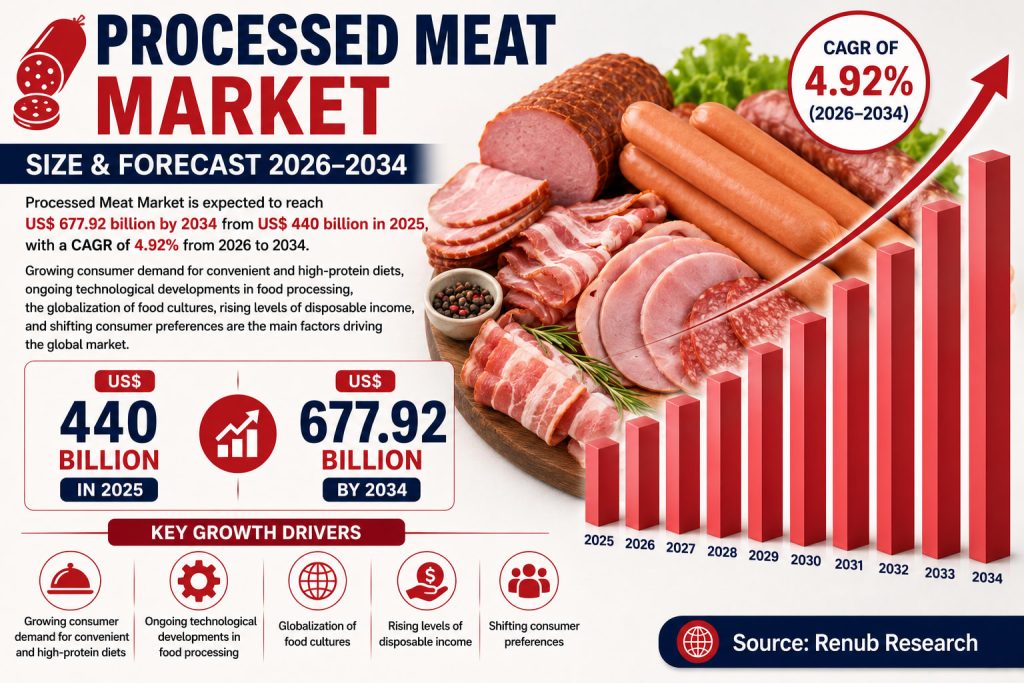
The global processed meat market is entering a period of sustained expansion as consumers increasingly seek convenient, protein-rich, and ready-to-eat food options that fit modern lifestyles. Rapid urbanization, changing dietary habits, rising disposable incomes, and advancements in food processing technologies are all contributing to the growing popularity of processed meat products worldwide.
According to Renub Research, the Processed Meat Market is projected to grow from US$ 440 billion in 2025 to US$ 677.92 billion by 2034, registering a compound annual growth rate (CAGR) of 4.92% from 2026 to 2034.
The market continues evolving beyond traditional offerings as manufacturers introduce healthier formulations, premium products, clean-label alternatives, and innovative packaging technologies. At the same time, the industry faces increasing pressure related to health concerns, sustainability expectations, and competition from plant-based protein alternatives.
From sausages and bacon to ready-to-cook frozen meals and deli meats, processed meat remains deeply integrated into foodservice operations, household consumption, and global fast-food culture.
Processed Meat Remains Central to Modern Food Consumption
Processed meat refers to meat products that have been transformed through techniques such as curing, smoking, salting, fermentation, canning, or preservation to improve flavor, convenience, and shelf life.
The industry includes a wide variety of products, including:
- Sausages
- Bacon
- Hot dogs
- Ham
- Salami
- Deli meats
- Frozen meat products
- Ready-to-eat meals
- Ready-to-cook meat items
These products are typically derived from poultry, beef, pork, and other meat sources.
The popularity of processed meat is strongly linked to changing consumer lifestyles. Modern consumers increasingly prioritize convenience, quick meal preparation, portability, and consistent flavor experiences. Processed meat products offer practical solutions for busy households, working professionals, and foodservice operators.
The expansion of supermarkets, hypermarkets, convenience stores, and online grocery platforms has further improved accessibility and consumption worldwide.
Convenience Foods Are Driving Global Demand
One of the strongest growth drivers in the processed meat market is the rising demand for convenience-oriented food products.
Urbanization and the growth of dual-income households have significantly reduced the amount of time consumers spend preparing meals at home. As a result, demand for ready-to-eat and ready-to-cook foods continues to rise globally.
Processed meat products offer several advantages:
- Fast preparation time
- Long shelf life
- Easy storage
- Consistent taste
- Protein-rich nutrition
- Compatibility with fast-food meals
Products such as sausages, nuggets, deli slices, frozen meatballs, and hot dogs have become staples in both household kitchens and quick-service restaurants.
The expansion of fast-food chains, cloud kitchens, and food delivery services further supports processed meat demand because these products are commonly used in burgers, pizzas, sandwiches, wraps, and snack items.
As consumer lifestyles continue emphasizing convenience and speed, processed meat products are expected to maintain strong demand across multiple markets.
Rising Global Protein Consumption Supports Market Growth
The increasing global demand for protein is another major factor driving the processed meat market.
Population growth, rising incomes, and changing dietary habits—particularly in emerging economies—are increasing overall meat consumption. Consumers in Asia, Latin America, and parts of Africa are steadily shifting toward protein-rich diets as living standards improve.
Processed meat offers several advantages in this context:
- Affordability compared with fresh premium cuts
- Longer shelf stability
- Easier transportation and distribution
- Reduced food waste
- Broad product variety
Urban migration is also accelerating this trend because city populations often rely more heavily on packaged and ready-to-cook food products.
Governments and private companies are increasingly investing in food processing infrastructure and cold-chain systems, further strengthening market growth opportunities.
Technological Innovation Is Transforming the Industry
Technological advancements continue reshaping the global processed meat industry.
Manufacturers are investing heavily in improved processing techniques, automation systems, cold-chain logistics, and advanced packaging technologies designed to enhance safety, efficiency, and shelf life.
Key innovations include:
- Vacuum sealing
- Modified atmosphere packaging (MAP)
- High-pressure processing
- Digital traceability systems
- Automated production systems
- Smart cold-chain monitoring
These technologies improve product quality while helping manufacturers comply with increasingly strict food safety regulations.
At the same time, innovation is expanding into healthier and premium product categories. Companies are increasingly introducing:
- Low-sodium processed meats
- Reduced-fat products
- Organic meat options
- Nitrate-free products
- Clean-label formulations
Branding, attractive packaging, and premium positioning are also helping companies differentiate products in a highly competitive market.
As consumer expectations continue evolving, technological innovation will remain essential for long-term market competitiveness.
Poultry-Based Processed Meat Products Are Expanding Rapidly
Among meat categories, poultry-based processed products continue gaining significant momentum globally.
Chicken-based products are especially popular because they are:
- Affordable
- Widely accepted across cultures
- Perceived as healthier than red meat
- Versatile across cuisines
Products such as chicken nuggets, sausages, marinated chicken cuts, and frozen chicken snacks are experiencing strong demand across both developed and emerging markets.
In countries such as India and parts of the Middle East, poultry dominates processed meat consumption due to cultural and dietary preferences.
The poultry segment is expected to remain one of the strongest contributors to future industry growth.
Frozen and Chilled Processed Meat Segments Continue Growing
Frozen and chilled formats remain highly important within the processed meat market because they offer convenience, extended shelf life, and easier transportation.
Frozen Processed Meat
Frozen products are widely used in retail, foodservice, and institutional catering because they maintain quality over long storage periods while reducing food waste.
Consumers increasingly prefer frozen ready-to-cook meals and snack products that require minimal preparation. Frozen processed meat is also highly suitable for expanding international trade and export markets.
Chilled Processed Meat
Chilled processed meat products continue gaining popularity due to perceptions of freshness and superior taste quality. Deli meats, refrigerated sausages, and premium cold cuts remain especially popular in developed markets.
Manufacturers continue investing in packaging technologies that improve chilled product stability and shelf life.
Healthier and Clean-Label Products Are Becoming Essential
Health concerns remain one of the most significant issues affecting the processed meat industry.
Consumers increasingly associate processed meat with:
- High sodium levels
- Saturated fats
- Preservatives such as nitrates and nitrites
- Cardiovascular risks
- Obesity concerns
Health organizations and regulators across many countries are introducing stricter labeling requirements and additive regulations.
As a result, manufacturers are increasingly reformulating products to include:
- Lower sodium content
- Reduced preservatives
- Leaner protein profiles
- Natural ingredients
- Organic certifications
“Clean label” processed meat products are becoming particularly important among health-conscious consumers seeking transparency and minimal processing.
Balancing convenience, taste, affordability, and health considerations remains one of the industry’s biggest long-term challenges.
Competition from Plant-Based Alternatives Is Intensifying
The rapid growth of plant-based protein products is creating major competitive pressure for the processed meat industry.
Consumers—particularly younger demographics in developed markets—are increasingly exploring:
- Flexitarian diets
- Vegetarian lifestyles
- Vegan alternatives
- Sustainable protein sources
Plant-based meat brands position themselves as healthier and more environmentally friendly alternatives to traditional processed meats.
Large food companies and startups alike are investing heavily in alternative proteins, increasing competition for retail shelf space and consumer attention.
To remain competitive, traditional processed meat companies are diversifying portfolios, improving sustainability practices, and accelerating innovation in premium and healthier product segments.
The United States Market Remains Highly Mature and Innovative
The United States processed meat market remains one of the largest and most mature globally.
Products such as bacon, hot dogs, deli meats, sausages, and frozen ready-to-eat items are deeply embedded in American eating habits. Demand is supported by busy lifestyles, fast-food culture, and strong household consumption patterns.
The U.S. market is highly competitive and innovation-driven, with manufacturers introducing:
- Premium gourmet meats
- Healthier formulations
- Reduced-sodium products
- Organic processed meat options
In June 2025, Tyson Foods introduced new Wright Brand Premium Sausage Links in multiple flavor varieties including Bacon Cheddar & Jalapeño and Applewood.
Such launches reflect the industry’s emphasis on flavor innovation and premium product positioning.
Germany Maintains Strong Traditional Demand
Germany remains one of Europe’s most important processed meat markets due to deeply rooted meat consumption traditions.
Products such as Bratwurst, Frankfurters, salami, and cold cuts remain central to German cuisine and food culture. Consumers place strong emphasis on quality, food safety, and regional specialties.
At the same time, growing health and sustainability awareness is increasing demand for:
- Leaner meat products
- Organic processed meat
- Reduced-additive formulations
Competition from plant-based alternatives is also intensifying in the German market, encouraging manufacturers to innovate while preserving traditional product appeal.
India’s Processed Meat Industry Is Expanding Rapidly
India’s processed meat market is still emerging but is growing rapidly due to urbanization, rising incomes, and changing dietary habits.
Demand is strongest in metropolitan and Tier-2 cities where consumers increasingly seek convenient and protein-rich food options. Poultry-based products dominate the market because of affordability and widespread cultural acceptance.
Frozen kebabs, sausages, marinated chicken products, and ready-to-cook items are becoming increasingly popular through supermarkets and online grocery platforms.
Improvements in cold-chain infrastructure and food processing technologies are helping expand organized retail and improve product quality standards.
Saudi Arabia’s Market Reflects Convenience and Halal Demand
Saudi Arabia’s processed meat market is expanding steadily due to urban lifestyles, rising disposable incomes, and increasing demand for convenience foods.
Halal certification remains essential for all meat products and strongly influences consumer trust and purchasing decisions.
Products such as sausages, deli meats, and frozen meat items are increasingly popular among younger consumers and urban households. The growth of modern retail chains and foodservice outlets is further supporting demand.
The Kingdom remains one of the Gulf region’s largest processed meat consumers, with demand expected to continue growing alongside retail and hospitality sector expansion.
Recent Industry Developments Highlight Ongoing Innovation
The processed meat industry continues witnessing active product development and expansion initiatives.
In September 2025, Dickey’s Barbecue Pit announced the launch of Rancher’s Premium Smokehouse Sausage products in select Kroger stores across Texas.
In May 2025, Amylu Foods introduced Organic Chicken Sausages as part of its expanding natural and organic product portfolio.
These developments illustrate how companies are responding to evolving consumer demand for premium, organic, and flavor-focused processed meat products.
Final Thoughts
The global processed meat market continues evolving as convenience, protein demand, urbanization, and food innovation reshape consumer eating habits worldwide.
While health concerns, sustainability pressures, and plant-based competition present ongoing challenges, processed meat products remain deeply integrated into modern food systems due to their convenience, affordability, and versatility.
According to Renub Research, the market’s projected growth from US$ 440 billion in 2025 to US$ 677.92 billion by 2034 highlights the industry’s long-term resilience and adaptability.