
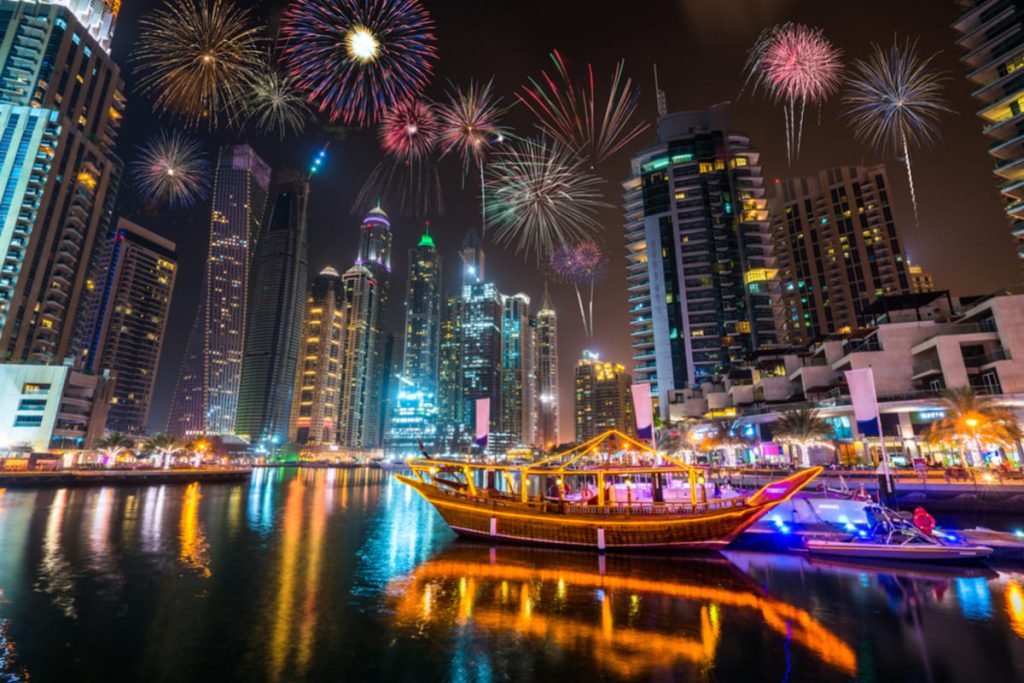
Cities across the country have been adorned with festive installations, illuminated greetings, and colorful lighting displays along major roads and key areas
The UAE is embracing the festive atmosphere this Eid Al Adha, with streets, squares, and bridges illuminated by decorative lights and colorful displays, while markets and shopping centers have witnessed strong activity as families prepare for the occasion.
Cities across the country have been adorned with festive installations, illuminated greetings, and colorful lighting displays along major roads and key areas, adding to the celebratory mood. At the same time, shopping malls and local markets have seen a surge in visitors purchasing Eid essentials, supported by promotional offers and seasonal discounts that have boosted commercial activity across the retail sector.
UAE sees Eid Al Adha 2026 gifting boom
The Eid Al Adha momentum this year has extended to e-commerce platforms and digital stores, which recorded increased demand amid growing consumer preference for online shopping, driven by convenience, diverse options and rapid delivery services.
Shopping centers have also emerged as key family entertainment destinations through accompanying events and activities, attracting visitors daily and adding vibrancy to the Eid celebrations nationwide.
Eid Al Adha is reinforcing its position as one of the strongest seasonal moments in the UAE’s consumer calendar, and the early signals this year are clear. According to Udora, pre-holiday demand was already running roughly 5 percent above the usual baseline, almost a week before the celebration, and the UAE online gifting segment is on track to grow by close to 40 percent during Eid Al Adha 2026.
Set against a broader market that is expanding at a CAGR of around 15.9 percent through 2030, the momentum also reflects rising digital adoption, the UAE’s broader strategy to accelerate SME growth and technology-based entrepreneurship as part of its non-oil economic diversification agenda.
The occasion reflects values of loyalty and belonging through the festive scenes witnessed across the country and the public’s eagerness to share the joy of Eid in a safe and exceptional atmosphere that embodies the UAE’s social cohesion and cultural diversity.
Read: UAE President, VPs congratulate heads of Arab, Islamic states on Eid al-Adha
UAE President performs Eid Al Adha prayers at Sheikh Zayed Grand Mosque
On Wednesday morning, UAE President His Highness Sheikh Mohamed bin Zayed Al Nahyan performed Eid Al Adha prayers at Sheikh Zayed Grand Mosque in Abu Dhabi.
In the Eid sermon, titled “Our Eid is sincerity and sacrifice,” Dr. Omar Habtoor Al Darei, Chairman of the General Authority of Islamic Affairs, Endowments and Zakat, highlighted the value of honesty and its impact on individuals and society.
He said honesty is the shortest path to trust and among its most enduring foundations, noting that trust builds strength through which societies prosper and civilizations are built. He added that the UAE’s leadership demonstrated sincerity of purpose and unity of resolve in founding the nation on honesty from the very beginning, helping establish a strong and stable country.
The preacher said honesty reflects loyalty to one’s homeland and sincerity in serving it, through which nations thrive and societies remain strong, while truthful people stand as guardians of their countries through their loyalty and actions.
He added that honesty is reflected in safeguarding the nation’s interests, defending it and standing firmly against those who seek to undermine it. He said honesty is also embodied in parents raising their children well, teachers remaining dedicated to their mission, employees carrying out their responsibilities with integrity, and every individual striving to contribute to the country’s continued progress.
Following the prayer, His Highness Sheikh Mohamed bin Zayed Al Nahyan exchanged Eid greetings with worshippers. His Highness and the Sheikhs then recited Al Fatiha in memory of the late Sheikh Zayed bin Sultan Al Nahyan.