
- Middle East bill could reach $58bn
- Some sites already back online
- Others will take several years
The latest strikes on UAE energy infrastructure underline how far the Gulf remains from recovery, with the cost of the war on the oil and gas sector still coming into focus.
The damage across the GCC is expected to run into tens of billions of dollars, according to an AGBI review of analysts’ projections. As set out in the map below, the estimated repair timelines range from weeks to several years.
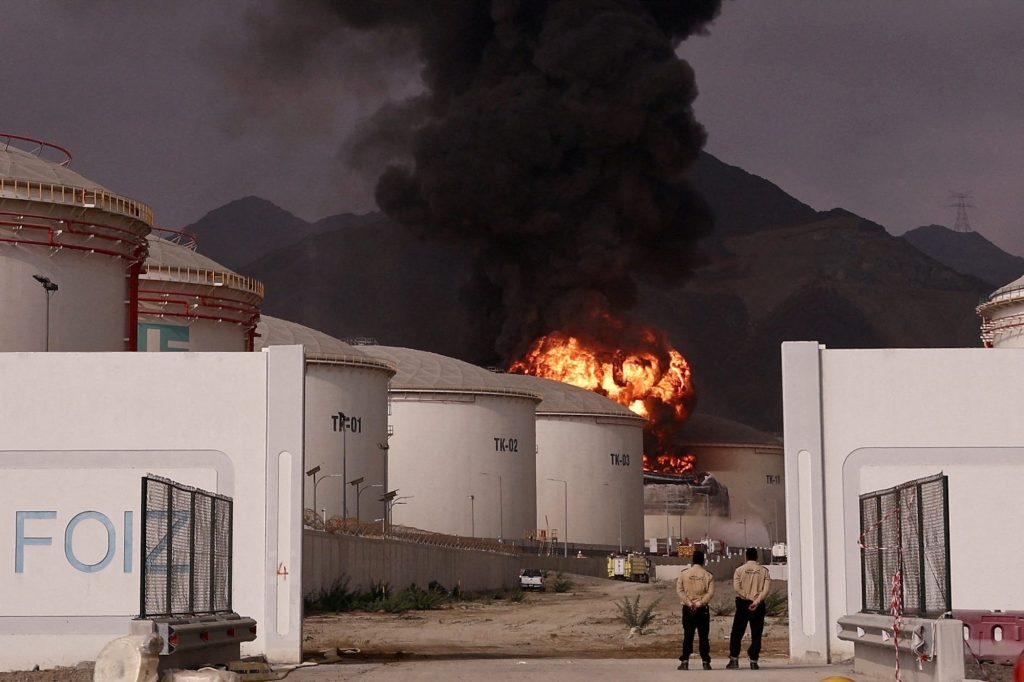
On Monday the authorities in Fujairah said a drone strike caused a large fire in the emirate’s oil industry zone. Three people were injured.
Fujairah had already suffered four strikes before Iran and the US agreed a ceasefire on April 8, according to tracking data from Welligence. The scale of the damage caused by those attacks and Monday’s strike is not yet clear.
The International Energy Agency (IEA) estimates that 84 energy facilities across Iran’s Gulf neighbours were damaged in the first wave of attacks in March and April, including 34 that suffered “serious or very serious” damage.
The disruption spans major refineries as well as small but critical infrastructure such as pipeline pump stations, storage terminals and individual production wells.
It could take about two years for the region to return to pre-conflict production levels, though the timelines will vary from country to country, the IEA said in April.
Qatar’s Ras Laffan liquefied natural gas export complex (marked in red above) was among the worst hit. Direct strikes forced QatarEnergy to declare force majeure on LNG deliveries. Damage to LNG “trains” – the processing units that convert gas into liquid form – is expected to take three to five years to repair.
“In terms of what is proving most difficult to repair, the challenge is primarily driven by equipment complexity, availability and contractor accessibility,” said Karan Satwani, senior analyst at Rystad Energy.
“Damage to large-scale gas processing and LNG facilities is the hardest to restore, as sourcing critical equipment drives the overall timeline due to long lead times and reliance on specialised original equipment manufacturers.”
Repairs to other kinds of facilities can be far quicker. Refineries throughout the region were targeted by Iran, including Ruwais in the UAE. This is expected to recover over a period of months, according to Rystad.
Some sites are already back up and running. In Oman, drone strikes forced temporary shutdowns at the ports of Salalah and Sohar, disrupting cargo flows. Both facilities have since resumed operations or are resuming in phases.
The broader picture remains challenging, however, even without the prospect of further attacks.
Further reading:
Further reading:
Rystad estimates that the cost of repairing war-damaged energy infrastructure across the Middle East – including Iran – could reach $58 billion. Oil and gas facilities account for the majority of that total.
Repair works are also competing directly with new developments for engineering capacity, equipment and labour, creating knock-on effects across the global energy system.
“Operators will need to reprioritise and, in most cases, restoring revenue-generating assets that are currently offline will take precedence over advancing greenfield developments,” Satwani said.
“This dynamic is already visible in Qatar, where the North Field expansion programme and the Ras Laffan LNG repair programme are drawing on overlapping pools of engineering teams, fabrication yards and site crews.”
Operational problems below the surface
Analysts have also warned that even where damage to a site appears limited, prolonged shutdowns can lead to deeper operational problems.
“A plant that is idle is not a plant that is ‘preserved’,” said Nick Holland, head of engineering for India, the Middle East and Africa at advisory group Marsh.
“Without deliberate controls, it is likely deteriorating and must be managed to prevent uncontrolled deterioration.”
Some operators might also be dealing with hidden damage caused by emergency shutdowns, he said.
“It is possible that some operators experienced unforeseen damages associated with the quick reaction of shutting down process plant equipment, especially on older facilities that lack best-in-class emergency shutdown and depressurisation systems.”
Goldman Sachs has suggested that Gulf oil production is largely likely to recover within a few months once the Strait of Hormuz reopens fully, but has warned that longer shut-ins could lead to more lasting supply damage.
“Prolonged well shut-ins also risk reducing flow rates, particularly in lower-pressure reservoirs, requiring workovers before output can be fully restored,” the bank said.