
The food packaging industry is undergoing a significant transformation, shaped by evolving consumer expectations and sustainability imperatives. Key trends are emerging that will reshape how food products are packaged and perceived in the marketplace.
Innova Market Insights’ Top Packaging Trends for 2026 highlighted “Substantiated Sustainability” as its leading trend, stressing the need for verified environmental claims amid stricter regulations like the EU Packaging and Packaging Waste Regulation. The market researcher has found that consumers are willing to pay more for sustainable packaging but expect scientific proof to back up claims, reducing greenwashing.
The second trend, “Digital-Enhanced Designs,” emphasizes the role of AI, augmented reality (AR), and QR codes in packaging. These technologies enhance consumer engagement and product traceability, while digital product passports provide lifecycle data.
“Health-Forward Convenience,” the third trend, reflects the demand for smaller, portable packaging that supports healthier lifestyles. The fourth trend, “Packaged for You,” focuses on personalized packaging to engage consumers, while the fifth, “Sensory Unboxing,” highlights the increasing demand for unique e-commerce packaging experiences.
In this report, we explore these trends, drawing insights from packaging leaders Mondi and Coveris, as the industry prepares for Interpack 2026, which starts tomorrow (May 7–13) in Düsseldorf, Germany.
Interpack, one of the most influential global trade fairs for the packaging industry, will showcase the latest innovations in food packaging. Attendees will see firsthand how the packaging industry is adapting to the demands for recyclability, functionality, and consumer communication.
Sustainability and transparency
Sustainability is a central theme shaping the food packaging industry in 2026. As consumers become more environmentally conscious, they increasingly expect brands to offer eco-friendly packaging options. This includes materials that are recyclable, responsibly sourced, and capable of reducing food waste.
Katja Killian, director for Flexibles business development at Coveris, says: “Consumers increasingly expect packaging to be environmentally responsible, which is accelerating the shift toward fully recyclable solutions, including monomaterial and paper-based formats.”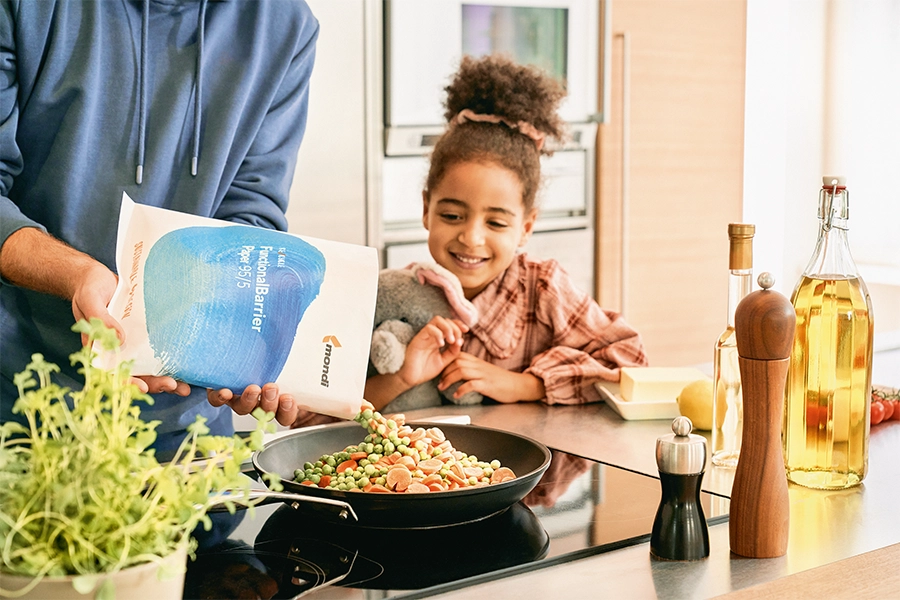 Mondi’s Re/cycle FunctionalBarrier Paper pouch, highlights the shift toward paperization in recyclable packaging.
This trend aligns with environmental goals and the EU’s regulatory pressures aimed at reducing waste, positioning sustainability as a critical driver of change.
Mondi, a leader in corrugated and flexible packaging, has focused on reducing plastic use while improving sustainability outcomes. “Preventing food waste is a key focus area, as it delivers both environmental and economic benefits,” says Jan Blankiewicz, head of innovation for Corrugated Solutions at Mondi.
The company’s Re/cycle RetortPouch, for example, replaces multilayer plastic packaging with recyclable monomaterial pouches, demonstrating a commitment to reducing plastic use and improving food safety.
Convenience and functionality
Alongside sustainability, convenience remains a key factor influencing food packaging choices. Consumers increasingly seek ready-to-eat, fresh, and easy-to-prepare foods, which are becoming more popular among busy households.
This shift is driving packaging designs that prioritize portability, portion control, and easy storage.
Coveris has responded to this growing demand with innovations like its Freshlife perforation technology, which optimizes packaging atmospheres to extend the shelf life of fresh produce.
“We develop flexible film packaging solutions tailored to product needs,” says Killian. This technology helps maintain freshness and quality while offering convenience to consumers.
Mondi has also developed packaging solutions for smaller portions, such as the PickUp and Coral trays, designed for fresh fruits and vegetables. These products combine functionality with retail efficiency, reducing material use, while maintaining protection and appealing to environmentally-conscious consumers.
Such solutions reflect the broader trend toward portion-controlled packaging that meets the dual needs of sustainability and consumer convenience.
Clear communication and brand differentiation
Today’s food packaging must do more than simply contain and protect — it must communicate important product information to consumers. The demand for transparency is growing, as consumers seek clear, credible information about the environmental impact and sustainability of the products they purchase.
Mondi recognizes the growing importance of packaging as a communication tool. “Secondary packaging is increasingly used for brand communication, offering a range of printing options, including flexo, offset, and digital for our solutions,” says Blankiewicz.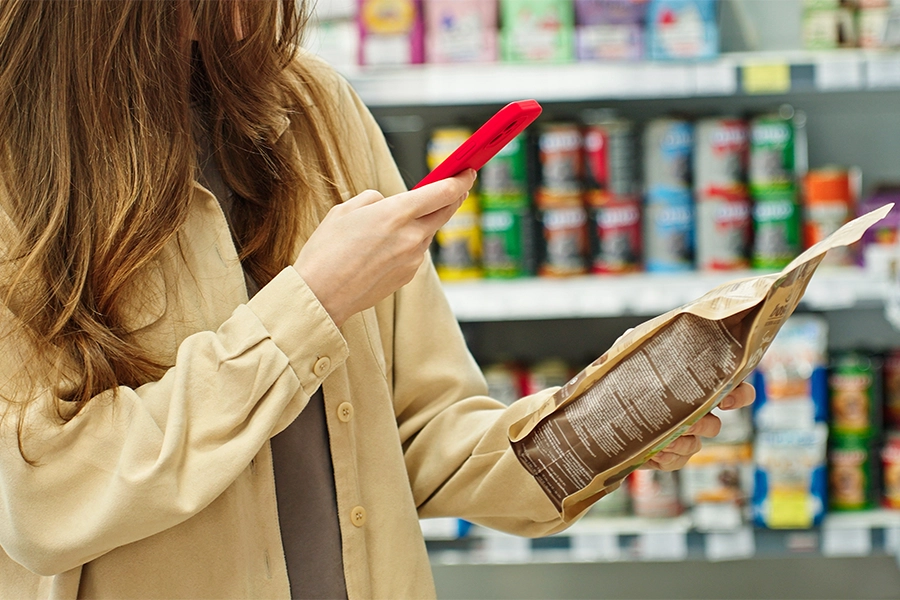 QR codes and AR can enhance consumer engagement and product traceability.
These visual strategies enhance brand visibility and serve as platforms for conveying sustainability claims, further aligning with consumer preferences for transparent packaging solutions.
Coveris also acknowledges the importance of clear communication. Killian highlights that “there is an increasing expectation for clear, informative communication that helps consumers understand both the environmental impact and value of packaging.”
As regulatory scrutiny of sustainability claims intensifies, effective communication through packaging will become even more essential.
The role of digital innovation
The rise of digital technologies is influencing not only the way products are packaged, but also how brands engage with consumers.
Digital printing technologies, for example, allow for dynamic and personalized packaging solutions, offering brands a way to interact more directly with consumers. Furthermore, technologies like QR codes and AR are being integrated into packaging to provide consumers with more information about the product, including its sustainability credentials and sourcing.
Mondi has been incorporating digital technologies into its packaging solutions to help brands provide consumers with relevant product information. “Digital capabilities help in boosting brand visibility and consumer interaction with the packaging,” Blankiewicz explains.
These technologies not only allow brands to stand out on shelves but also respond to consumer demands for greater connectivity with the products they purchase.
Flexibility in materials and designs
Another key trend in food packaging is the growing use of flexible materials that combine sustainability with performance. Companies like Mondi and Coveris are exploring monomaterial and hybrid solutions that balance recyclability with product protection.
For example, Coveris has developed MonoFlexBE, a recyclable, high-barrier monomaterial that offers “excellent protection” for food products, while maintaining a premium finish.
“This development combines enhanced product protection with a premium metallic finish, supporting shelf impact and brand differentiation without compromising recyclability,” says Killian.
Similarly, Mondi’s Re/cycle RetortPouch is a monomaterial pouch designed to replace multilayer plastic packaging, offering a solution that is recyclable and durable.
Innovations like these demonstrate how flexible materials are becoming central to packaging strategies, allowing brands to meet consumer expectations and sustainability goals.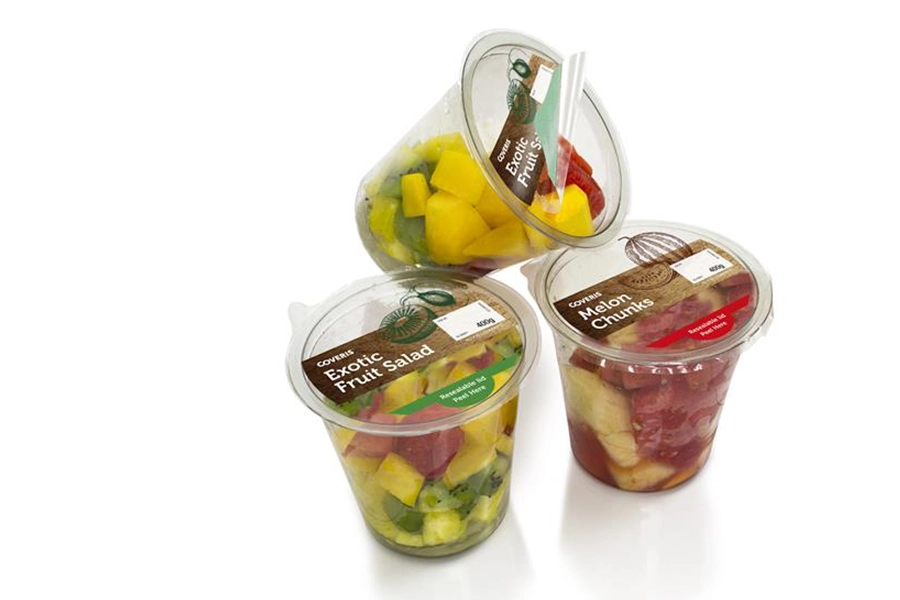 Coveris’ Freshlife technology extends shelf life, while meeting consumer demand for convenience.
Packaging’s role in food sustainability
As the demand for sustainable packaging continues to grow, the food packaging industry must balance environmental concerns with product protection and consumer convenience. Sustainable packaging is no longer a niche demand but a mainstream expectation, with consumers and brands alike seeking solutions that align with environmental and economic goals.
Mondi’s approach to packaging development focuses on understanding the product, supply chain, and consumer needs.
“Our success is in building strong partnerships,” says Blankiewicz, emphasizing the importance of collaboration in developing sustainable packaging solutions that are functional and environmentally responsible.
Coveris is similarly focused on future-proofing its packaging solutions. By simplifying structures and eliminating unnecessary materials, the company is positioning itself as a leader in sustainable packaging.
“Brands need packaging that does more than merely comply — it must perform, protect, and communicate,” says Killian. As regulatory pressures increase and consumer expectations shift, Coveris is helping food brands prepare for the future of packaging.
The future of food packaging
The future of food packaging is inextricably linked to sustainability, consumer convenience, and digital innovation.
As packaging manufacturers like Mondi and Coveris continue to innovate, they are setting the stage for a packaging revolution that addresses the challenges of food waste, environmental impact, and consumer expectations.
Companies that embrace these trends will be well-positioned to lead in 2026 and beyond, creating packaging solutions that are functional and aligned with modern consumer values.