
KUALA LUMPUR: Malaysia is emerging as a strong and tightly connected cybersecurity ecosystem with high-skilled talent and creative problem-solving capabilities amid rising global cyber threats, according to Russian cybersecurity firm Positive Technologies.
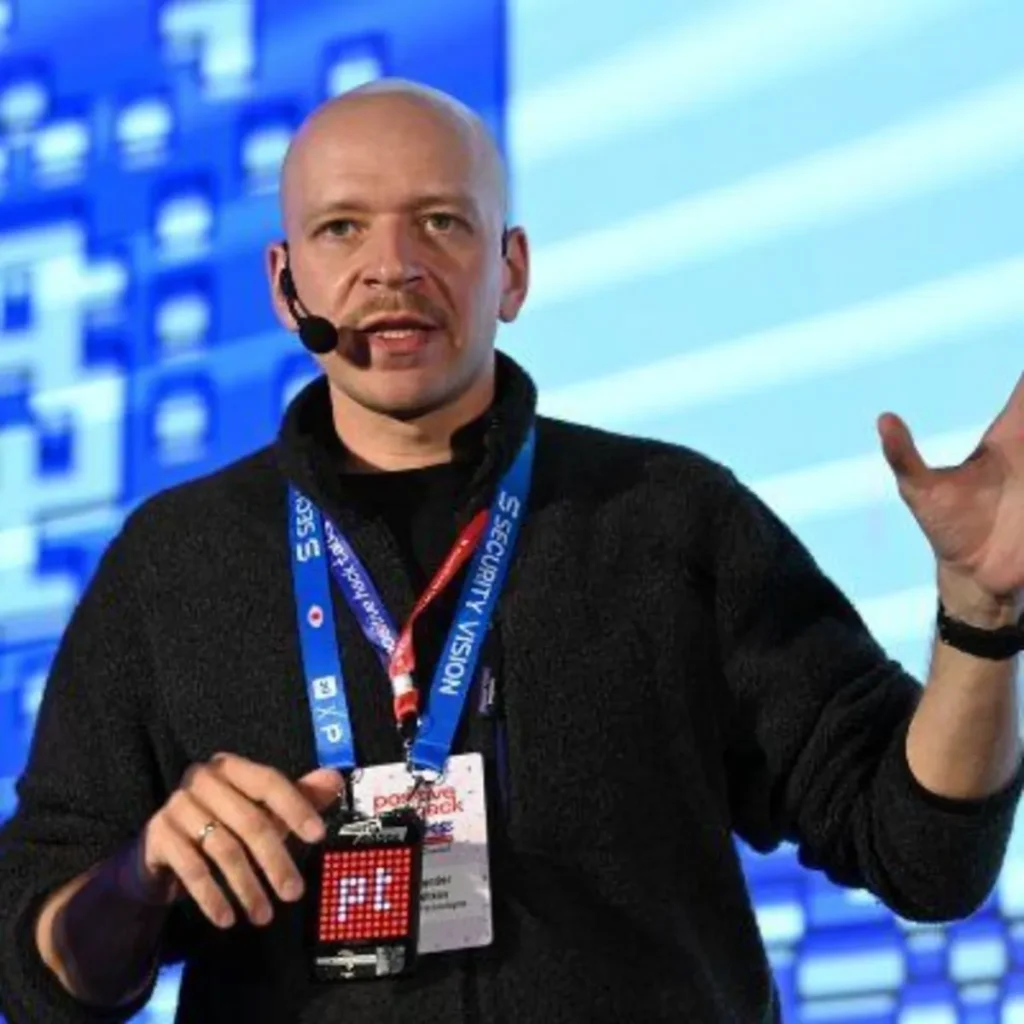
Speaking to SunBiz on the sidelines of its flagship Positive Hack Talks (PHTalks) here, the firm’s Community Bro Alex Moshkov said Malaysia’s cybersecurity community stands out for its strength and cohesion.
“From the community perspective, Malaysia is really, really strong. You have very strong professionals here with high skills. And the community is very, very tight. They are friendly, they know each other, they are bonded together. So I wouldn’t say it’s anything the same as I met in any other countries,” he added.
Moshkov said cybersecurity is increasingly shaped by global developments, where threats evolve rapidly and require collaboration across borders, with knowledge-sharing playing a key role in keeping pace with emerging risks.
The PHTalks series is being scaled progressively across Asia, in line with growing demand for practical, community-driven cybersecurity engagement, he said.
“We have already hosted events in Indonesia, Vietnam and India, and we are continuing to expand across Southeast Asia. China is likely on our roadmap next year, and Thailand could happen as early as this year. We usually plan our events just two to three months ahead,” Moshkov said..
According to Positive Technologies, while Malaysia may not have the same level of funding as more developed markets, it possesses a distinct advantage in its approach to problem-solving, particularly through the way its cybersecurity professionals think and operate.
“They may be what they lack in the funding, but have their advantages in unorthodox thinking. It motivates them to look for alternative solutions that maybe are not on the table for people who have enough money,” a company representative said.
The representative added that working within constraints often drives professionals to explore different perspectives and approaches to enable them to develop alternative solutions and adapt more effectively to evolving cybersecurity challenges.
Such qualities create opportunities for deeper collaboration, particularly through platforms such as Positive Hack Talks, where experts from different backgrounds are able to exchange ideas and learn from one another.
“It brings us the opportunity to create this community and share the experience and then connect experts with different kinds of knowledge and different angles, different views at different things,” the representative said.
Positive Technologies said fostering such collaboration is critical, as cybersecurity is a shared global challenge that requires contributions from multiple countries and cannot be addressed in isolation.
“Different countries bring distinct strengths, perspectives and approaches to solving cybersecurity challenges, making cross-border collaboration essential in developing more effective and resilient solutions.
“By connecting experts from various regions, the exchange of knowledge, experiences and methodologies can help accelerate problem-solving and improve the collective ability to respond to emerging threats.”
Such collaboration, the company said, is particularly important as cyber risks become more complex and interconnected, requiring not only technical expertise but also diverse thinking and coordinated efforts across the global cybersecurity community.
According to the firm, it currently has no significant commercial footprint in Malaysia, and stated that its presence here is not driven by immediate business interests.
“We don’t really have a footprint here because we don’t do much business from that perspective in Malaysia in particular, this is not the goal of the current event, really. Here it’s basically about community,” the representative said.
The firm said its focus is on building relationships with local cybersecurity professionals, researchers and students, with the aim of strengthening connections and supporting knowledge development over time.
Positive Technologies said its long-term goal is to build a global network of cybersecurity experts who can collaborate across borders, share knowledge and develop solutions collectively.
“We would really like to build a community that communicates all around the world where people will be able to share their experiences, share their problems, find some ways to solve their problems or share their ideas and develop them,” the representative said.
The PHTalks is designed as a free, in-person, community-driven meetup, where participants share hands-on experience on what they have “built, broken and learned” in cybersecurity, with an emphasis on practical demonstrations over theoretical discussions.
The Kuala Lumpur edition featured a lineup of international and regional speakers covering topics such as Android runtime application self-protection analysis, Windows privilege escalation vulnerabilities, kernel-level exploitation techniques, and artificial intelligence-assisted vulnerability research.
Among the key sessions were presentations on advanced attack vectors in Windows Subsystem for Linux, reversing anti-cheat systems, and identifying hidden risks in email-based systems, reflecting the evolving complexity of cyber threats.
In addition to formal sessions, the event included “community stand-ups”, where local cybersecurity practitioners shared short insights on topics such as Malaysia’s threat landscape, talent development initiatives and the future of operational technology and Internet of Things security.
PHTalks forms part of a global series that has brought together more than 1,500 cybersecurity professionals across countries including India, Vietnam, Egypt, Indonesia and Brazil, as part of efforts to strengthen knowledge-sharing within the cybersecurity community.