
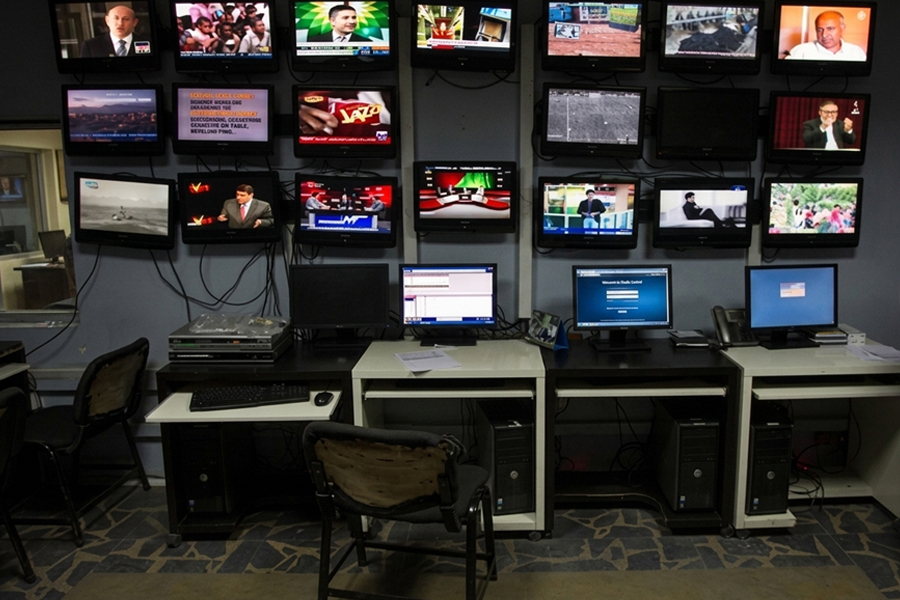
Several families in Afghanistan are criticizing the content broadcast by domestic television channels. According to them, domestic media have dedicated almost their entire airtime to Taliban-related news and programs, leaving no room for educational, entertainment, or recreational content. These families say they have no motivation to turn on the television at all. Meanwhile, several child rights activists are warning that this situation could hurt the intellectual and psychological development of children.
Zainab (pseudonym), a mother, says: “Every time I turn on the television for my children, there is nothing to watch except news related to the Taliban. There are no programs that are both engaging for my children and watchable for me. In the past, children would be entertained and learn useful skills through educational and entertaining programs, and we mothers could attend to our daily chores with peace of mind.”
She adds, “Children should not be exposed to news about war and conflict from an early age. It would be better if media outlets produced content that fosters hope, motivation, and joy among children, rather than filling their minds with distressing subjects.”
Nilaab (pseudonym) says that domestic television channels in Afghanistan currently offer no programs for entertainment or skills development. In her view, this situation, combined with the widespread restrictions on girls’ education and employment, has had serious consequences for women. She adds, “Television channels have no content for women. This situation gives rise to problems such as lack of motivation, aimlessness, and the erosion of their capabilities.”
Nilaab emphasizes that this issue not only affects women’s individual lives but will, in the long run, pose challenges for society as a whole. She adds, “When we are idle throughout the day, and even the television has nothing to watch or learn from, the mind becomes filled with negative thoughts. The future seems unclear to me, and this situation ultimately leads to a lack of motivation and even depression.”
Shakila (pseudonym), another mother, says that domestic media have dedicated almost their entire airtime to Taliban-related news and programs, leaving no room for educational, entertainment, or recreational content. She adds with concern: “There are currently no programs dedicated to children. In the past, alongside the efforts of families, television also served as a source of inspiration.”
She also points to the lack of diverse programming for adults, saying, “Even for myself, when I have free time and turn on the television, no matter how many channels I flip through, I cannot find anything entertaining. In the past, there were counseling programs for women, health programs, and even cooking programs, but now none of these can be found.”
Sharara (pseudonym), another mother in Afghanistan, expresses concern over the lack of educational and entertaining programs for children on domestic television channels.
Sharara adds: “Most current television programs are devoted to political topics and Taliban activities, and channels are compelled to cover the actions of this group. Constantly seeing images and reports about war, conflict, and military equipment weakens the morale of our children.” This mother says, “In the past, we would turn on the television with peace of mind, and children would sit and watch programs with enthusiasm, while we could attend to our daily chores.”
Marjan (pseudonym) says she has no motivation to turn on the television at all. She describes her feelings in these words: “Many times I feel restless and tired, I get upset over small things quickly, and life has become repetitive and dull for me. It simply passes by rather than being something I truly enjoy.”
Meanwhile, Abdul Matin Hakimi, a child rights activist, considers the role of media in raising awareness, advocacy, entertainment, and civic education of citizens to be important, and emphasizes that a large portion of communication in the 21st century takes place through the media. He believes that if media outlets operate along their proper course, they can contribute to the growth and dynamism of society.
This child rights activist says: “One of the important responsibilities of media outlets is the production and broadcast of educational and entertainment programs, especially for children. However, domestic media in Afghanistan are facing a serious shortage in this area, and suitable programs for children are nowhere to be seen.”
Hakimi warns that this situation could have a negative impact on the intellectual and psychological development of children. He adds: “The absence of educational and entertainment programs for children destroys their sense of future, their joy, and their childhood world.”
At the same time, Sediqullah Tawhidi, an exiled journalist and former head of a media watchdog, says that the Taliban have no constructive relationship with a free press or independent reporting. Nevertheless, they know very well how to exploit the presence of ostensibly free media inside Afghanistan for their own benefit, creating a platform for their propaganda.
Mr. Tawhidi says: “The Taliban have also organized several individuals to promote and propagate the group through the creation and management of YouTube channels. Meanwhile, the content broadcast by domestic television channels is largely devoid of scientific, cultural, and recreational dimensions, and serves primarily to reflect and reinforce the Taliban’s official narratives.”
This journalist adds: “Domestic media do not have the right to criticize and cannot give voice to the real concerns of the people, especially women and girls who have been deprived of education and employment. The Taliban are a disgrace to humanity and a fanatical, retrograde administration that has taken the people of Afghanistan hostage. Domestic media in Afghanistan appear free on the surface, but they are not even one percent free in their professional work. Reflecting every oppressive act of the Taliban is among the duties of media outlets inside Afghanistan.”
This comes as the Afghanistan Journalists Center (AFJC), on the eve of World Press Freedom Day, stated that the country has entered a new phase of crisis marked by the Taliban’s intensifying crackdown on the media.
The Media Support Organization of Afghanistan (AMSO) also expressed concern last week over the Taliban’s new restrictions on the content of domestic media outlets.
You can read the Persian version of this report here:
تلویزیونهای افغانستان در انحصار روایت طالبان؛ نگرانیها از حذف برنامههای سرگرمی و آموزشی