
Environmental Biotechnology
The environmental biotechnology sector is positioned for remarkable expansion as innovative technologies and increasing environmental concerns drive the demand for sustainable solutions. Let’s explore the current market size, key players making strides in the field, prevailing trends, and the major segments shaping this fast-evolving industry.
Projected Growth and Market Size of the Environmental Biotechnology Sector
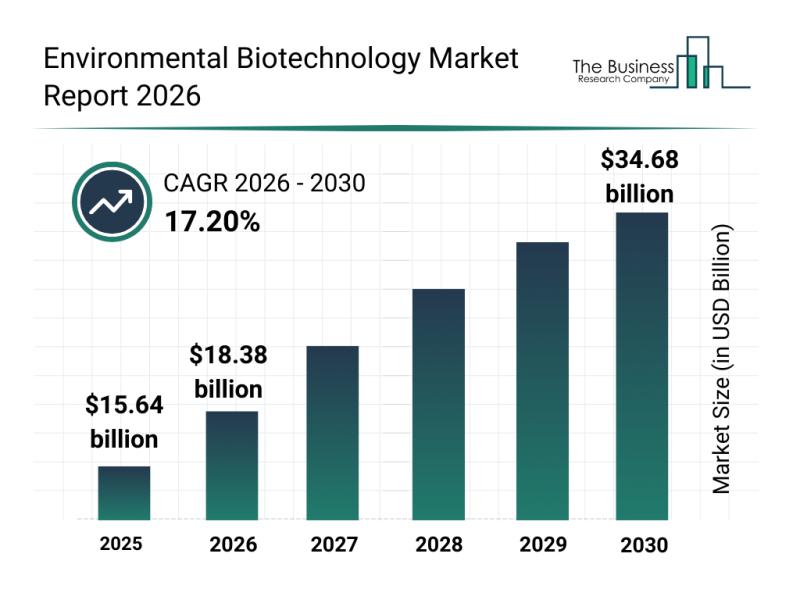
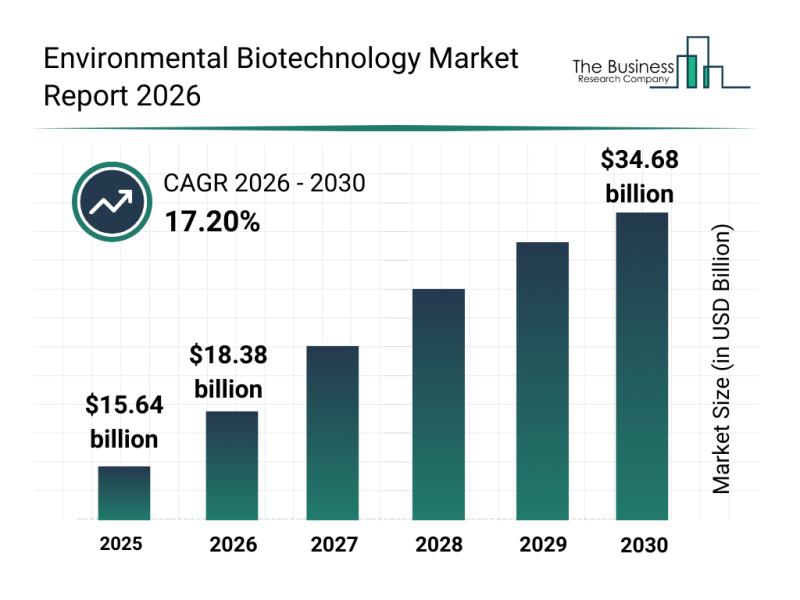
The environmental biotechnology market is forecasted to grow substantially, reaching a valuation of $34.68 billion by 2030. This represents a strong compound annual growth rate (CAGR) of 17.2%. The anticipated expansion is fueled by advancements in microbial consortia and enzyme formulations, stronger governmental support for eco-friendly initiatives, tighter environmental regulations targeting wastewater and soil treatment, broadening industrial and agricultural bioremediation applications, and increased investments in genetically engineered microorganisms. Key market trends include heightened adoption of microbial blends for waste management, growing enzyme use in pollution control, development of nutrient-based bioremediation products, expanded focus on soil and water treatment applications, and intensified utilization of genetically engineered microorganisms to tackle environmental challenges.
Download a free sample of the environmental biotechnology market sample:
https://www.thebusinessresearchcompany.com/sample.aspx?id=25762&type=smp&utm_source=OpenPR&utm_medium=Paid&utm_campaign=Apr_PR
Leading Companies Steering the Environmental Biotechnology Market
Several prominent corporations are at the forefront of the environmental biotechnology industry, including BASF SE, Dow Chemical Company, Evonik Industries AG, Ecolab Inc., DuPont de Nemours Inc., Suez SA, Novonesis A/S, Ginkgo Bioworks Holdings Inc., Praj Industries Limited, Genomatica Inc., LanzaTech Global Inc., Biorem Inc., Green Biologics Ltd., and Veolia Environnement S.A. A notable recent development occurred in August 2024 when PI Industries Ltd., based in India, acquired the UK company Plant Health Care Plc. This strategic move aims to enhance PI Industries Ltd.’s global footprint in biologicals by combining Plant Health Care’s cutting-edge peptide technology with its sustainable agriculture inputs portfolio.
Emerging Trends Highlighting Innovation in Environmental Biotechnology
Industry leaders are prioritizing the creation of enzyme-based biocatalysts to boost the efficiency and environmental sustainability of pollution control and waste treatment. These biological molecules accelerate chemical reactions, facilitating faster and more effective processes for breaking down waste and removing pollutants. For example, in November 2024, Novonesis A/S, a Danish biotechnology firm, unveiled Eversa Advance, an enzymatic biosolution designed to improve biodiesel feedstock processing. This innovation is particularly effective for feedstocks containing up to 20% free fatty acids, enabling producers to bypass acid esterification pretreatment steps. The result is a reduction in operating costs by as much as 45%, alongside decreased equipment wear and downtime, ultimately supporting more flexible, profitable, and sustainable biodiesel production.
View the full environmental biotechnology market report:
https://www.thebusinessresearchcompany.com/report/environmental-biotechnology-global-market-report?utm_source=OpenPR&utm_medium=Paid&utm_campaign=Apr_PR
Breakdown and Analysis of Key Segments in the Environmental Biotechnology Market
This report categorizes the environmental biotechnology market into several essential segments:
1) Product Categories: Microbial Blends, Nutrients, Enzymes, and Microbes
2) Technologies Employed: Cell-Based Assays, Nanobiotechnology, Fermentation, DNA Sequencing, Polymerase Chain Reaction Technology, and Other Technologies
3) Applications: Wastewater Treatment, Bioremediation, and Additional Applications
4) End Users: Agriculture, Water Treatment, Energy, Waste Management, Food and Beverage, and Pharmaceuticals
Further subsegment details include:
– Microbial Blends such as Bioaugmentation Blends, Bioremediation Microbial Consortia, Waste Decomposition Mixes, and Odor Control Formulations
– Nutrients encompassing Nitrogen Supplements, Phosphorus Additives, Trace Mineral Blends, and Carbon Source Additives
– Enzymes including those targeting Waste Degradation, Oil and Grease Breakdown, Sludge Reduction, and Odor Control
– Microbes consisting of Bacteria, Fungi, Algae, and Genetically Engineered Microorganisms
This detailed segmentation provides a comprehensive view of the various components and applications propelling growth and innovation within the environmental biotechnology market.
Reach out to us:
The Business Research Company: https://www.thebusinessresearchcompany.com/,
Americas +1 310-496-7795,
Europe +44 7882 955267,
Asia & Others +44 7882 955267 & +91 8897263534,
Email us at info@tbrc.info.
Follow Us On:
LinkedIn: https://in.linkedin.com/company/the-business-research-company,
Twitter: https://twitter.com/tbrc_info,
YouTube: https://www.youtube.com/channel/UC24_fI0rV8cR5DxlCpgmyFQ
Learn More About The Business Research Company
With over 17500+ reports from 27 industries covering 60+ geographies, The Business Research Company has built a reputation for offering comprehensive, data-rich research and insights. Armed with 1,500,000 datasets, the optimistic contribution of in-depth secondary research, and unique insights from industry leaders, you can get the information you need to stay ahead.Our flagship product, the Global Market Model (GMM), is a premier market intelligence platform delivering comprehensive and updated forecasts to support informed decision-making.
This release was published on openPR.