
Close Menu
Simply Invest Asia
  • Home
  • About us
  • Explore industries/sectors
    • Automobile
    • Aviation
    • Banking
    • Biotechnology
    • Chemical & Fertilizer
    • Entertainment and Media
    • Food Processing
    • Healthcare
    • Iron and Steel
    • Leather
    • Mining
    • Oil and Gas
    • Pharmaceutical
  • Explore by countries
    • China
    • Dubai / UAE
    • Hong Kong
    • India
    • Indonesia
    • Japan
    • Malaysia
  • Explore cities
    • Bangkok
    • Beijing
    • Chongqing
    • Delhi
    • Dubai
    • Guangzhou
    • Jakarta
    • Kuala Lumpur
  • Why Asia
Facebook X (Twitter) Instagram Threads
Trending:
  • Air New Zealand Cancels More Flights Due to This Issue
  • Dubai Launches Dh1 Billion Creative Sector Resilience Portfolio with Grants, Workspaces and Public Visibility
  • Bank Negara Malaysia imposes penalties on Zurich firms
  • China to take rotating U.N. Security Council presidency
  • Yacht tourists, hikers drive ‘golden week’ optimism for Hong Kong eateries
  • Indonesia Opens Market to Five Meat Exporters
  • It won’t be like Korea–Japan: who’ll need an early start for Argentina?
  • Energy Storage Chemicals Market in Germany | Report – IndexBox
  • Israel rushes ‘Iron Beam’ laser defense system to UAE to counter Iranian drone threat
  • India’s new conversion law draws concern from Christians
  • Criminals, traffic violators beware: DBKL’s 10,000 CCTVs can now identify faces, track your routes
  • Hong Kong tour groups to mainland China surge by 40 % for Labour Day weekend
  • Defying Decay – Synthetic Sympathy ReviewDefying Decay ‘Synthetic Sympathy’ Review — Bangkok’s Triumph
  • Live Nation Entertainment To Participate In MoffettNathanson’s Media, Internet & Communications Conference And J.P. Morgan’s 2026 Global Technology, Media And Communications Conference
  • Australians will pay more if Albanese prioritises fossil fuel projects, former oil and gas leaders warn | Fossil fuels
  • PDG acquires land in Jakarta, Indonesia, for 240MW data center campus
  • Sheikh Hamdan shares Kenyan mum’s video of son who wants to visit Dubai
  • China shares insider playbook for visa-free visits and 144-hour transit stays ahead of May rush
Friday, May 1
Facebook X (Twitter) Instagram
Simply Invest Asia
  • Home
  • About us
  • Explore industries/sectors
    • Automobile
    • Aviation
    • Banking
    • Biotechnology
    • Chemical & Fertilizer
    • Entertainment and Media
    • Food Processing
    • Healthcare
    • Iron and Steel
    • Leather
    • Mining
    • Oil and Gas
    • Pharmaceutical
  • Explore by countries
    • China
    • Dubai / UAE
    • Hong Kong
    • India
    • Indonesia
    • Japan
    • Malaysia
  • Explore cities
    • Bangkok
    • Beijing
    • Chongqing
    • Delhi
    • Dubai
    • Guangzhou
    • Jakarta
    • Kuala Lumpur
  • Why Asia
Simply Invest Asia
Home»Explore by countries»Japan»Japan’s 2011 tsunami shows how muddy coasts amplify disaster
Japan

Japan’s 2011 tsunami shows how muddy coasts amplify disaster

By IslaApril 30, 20264 Mins Read
Share
Facebook Twitter Pinterest Threads Bluesky Copy Link


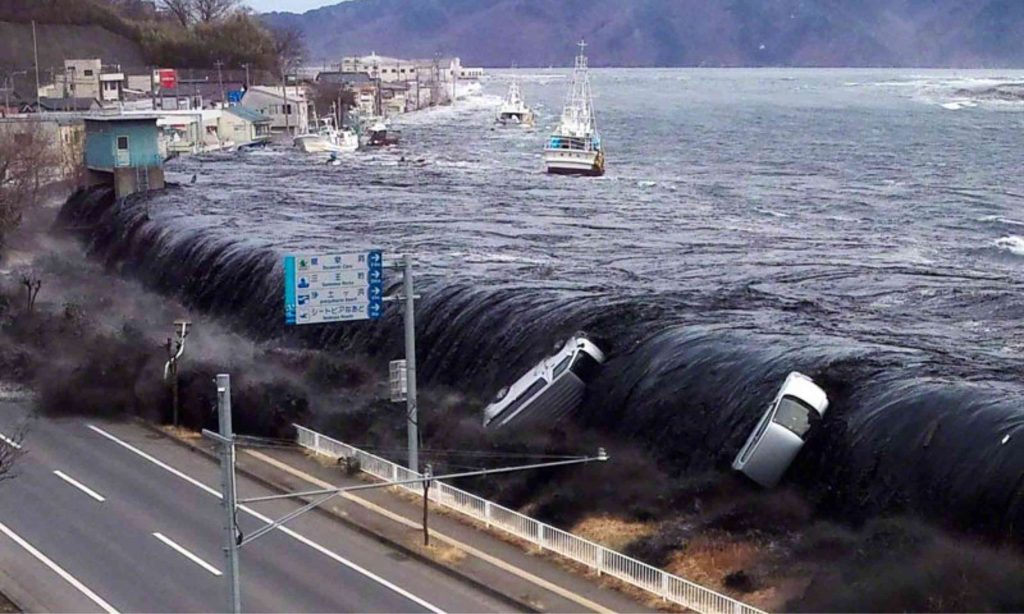
A new study has found that Japan’s 2011 tsunami gathered enough mud to turn its front into a heavier, harder-hitting surge.

The finding changes the danger calculation for flat, muddy shorelines where farms, canals, and soft soils sit in the flood path.

Hidden mud force


EarthSnap

Helicopter footage over the Sendai Plain, a flat coastal farming area in northeastern Japan, preserved the muddy wave front as it crossed fields and buildings.

By studying that footage, Patrick D. Sharrocks, a geoscience researcher at the University of Leeds, showed that mud changed the surge’s behavior.

Some sections surged toward obstacles at nearly 30 miles per hour (48 kilometers per hour), while nearby parts slowed within seconds.

Water still drove the disaster, but sediment added force where the front crossed soft ground.

The disaster setting

The wider disaster began on March 11, 2011, when a magnitude 9.1 earthquake struck off Honshu, the main island of Japan.

Within 30 minutes, the tsunami reached shore, overtopped seawalls, and disabled three reactors at Fukushima Daiichi, a coastal nuclear power plant.

By March 2026, official counts listed 15,901 deaths and 2,519 people missing and presumed dead.

Those stakes make the mud finding more than a geological detail, because better force estimates can guide safer coastal choices.

A steeper front

Clear floodwater usually spreads into a flatter sheet as it moves inland across open land. During this event, the leading edge rose at 25 to 59 degrees, so the front stayed steep instead.

That shape fits a debritic head, a dense muddy front that moves as slurry, because clay and silt can bind water, grit, and wreckage.

Steepness mattered because a taller, thicker front could slam structures before slower water behind it arrived.

What mud changed

Across paddies and canals, the surge scraped up fine clay and silt from the ground. Fine grains thickened the water, raising viscosity, or resistance to flow.

A cohesive flow, a mixture held together by fine sediment, can push wreckage harder against walls.

“This evidence shows that a highly cohesive flow with a dense debritic head formed in the mid-shore region,” wrote Sharrocks and his co-authors.

Evidence in deposits

Field teams later found deposits left behind as floodwater slowed, changing from sand near shore to mud farther inland across the Sendai Plain.

A separate survey recorded severe nearshore erosion and a sand sheet that thinned into muddy layers inland.

Those layers show the wave kept taking material from rice fields, soil, and canal beds for at least 1.2 miles (1.9 kilometers) inland.

Sediment made the wave heavier as it moved over land, not just from the wreckage it carried.

Wave moved in bursts

At one filmed site, the front moved between about 6 and 29 miles per hour (10–47 kilometers per hour).

Farther inland, speeds mostly ranged from 4 to 22 miles per hour (6–35 kilometers per hour), but the motion still jumped unevenly.

That pulsing pattern resembles debris flows, dense slurries that surge in bursts and stall between bursts. For a building or car, a short burst can matter as much as the average speed.

Limits of current models

Many tsunami models, computer tools that estimate flood movement, treat the moving front as low-density seawater, which keeps the math manageable.

Mud changes hydrodynamics, the way water moves and pushes, by making the mixture thicker and heavier.

Existing federal design guidance covers depth, velocity, loads, and shelters, but hazard assessments, forecasts of where danger may strike, need muddy-front physics too.

That need grows on mud-rich coastlines, where dense fronts can raise force beyond what clear-water assumptions predict.

Risk beyond Japan

Mud-rich coastal plains line tsunami-prone islands across Southeast Asia. Rice fields, ponds, canals, and filled coastal land can supply the fine material that thickens a flood front.

Sandier or steeper coasts may behave differently, because they offer less sticky mud for the wave to gather.

Land use therefore becomes part of tsunami risk for coastal managers, not a separate planning detail.

Gaps in the data

The evidence is strong, but it does not turn every muddy coast into the same danger zone. Videos covered only parts of the Sendai Plain, leaving the final stretch of inland flooding unseen.

Measurements also depended on landmarks, satellite images, and object heights, so uncertainty remains in exact front angles.

Still, the matching pattern in speed, shape, erosion, and mud content makes the dense-front explanation hard to dismiss.

Rethinking tsunami risk

Japan’s 2011 tsunami now stands not only as a water disaster, but as evidence of what floodwater can pick up.

For muddy coastlines, the next safety step is to treat soil, land use, and wave force as one connected threat.

The study is published in the Journal of the Geological Society.

—–

Like what you read? Subscribe to our newsletter for engaging articles, exclusive content, and the latest updates.

Check us out on EarthSnap, a free app brought to you by Eric Ralls and Earth.com.

—–


Source link

Related Posts

It won’t be like Korea–Japan: who’ll need an early start for Argentina?

May 1, 2026

Japanese Imperial Decorations awarded to four distinguished Arabs|Arab News Japan

April 30, 2026

Japanese premier urges Iran to ensure ships navigate Hormuz safely

April 30, 2026
Add A Comment
Leave A Reply Cancel Reply

Top Posts

Abandoned malls, whispers of nuclear war and young foreigners detained. This is what’s REALLY going on in Dubai… and the chilling warning one taxi driver gave to the Mail’s IAN BIRRELL

April 11, 2026

Chongqing Aims To Build Hub Role

April 15, 2026

US trade chief says tech restrictions to block Chinese autos

April 10, 2026
Don't Miss

Air New Zealand Cancels More Flights Due to This Issue

By IslaMay 1, 2026

CHRISTCHURCH— Air New Zealand (NZ) has announced another round of regional flight reductions as persistently…

Dubai Launches Dh1 Billion Creative Sector Resilience Portfolio with Grants, Workspaces and Public Visibility

May 1, 2026

Bank Negara Malaysia imposes penalties on Zurich firms

May 1, 2026

China to take rotating U.N. Security Council presidency

May 1, 2026
SUBSCRIBE TO OUR NEWSLETTER

Get our latest downloads and information first. Complete the form below to subscribe to our weekly newsletter.


I consent to being contacted via telephone and/or email and I consent to my data being stored in accordance with European GDPR regulations and agree to the terms of use and privacy policy.

Stay In Touch
  • Facebook
  • YouTube
  • TikTok
  • WhatsApp
  • Twitter
  • Instagram
Top Trending

Defying Decay – Synthetic Sympathy ReviewDefying Decay ‘Synthetic Sympathy’ Review — Bangkok’s Triumph

By IslaApril 30, 2026

Live Nation Entertainment To Participate In MoffettNathanson’s Media, Internet & Communications Conference And J.P. Morgan’s 2026 Global Technology, Media And Communications Conference

By IslaApril 30, 2026

Australians will pay more if Albanese prioritises fossil fuel projects, former oil and gas leaders warn | Fossil fuels

By IslaApril 30, 2026
Most Popular

Indonesia offers 116 new oil and gas blocks to global investors

April 25, 2026

Travel Revolution Unfolds as Indonesia and China Redefine Currency Power and Tourism Economics

April 11, 2026

Dazu Rock Carvings: Chongqing’s Hidden UNESCO Masterpiece

April 20, 2026
Our Picks

Xi tells Taiwan opposition leader people on both sides of strait are Chinese in rare meeting | China

April 10, 2026

Malaysia government fleet should transition to EVs to build confidence, say experts – Asia News Network

April 29, 2026

Ofichem consolidates six brands into single integrated CDMO and pharmaceutical supplier identity

April 9, 2026
SUBSCRIBE TO OUR NEWSLETTER

Get our latest downloads and information first. Complete the form below to subscribe to our weekly newsletter.


I consent to being contacted via telephone and/or email and I consent to my data being stored in accordance with European GDPR regulations and agree to the terms of use and privacy policy.

© 2026 Simply Invest Asia.
  • Get In Touch
  • Cookie Policy
  • Privacy policy
  • Terms & Conditions

Type above and press Enter to search. Press Esc to cancel.

SUBSCRIBE TO OUR NEWSLETTER

Get our latest downloads and information first.

Complete the form below to subscribe to our weekly newsletter.


I consent to being contacted via telephone and/or email and I consent to my data being stored in accordance with European GDPR regulations and agree to the terms of use and privacy policy.