
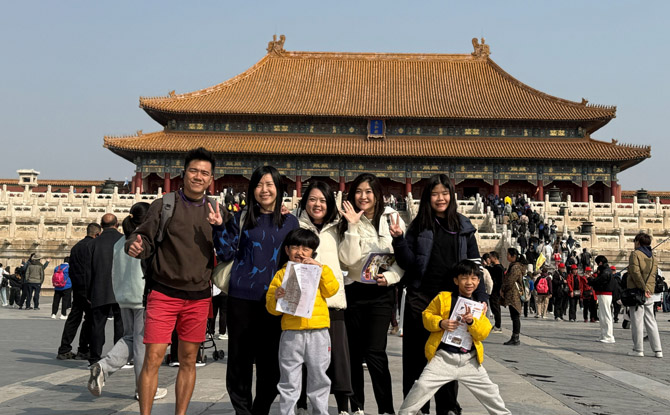
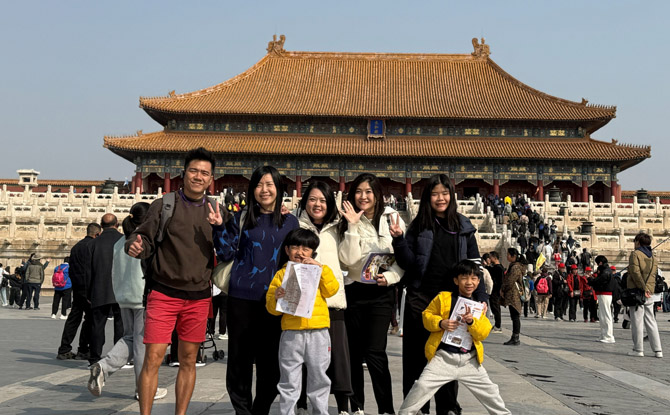
We embarked on a 9-day holiday to Beijing with kids, this time armed with more knowledge on our destination as compared to a trip in 2013. While it did not rank high on my list of family-friendly destinations in the past, things have changed vastly with Beijing’s rapid development.
It was our first trip to Beijing with kids as well as friends. Hence, we intentionally planned it to be a trip that is enjoyable for both adults and children.
Beijing with Kids: A 9-Day Trip
Day 1: Starting the Journey Differently
We started the trip differently this time — opting for a transit route via Shenzhen instead of a direct flight.
The cost savings were significant enough to meaningfully offset other parts of the trip, whether accommodation or attraction tickets. More importantly, it allowed us to arrive in Beijing better rested.
DEMPSEY HILL: Kid-friendly Guide to Dining & Things to Do
JURONG EAST SWIMMING COMPLEX: Family-friendly Splash Pad, Lazy River and Wave Pool
Instead of rushing through the layover, we stayed at a rest lounge in Shenzhen Airport. It was a small adjustment, but one that made a big difference — especially when travelling with kids.
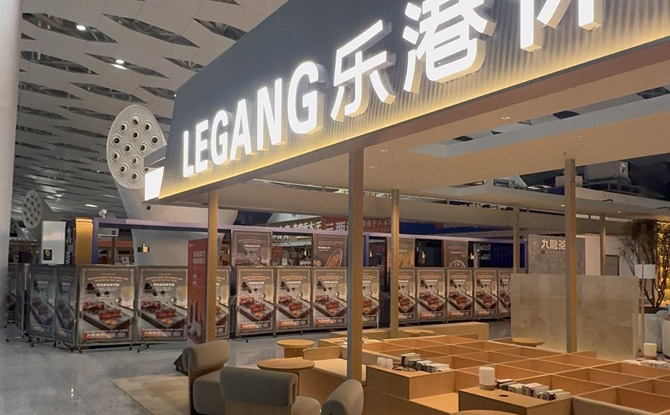
The Legang Rest Lounge (Terminal 3) operates more like a private rest cabin concept, where rooms are charged by the hour. Each unit comes with proper beds, basic toiletries, and access to shower facilities — a small but meaningful luxury when you are in transit.
Since the Boays are still young, the four of us managed to squeeze into a queen-sized bed for a few hours of rest. The arrangement worked out surprisingly well.
By the time we arrived in Beijing, it felt like we had eased into the trip rather than rushed into it.
Our Strategic Choice of Accommodation
We landed at Beijing Daxing International Airport at about 11 am and took a private hire via the Didi app into the city.
The journey to Wangfujing took close to one and a half hours, reminding us just how expansive Beijing is. Choosing where to stay was a strategic decision.
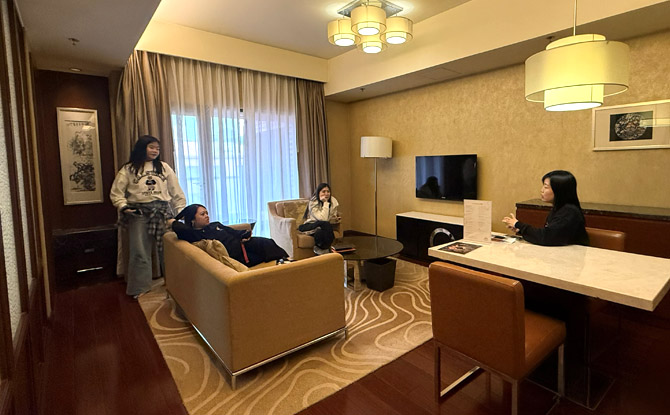
We were looking for something central, spacious enough for a family, and reasonably priced. This combination was not always easy to come by in Beijing. After some research, we settled on The Imperial Mansion, Beijing – Marriott Executive Apartments, located right in Wangfujing.
Beijing’s accommodation prices do run higher compared to other cities in China, and while this was not the cheapest option available, it felt like a practical compromise.
At around SGD255 per night, the Premium One-Bedroom Apartment offered about 78 square metres of space — something we came to appreciate very quickly with two energetic boys in tow.
The apartment-style setup allowed the boys to unwind, while we had room to recharge. The kitchenette gave us flexibility, and the washer-dryer turned out to be one of those small conveniences that made a big difference over a multi-day trip.
Saving on flights allowed us to spend a bit more on comfort. A pleasant surprise came in the form of a complimentary upgrade to a family room configuration, which gave us additional sleeping space and a bit more flexibility in how we settled in each night.
We decided to skip hotel breakfasts and rely on food delivery instead. It allowed for slower mornings, less rushing, and a gentler start to each day — something that benefited both the children and ourselves.
The location in Wangfujing proved to be a strong advantage. Key attractions such as the Forbidden City, Tiananmen Square and Jingshan Park were all within approximately 1.4 kilometres.
The Wangfujing area itself, while known for its pedestrian shopping street, felt somewhat different from what we remembered.
While still vibrant, many of the older buildings remain, now sitting alongside newer malls that have gradually reshaped the district.
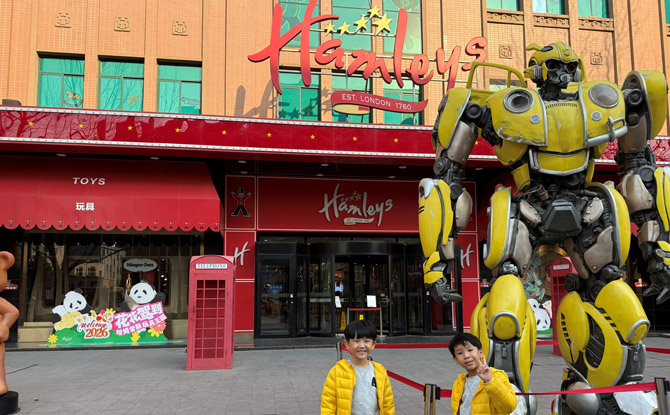
Adjoining our hotel was Xinyue Mall, a mid-range shopping space with a good variety of food options in the basement, alongside family-friendly retail such as a Disney store and an upcoming iQIYI-themed attraction.
Within a short walking radius, other malls such as APM, Beijing Department Store houses a two-storey Hamleys.
Other higher-end complexes like WF Central and Oriental Plaza offered a range of experiences from practical dining to more leisurely browsing.
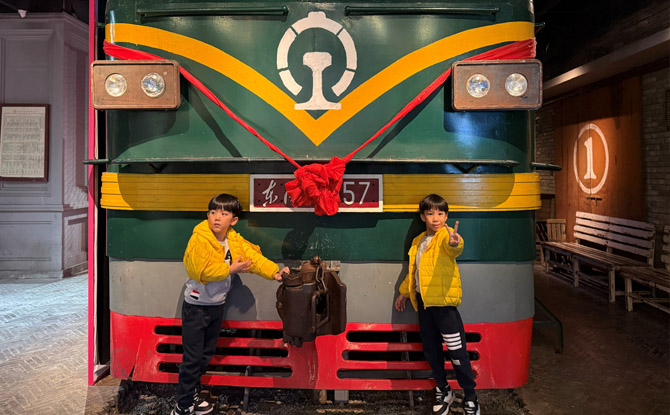
One particularly interesting find was the underground Nostalgia Bazaar within the Beijing Department Store.
Spanning a large immersive space, it recreates a 1980s Beijing neighbourhood, complete with vintage storefronts, props and street food stalls — a small but thoughtful nod to the city’s past within an otherwise modern retail environment.
Connectivity was also a big plus. Wangfujing MRT station, located about five minutes from the hotel, connects directly to Line 8, which provides access to several key attractions including Nanluoguxiang, Shichahai, Gulou Dajie and the Beijing Science Centre.
Looking back, choosing comfort and convenience here helped create a more balanced rhythm for the rest of the trip.
Day 2: Easing Into the City
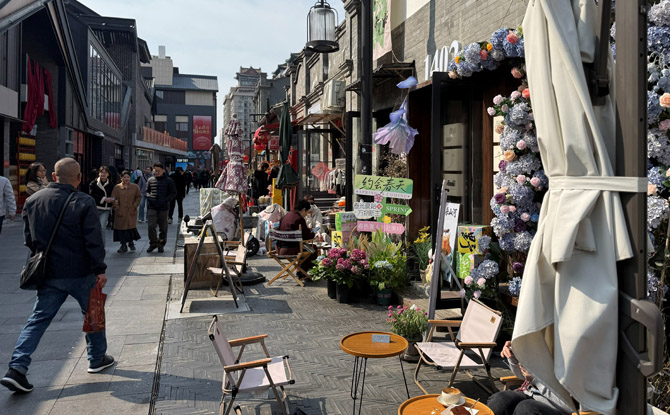
Our first day in Beijing with kids was intentionally kept light. We explored Dongsi, known for its network of hutongs, cafés and small lifestyle stores.
It was quieter and more spread out than expected, but perhaps that worked in our favour. We could ease into the city without trying to do too much.
For the Boays, however, the highlight came from something entirely unexpected — Ultraman merchandise.
From Miniso to Uniqlo and even larger toy stores, it seemed to be everywhere. What started as a casual browse quickly turned into them choosing an entire box of Ultraman cards.
It was a small moment, but an important reminder: what anchors a day for children is often very different from what we plan for as adults.
Day 3 – Where Beijing Surprised Us
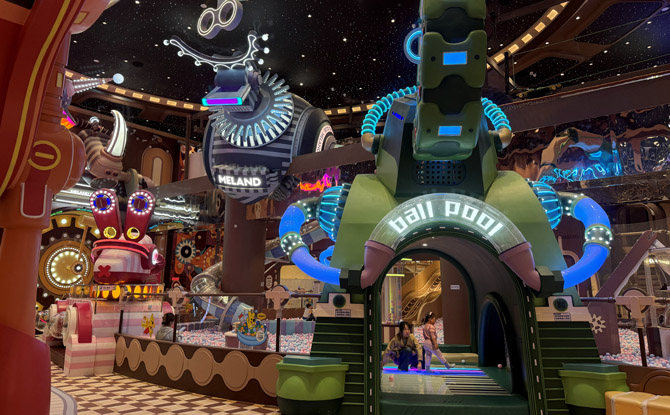
The next day at Wukesong was where our perception of Beijing began to shift.
At the heart of it is Wanda Plaza — not just a mall, but a fully integrated family space.
One of the first things that caught our attention was the multi-storey escalator fitted with high-definition digital screens, the kind that naturally draws a pause, if not for the ride itself, then at least for a quick photo.
Beyond that, the mall opens up into a wide range of experiences — boutique cinemas, themed cafés, and, most notably, large-scale indoor play concepts.
We spent most of our time at Meland Club, a sprawling indoor amusement space with a mix of rides, interactive zones and physical play areas.
While the boys have, in some ways, outgrown the simpler pretend-play setups, there was still more than enough to keep them engaged.
The sports and digital interaction zones stood out in particular — spaces where movement is paired with screens, allowing them to “drive”, “ride”, or compete in simulated environments.
It struck a good balance between physical activity and play, which kept their attention far longer than expected.
Just across the road, Huaxi Live offered a different kind of experience altogether.
If Wanda Plaza felt structured and contained, Huaxi Live felt more open and exploratory.
The area is designed almost like a lifestyle district, with a themed food street, an IKEA, and a wide range of entertainment options — from go-kart circuits and escape rooms to aquariums and smaller play spaces scattered throughout.
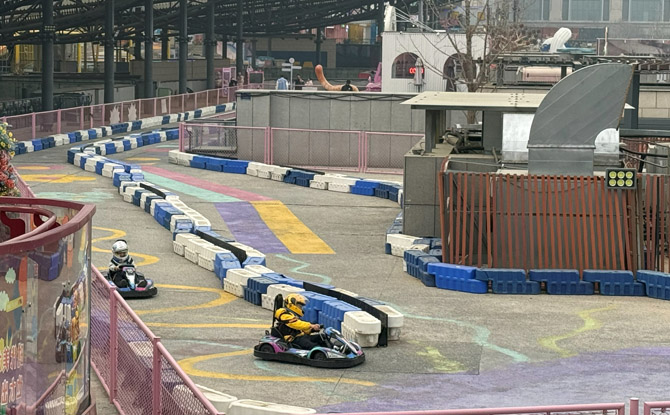
What worked particularly well was how naturally the space allowed the group to split and regroup. While the boys tried their hand at go-karting and explored the playgrounds, the rest of us took the opportunity to browse, sit down for a drink, or simply take in the atmosphere.
There was no sense of rushing from one activity to another — just a gradual flow from one space to the next.
It was perhaps one of the clearest examples during the trip of how a destination can cater to both children and adults without forcing a compromise.
Dinner that evening was at Si Ji Ming Fu (Peking Chambers), a well-known local restaurant where queues can easily stretch beyond an hour. It is the kind of place many would include on a “must-try” list, and we decided to do the same.
The wait, as expected, was part of the experience. But once seated, the meal delivered — classic Beijing dishes done well, served in a setting that felt unpretentious and grounded.
Perhaps more surprisingly, the meal remained relatively affordable, coming up to about SGD180 for seven people. It was a fitting end to a full day — simple, satisfying, and quietly memorable.
Day 4 – The Great Wall and Malls
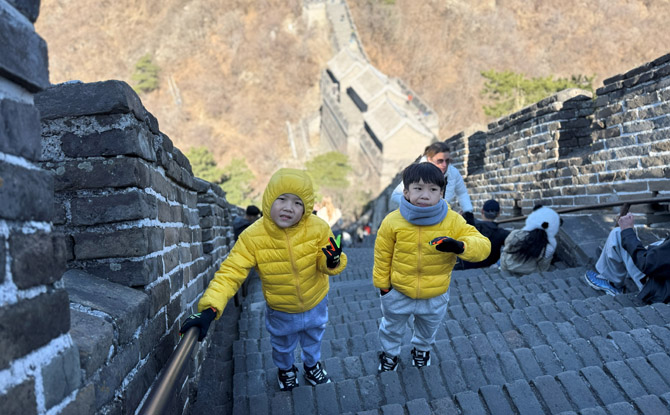
No trip to Beijing feels complete without a visit to the Great Wall. Having previously been to the Badaling section, we decided this time to explore Mutianyu — a stretch often described as more manageable for both adults and children.
Setting off early, we arrived to cool air and relatively light crowds. What appeared manageable from afar proved more physically demanding up close. The steep sections slowed us down, and over two hours, we covered only a short distance.
Compared to Badaling, Mutianyu offered a quieter and more scenic experience. The dramatic turns and steep undulations along the wall made for striking views, though they also served as a gentle reminder that this was not quite the leisurely stroll one might imagine.
What looked like a straightforward path from afar turned out to be far more physically demanding up close.
Over the course of two hours, we covered what was likely no more than 400 metres — partly due to the steep sections.
We found ourselves pausing frequently, taking in the views and inevitably stopping for photos.
If there was one highlight that stood out for both the children and adults, it would be the chairlift up and the toboggan ride down. Unique to Mutianyu, the experience added a playful element to what is otherwise a historically significant site.
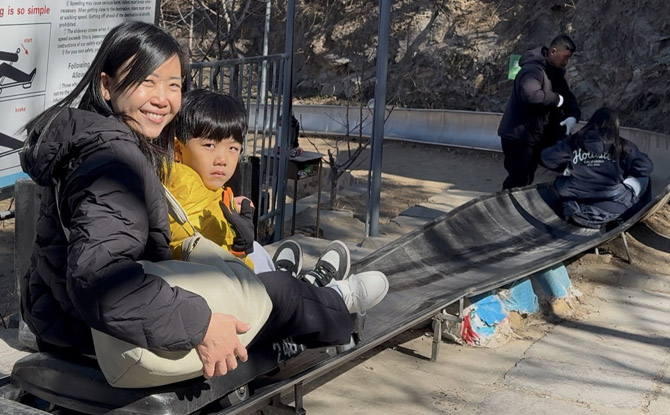
The ride down, in particular, was unexpectedly memorable — easily drawing comparisons to something like the luge back home, but set against the backdrop of the Great Wall.
Part of the reason we had started the day early was to allow for a slower-paced afternoon back in the city.
While the morning had been centred on history and exploration, the rest of the day shifted towards something altogether different.
We headed to Sanlitun, an area often associated with Beijing’s more contemporary and fashion-forward scene.
With its open-air layouts, modern retail spaces and café-lined streets, it felt like a contrast to the older parts of the city — perhaps best described as a blend of shopping district and lifestyle enclave.
At the heart of it is Taikoo Li, a sprawling retail complex that houses both international brands and local concepts. The Uniqlo flagship store was a particularly popular stop for the children, especially with its range of Ultraman-themed apparel.
For the adults, the appeal lay more in the cafés and slower browsing experience, with options ranging from artisanal milk tea to indulgent pastries and sit-down noodle spots.
While Sanlitun may not be the most child-focused area in Beijing, it offered a different kind of balance for the group.
The children had already had their share of adventure in the morning, while the afternoon allowed for a more relaxed pace — a chance for the adults to unwind, explore, and simply enjoy the space.
In many ways, it was one of the more well-rounded days of the trip. From the physical challenge and historical weight of the Great Wall, to the modern, lifestyle-driven energy of the city, the day unfolded in a way that catered to both ends of the spectrum.
It was a reminder that travelling with a mixed group often works best when there is room for both structure and flexibility.
Day 5 – Universal Studios Beijing
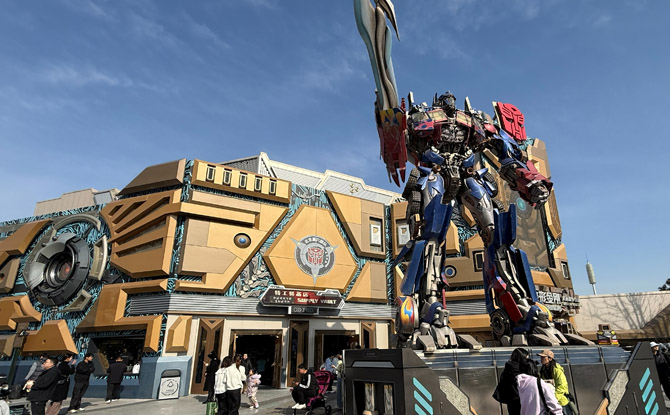
It was another early start for us.
Since its opening in 2021, Universal Studios Beijing has, in many ways, reshaped how the city is perceived.
Beyond its well-known historical landmarks, Universal Studios Beijing offers a compelling reason for families to include Beijing as a destination that caters meaningfully to children as well.
We set aside the entire day for the theme park, and in all honesty, it turned out to be one of the most satisfying experiences of the trip.
Having intentionally avoided peak holiday periods, the crowd levels were manageable, which made a significant difference to how the day unfolded.
By early evening, we had managed to cover almost all the major rides — with the exception of those clearly designed for younger children. It was, admittedly, a small point of pride for us, especially considering how theme park days can sometimes feel like a race against time.
The Boays were able to meet most of the height requirements, which meant they could participate fully in the majority of attractions. This made the experience far more engaging for them, as they were not limited to just the gentler rides.
One slight miscalculation on our part was the purchase of express passes. Having previously experienced the long queues at Universal Studios Japan — where waiting times of over an hour are not uncommon — we had anticipated a similar situation here.
In reality, most rides had waiting times of under 30 minutes. While the express passes did come in useful for revisiting a few of the more popular attractions, they were, perhaps, not as essential as we had expected.
That said, the overall experience remained highly positive. In many ways, this was one of the few days where balance did not have to be consciously planned.
The park itself created that shared experience — where both adults and children found equal enjoyment, just in slightly different ways.
For those interested in a more detailed breakdown of how we planned our route and prioritised the attractions, we will be sharing a separate article dedicated to Universal Studios Beijing.
Day 6 – Wildlife Encounters and Evening Streets
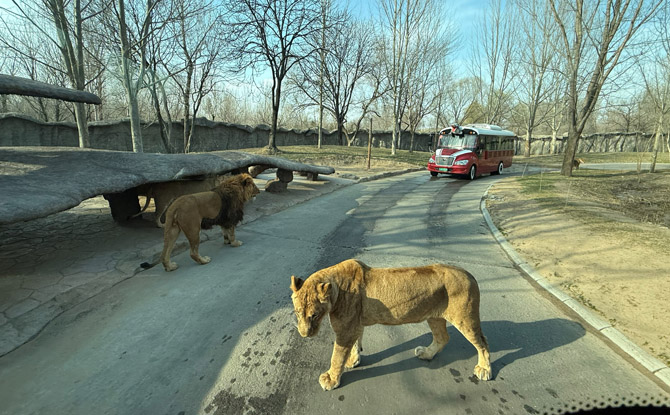
After an action-packed day at Universal Studios Beijing, we allowed ourselves a slower start the next morning — which, in hindsight, may not have been the best decision.
The Beijing Wildlife Park was not part of our original itinerary for our trip to Beijing with kids. It came as a recommendation from our driver, and after a quick look through Xiaohongshu, we were intrigued by what seemed to be a more interactive zoo experience.
What we found exceeded expectations.
This was not a typical walk-through zoo. The park incorporates safari-style rides, self-drive experiences, and even predator feeding sessions.
What stood out most, however, was how intentionally the space had been designed.
Playgrounds and rest areas were seamlessly integrated with animal enclosures, allowing children to move between play and wildlife viewing in a way that felt natural rather than structured.
It did not feel like a place where you simply walked from one exhibit to another. Instead, it encouraged exploration, interaction, and moments of discovery — which kept the Boays engaged far longer than we had expected.
Unfortunately, our late start meant we were unable to cover everything, including the self-drive buggy experience. It was a lesson that places like these are best visited with time on your side.
For families considering a visit, starting early would make a significant difference in being able to cover the full range of experiences. We will be sharing a more detailed write-up of the park separately.
The second half of the day took on a different pace as we made our way to Shichahai and Nanluoguxiang.
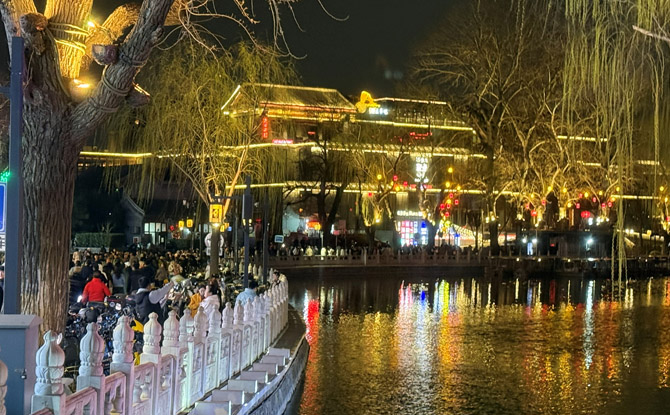
Shichahai, known for its scenic waterways lined with traditional architecture, offers a wide selection of restaurants, bars and street food options.
It is an area that comes into its own in the evening, when the lights reflect off the water and the atmosphere takes on a more relaxed, almost nostalgic quality.
Nanluoguxiang, by contrast, is lively, crowded and unmistakably tourist-oriented. Shops line both sides of the narrow alley, offering everything from snacks to souvenirs and toys.
The adults had their time to slow down and enjoy the atmosphere, while the children walked away with both the excitement of the wildlife park and a few small additions to their growing collection of toys.
Day 7 – Forbidden City, Shopping and Treasure Hunt
We initially thought it was a mistake to book a visit to the Forbidden City on a Saturday. However, March turned out to be a relatively forgiving period, with crowds that were manageable. We were able to move at a comfortable pace, without being jostled, and even found pockets of space for photos.
As someone who enjoys watching Scarlet Heart (步步惊心) and Story of Yanxi Palace (延禧攻略), stepping into the Forbidden City felt like watching history unfold in real life. The scale, the symmetry, and the stories behind each hall brought a different depth to the experience.
For the children, however, the engagement was understandably more limited.
We had arranged a customised learning tour, complete with an activity book designed for younger audiences. While the effort was commendable, the three to four-hour duration proved challenging. Attention gradually drifted, and the language barrier added another layer of difficulty.
That said, it was not without its value.
The boys picked up on small but interesting details — the recurring use of the number nine in the architecture, and references to idioms like “无事不登三宝殿” (loosely, only appearing with purpose), which was linked to the three main ceremonial halls.
These were not deep takeaways, but they were points of awareness — and perhaps that was enough for now.
After a morning that leaned more towards the adults, the visit to Qianmen helped restore the balance.
Located just south of Tiananmen Square and anchored by Zhengyangmen, Qianmen was once the main commercial hub of old Beijing. Today, while it has been restored and curated, it still offers a sense of that historical continuity.
While the main stretch of Qianmen Street is only about 800 metres long, it is easy to spend two to three hours there given the wide variety of shops, street food and attractions along the way.
The area has been thoughtfully restored to reflect old Beijing, with traditional-style shopfronts, signboards, and even a vintage tram running through the street, adding to its nostalgic charm—especially in the evening when the lights come on.
Qianmen offers a mix of traditional and modern retail experiences. While the adults enjoyed browsing and shopping, the children were equally entertained by the variety of snacks and novelty items.
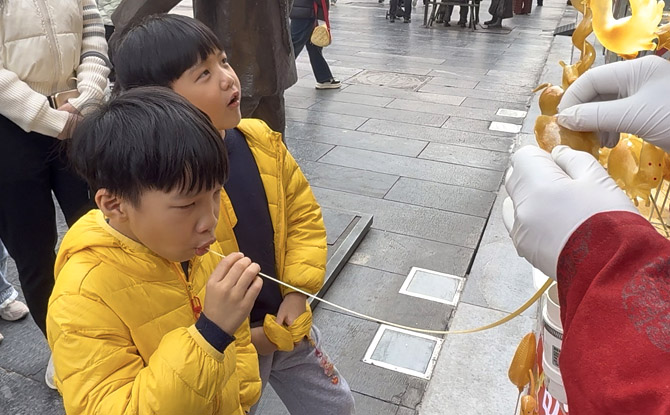
Highlights included watching traditional blown sugar art (糖人) being made—where children can even participate by blowing the sugar to form shapes—sampling local treats such as roast duck skewers, and of course, making a stop at familiar favourites like Miniso, which features a sizeable toy section.
The street is also one of the easiest places to sample a range of Beijing snacks in one area, while catching glimpses of traditional food-making techniques such as candied hawthorn and sugar figurines.
Although it is a popular tourist destination, its accessibility and variety make it particularly suitable for families with kids.
One of the advantages of starting the day early was that we still had time to fit in one final activity before our friends departed for Singapore the next day. Having explored several indoor amusement parks across different cities in China, we are always on the lookout for new and unique concepts.
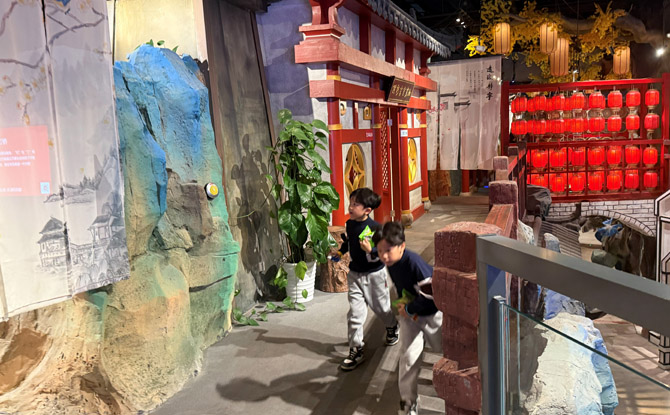
Imaginary World did not disappoint.
This was not your typical indoor playground. Instead, it combined elements of a treasure hunt, immersive storytelling, and themed exploration. Children moved through different zones, completing missions and solving puzzles along the way.
One moment, they might be searching for a lost talisman in a forest-themed setting, and the next, deciphering clues in a room filled with television screens.
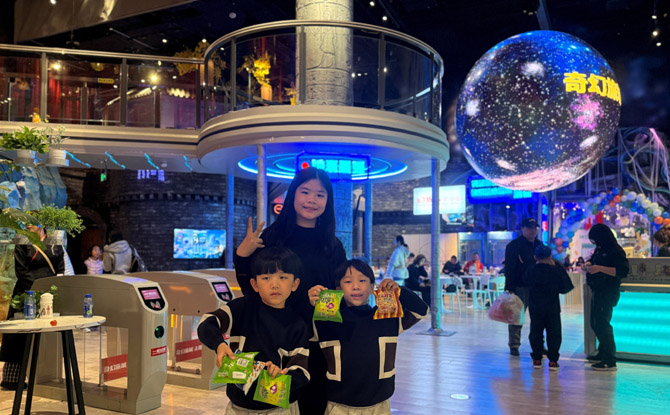
The setup was engaging, but not without its challenges. Some of the puzzles required local knowledge, and the language barrier could have easily dampened the experience.
To work around this, we hired a coach for about SGD55.This turned out to be a worthwhile decision. The coach guided the boys just enough for them to keep progressing, while still allowing them to feel as though they were solving the puzzles independently.
At the same time, it created an unexpected benefit for the adults. While the children were fully engaged, we found ourselves with a rare window to sit, rest, and catch up over coffee.
Day 8–9: Beijing Science Center & Journey Home
Our final day in Beijing was kept intentionally simple.
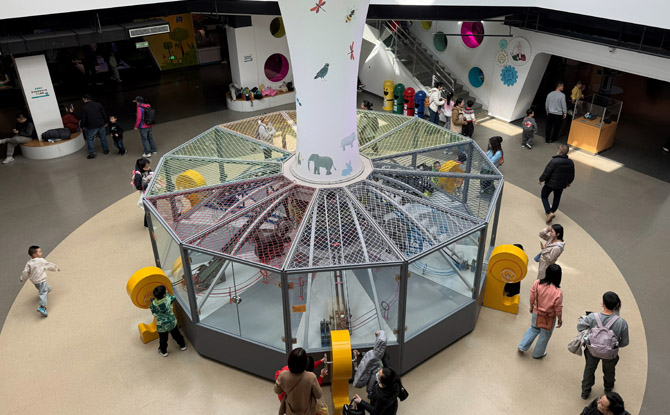
Located just about 15 minutes away by subway, the Beijing Science Centre was an easy addition to the itinerary. Admission is free, with tickets redeemed at the entrance using passports.
The compound consists of two main buildings — one catered more towards older children and adults, and another dedicated to younger children with more hands-on, kinaesthetic learning spaces.
Entry to the children’s section requires prior booking, and while we had not done so in advance, we were fortunately allowed in.
What stood out was how interactive the entire space was.
Rather than static exhibits, the centre is designed to encourage movement and participation. The boys moved from one station to another with little prompting and were fully engaged. At times, they even worked up a sweat.
It was a fitting way to end the trip — simple, engaging, and requiring very little planning.
After our visit and one final lunch at Wangfujing, it was time to bid farewell to Beijing and begin our journey home.
We arrived back in Shenzhen at around 11 pm and checked into Hyatt Place for the night before catching our transit flight the next morning.
Final Thoughts on a Family-friendly Beijing Holiday with Kids
Beijing, while still deeply rooted in its history, has evolved significantly since our last visit.
What stood out was not just the number of child-friendly attractions, but how the city can be experienced in a way that accommodates both adults and children — if the itinerary is thoughtfully planned.
Take a leaf from our family-friendly itinerary and follow @boaysontheloose for more travel content!