
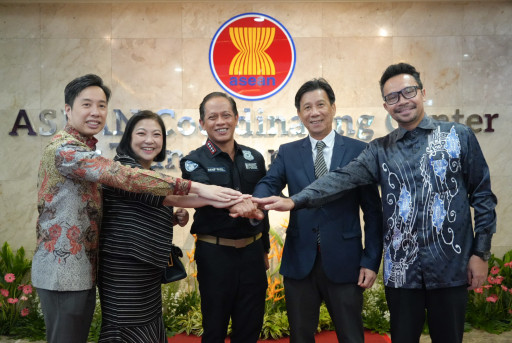
Indonesia inaugurated the ASEAN Coordinating Centre for Transboundary Haze Pollution Control Secretariat in Jakarta, strengthening regional cooperation to combat cross-border haze from forest fires. The centre will provide real-time monitoring, technical coordination, and early warning systems, shifting ASEAN toward proactive haze management across Southeast Asia.
Key Points
• Indonesia has inaugurated the ASEAN Coordinating Centre for Transboundary Haze Pollution Control (ACC THPC) Secretariat in Jakarta, aimed at combating cross-border haze from forest fires disrupting public health, aviation, and economies across Southeast Asia.
• The centre will serve as a regional command hub for real-time fire monitoring, technical coordination, early warning systems, and cross-border firefighting efforts, shifting ASEAN’s approach from reactive to proactive haze management.
• By hosting the secretariat, Indonesia reaffirms its commitment to regional environmental governance, strengthening collaboration with ASEAN partners and national agencies to achieve a long-sought haze-free Southeast Asia.
Indonesia Launches ASEAN Haze Pollution Control Secretariat
A landmark step toward regional environmental governance
Indonesia has inaugurated the Secretariat Office of the ASEAN Coordinating Centre for Transboundary Haze Pollution Control (ACC THPC), marking a significant milestone in Southeast Asia’s efforts to combat cross-border haze pollution. Led by Minister of Environment Hanif Faisol Nurofiq, the inauguration took place in East Jakarta on April 22, 2026. The initiative operates under the ASEAN Agreement on Transboundary Haze Pollution, a legally binding framework committing member states to coordinated prevention and mitigation efforts.
Addressing an urgent and recurring regional crisis
Transboundary haze, driven by forest and land fires, has long disrupted public health, aviation, and economic activity across the region. Authorities have flagged heightened fire risks this year due to an intensified El Niño cycle. The secretariat is designed to serve as a regional command hub, enabling real-time information sharing, cross-border firefighting coordination, and emergency assistance mobilization during major fire incidents.
Core Functions and Operational Mandate of the ACC THPC
From reactive management to proactive risk mitigation
The ACC THPC is mandated to deliver three essential functions: real-time monitoring of fire hotspots and air quality, technical coordination of expertise and firefighting capabilities, and the strengthening of early warning systems during peak dry seasons. Together, these capabilities represent a strategic shift from crisis response toward preventive risk management, equipping ASEAN with the tools needed to anticipate and contain haze events before they escalate.
Building integrated cross-border cooperation
The secretariat’s establishment in Jakarta is expected to deepen collaboration between Indonesian agencies, including the National Disaster Management Agency, the Ministry of Environment, and the Ministry of Forestry, and their ASEAN counterparts. This institutional alignment is considered essential for ensuring that fire prevention and suppression efforts remain coordinated across borders, particularly in multi-jurisdictional haze-affected zones.
Indonesia’s Leadership Role in Regional Environmental Governance
Reaffirming national commitment to haze reduction
Indonesia has reiterated its dedication to tackling forest and land fires through stronger prevention measures, faster response mechanisms, stricter law enforcement, and ecosystem restoration. By hosting the ACC THPC secretariat, Jakarta is positioning itself as the primary coordination hub for haze control in Southeast Asia, signaling a clear intent to assume a more central role in shaping regional environmental policy.
A renewed ASEAN consensus on institutionalized cooperation
Broad regional support for the centre reflects a growing ASEAN consensus on the need for more structured, operationally focused collaboration. Minister Hanif emphasized that the centre will enable faster data exchange and more coordinated resource deployment during emergencies. While a haze-free Southeast Asia has remained an elusive goal despite decades of efforts, this initiative offers renewed momentum through a more effective and institutionalized regional framework.