
Close Menu
Simply Invest Asia
  • Home
  • About us
  • Explore industries/sectors
    • Automobile
    • Aviation
    • Banking
    • Biotechnology
    • Chemical & Fertilizer
    • Entertainment and Media
    • Food Processing
    • Healthcare
    • Iron and Steel
    • Leather
    • Mining
    • Oil and Gas
    • Pharmaceutical
  • Explore by countries
    • China
    • Dubai / UAE
    • Hong Kong
    • India
    • Indonesia
    • Japan
    • Malaysia
  • Explore cities
    • Bangkok
    • Beijing
    • Chongqing
    • Delhi
    • Dubai
    • Guangzhou
    • Jakarta
    • Kuala Lumpur
  • Why Asia
Facebook X (Twitter) Instagram Threads
Trending:
  • Finals Round 2, Dubai Basketball
  • Bowman Secures More Than $4 Million In Mining-Related Contract Awards
  • Fry to fly: Japan steps up efforts on cooking oil in race for sustainable aviation fuel​​
  • Limited interest in latest oil and gas lease sale for Alaska’s Arctic National Wildlife Refuge
  • Bangkok Bolt driver gets one-month jail and fine after attacking Japanese passenger over fare row
  • JPMorgan and HSBC Join Hong Kong Tokenized Bonds Expert Group
  • Assessing Danske Bank (CPSE:DANSKE) Valuation After Mixed Short Term Returns And Strong One Year Performance
  • Aurobindo Bets Big on Biologics, Inaugurates TheraNym Manufacturing Hub in Telangana
  • Electrodialysis Membrane Stacks Market Growth Outlook to 2035: Desalination and Food Processing Drive Expansion – News and Statistics
  • When China banned plastic waste imports, rich nations rerouted trash to Indonesia and its air got deadlier
  • Beijing accelerates development of satellite internet industry
  • UAE participates in EBRD Board of Governors meeting
  • Nepal seeks ‘transformative’ ties, says no grudge against India
  • Malaysia: Stellantis starts local assembly of Leapmotor C10
  • Zero waste must move from global pledges to local action, Malaysian urban adviser says
  • Exclusive | Hong Kong Golf & Tennis Academy patrons threaten legal action over clubhouse changes
  • Egypt explores expanded renewable energy cooperation with China Energy, EPPEI
  • Modern dance Mindscape premieres in Guangzhou, blending Chinese philosophy and global contemporary art
Saturday, June 6
Facebook X (Twitter) Instagram
Simply Invest Asia
  • Home
  • About us
  • Explore industries/sectors
    • Automobile
    • Aviation
    • Banking
    • Biotechnology
    • Chemical & Fertilizer
    • Entertainment and Media
    • Food Processing
    • Healthcare
    • Iron and Steel
    • Leather
    • Mining
    • Oil and Gas
    • Pharmaceutical
  • Explore by countries
    • China
    • Dubai / UAE
    • Hong Kong
    • India
    • Indonesia
    • Japan
    • Malaysia
  • Explore cities
    • Bangkok
    • Beijing
    • Chongqing
    • Delhi
    • Dubai
    • Guangzhou
    • Jakarta
    • Kuala Lumpur
  • Why Asia
Simply Invest Asia
Home»Explore by countries»Indonesia»Blanket overflight, Indonesia, and the law of neutrality
Indonesia

Blanket overflight, Indonesia, and the law of neutrality

By IslaApril 22, 20265 Mins Read
Share
Facebook Twitter Pinterest Threads Bluesky Copy Link


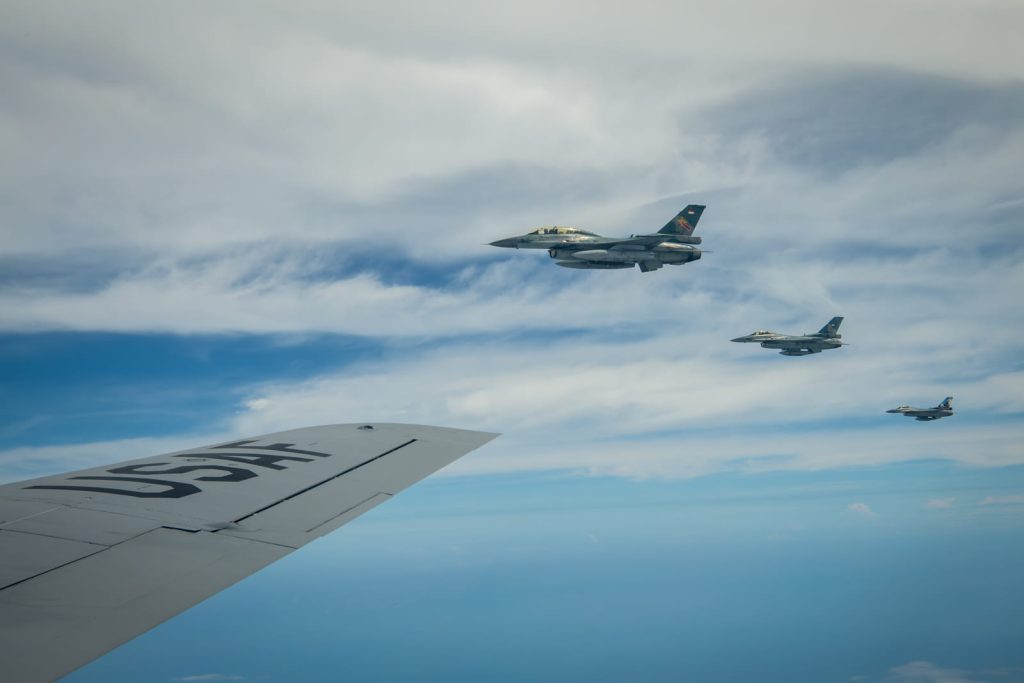
There’s been some discussion lately about allowing US military aircraft broad overflight access across Indonesian airspace. At first glance, this sounds like a technical or operational issue. But legally, it’s not that simple.

Consider this question in the present context of the United States having engaged in an armed conflict with Iran. In this situation, Indonesia has been a neutral state. And neutrality is not just a label. It comes with obligations.

The Iran case offers an intriguing illustration of a more difficult question – and the one that matters for this region. How would US military overflight of Indonesia play out in a future US–China contingency, whether over Taiwan or in the South China Sea?

What the law actually says

The starting point is pretty clear. Under Hague Convention V, which sets out the rights and duties of neutral powers in times of war, Article 2 states:

“belligerents are forbidden to move troops or convoys of munitions of war or supplies across the territory of a neutral Power.”

Even though this convention was explicitly drafted with land warfare in mind, the logic carries over. Airspace is part of territory of neutral states, which is inviolable. So if belligerent military aircraft are transporting troops, weapons, or supplies, the same issue arises.

Therefore, if Indonesia allows blanket overflight it starts to look very close to a classic neutrality violation in the traditional sense.

The maritime overlay: limited space, not a free pass

Things get more nuanced once you bring in the law of the sea and the law of maritime neutrality.

Under the United Nations Convention on the Law of the Sea (UNCLOS), Articles 38 and 53 set out that aircraft (of all states) enjoy the right of transit passage and archipelagic sea lanes passage through straits used for international navigation and designated sea lanes.

This is reinforced in paragraph 28 of the San Remo Manual on International Law Applicable to Armed Conflicts at Sea, which makes the point clearly:

“belligerent and neutral surface ships, submarines and aircraft have the rights of transit passage and archipelagic sea lanes passage through, under, and over all straits and archipelagic waters to which these rights generally apply.”

So yes – even for belligerents, there is a recognised right of passage.

But the key point is often missed.

These regimes are tied to defined routes. In the archipelagic context, that includes designated sea lanes (for Indonesia, the ALKI lanes), and where no designation exists, routes normally used for international navigation – as reflected in Article 53(12) of UNCLOS.

Once you start allowing blanket overflight for one belligerent, you are no longer just managing access.

There is still debate about what counts as “routes normally used for international navigation” but once you move beyond ALKI or international straits such as the Strait of Malacca and start talking about unrestricted overflight, you are clearly outside that framework.

This is not a general freedom to operate across the entire airspace of a neutral state. It is a specific right tied to corridors, and subject to the requirement of continuous and expeditious transit.

From legal exception to tactical advantage

This is where the real implication sits.

This kind of policy would give a clear tactical advantage to US military aircraft.

If flights are limited to ALKI and international straits, their routes are constrained and predictable. An opposing belligerent – in the present case, Iran – can calculate likely entry and exit points. For example, aircraft transiting via ALKI I can be anticipated near the southern approaches of the Sunda Strait, or through international straits such as the Malacca Strait.

That predictability matters. It allows for tracking, and, if necessary, interception.

Blanket overflight changes that entirely.

A US Air Force B-52 bomber during exercises in Indonesia (Matthew Lotz/DVIDS)

A US Air Force B-52 bomber during exercises in Indonesia in 2021 (Matthew Lotz/DVIDS)

If aircraft are no longer confined to ALKI or international straits, they are not tied to fixed corridors. They can enter and exit Indonesian airspace at multiple points, not just at the ends of sea lanes or international straits. From an operational perspective, that removes a key layer of predictability.

In simple terms: the opposing side can no longer reliably anticipate where US military aircraft will appear or disappear.

So, what looks like a legal accommodation quickly translates into a significant tactical advantage.

Neutrality is a self-help system

Now the more uncomfortable part.

Neutrality law is, at its core, a self-help system. If a neutral state is unwilling or not capable of enforcing its neutrality, the aggrieved belligerent does not just sit quietly.

If Indonesia allows this kind of overflight, it is difficult to frame that as incapacity. It looks more like a policy choice – in other words, unwillingness.

And that matters.

In that situation, the opposing belligerent can argue that it is entitled to act to protect its rights.

Translated into this scenario: Iran could take the position that it may intercept US military aircraft even within Indonesian airspace, on the basis that neutrality is not being enforced.

That is obviously escalatory. And politically very sensitive. But from a legal standpoint, the argument is not easily dismissed.

Where this leaves Indonesia

With its Bebas-Aktif (“free and active”) foreign policy, Indonesia has long positioned itself as a neutral actor. But neutrality is not just about political posture. It is about how a state regulates its territory – including its airspace.

Once you start allowing blanket overflight for one belligerent, you are no longer just managing access. You are shaping the operational environment of the conflict.

And at that point, the line between neutral and non-neutral starts to blur.


Source link

Related Posts

When China banned plastic waste imports, rich nations rerouted trash to Indonesia and its air got deadlier

June 6, 2026

Amartha Initiates Coalition to Advance Financial Health for Grassroots Communities in Indonesia

June 6, 2026

Prime Minister Carney speaks with President of Indonesia, Prabowo Subianto

June 6, 2026
Add A Comment
Leave A Reply Cancel Reply

Top Posts

Chinese Wall may stem India tech flows for electronics and automobile

June 1, 2026

Abandoned malls, whispers of nuclear war and young foreigners detained. This is what’s REALLY going on in Dubai… and the chilling warning one taxi driver gave to the Mail’s IAN BIRRELL

April 11, 2026

Von der Leyen warned about China. Europe didn’t listen. Will it now?

June 6, 2026
Don't Miss

Finals Round 2, Dubai Basketball

By IslaJune 6, 2026

Take a look at the highlights of the 2025/26 season AdmiralBet ABA League season game…

Bowman Secures More Than $4 Million In Mining-Related Contract Awards

June 6, 2026

Fry to fly: Japan steps up efforts on cooking oil in race for sustainable aviation fuel​​

June 6, 2026

Limited interest in latest oil and gas lease sale for Alaska’s Arctic National Wildlife Refuge

June 6, 2026
SUBSCRIBE TO OUR NEWSLETTER

Get our latest downloads and information first. Complete the form below to subscribe to our weekly newsletter.


I consent to being contacted via telephone and/or email and I consent to my data being stored in accordance with European GDPR regulations and agree to the terms of use and privacy policy.

Stay In Touch
  • Facebook
  • YouTube
  • TikTok
  • WhatsApp
  • Twitter
  • Instagram
Top Trending

Nepal seeks ‘transformative’ ties, says no grudge against India

By IslaJune 6, 2026

Malaysia: Stellantis starts local assembly of Leapmotor C10

By IslaJune 6, 2026

Zero waste must move from global pledges to local action, Malaysian urban adviser says

By IslaJune 6, 2026
Most Popular

Watch: Delhi CM Rekha Gupta extends congratulations to newly appointed Delhi BJP President Harsh Malhotra – The Hindu

May 28, 2026

Update: China firmly opposes U.S. restrictions on test and certification, telecom sectors

May 1, 2026

India and Italy: Bridging Continents Through IMEC

April 24, 2026
Our Picks

TVL Marine to launch Hong Kong–Taiwan service

April 12, 2026

Infosecurity Europe: Reactive Security Is Failing Healthcare, Experts

June 5, 2026

Kuehn Law Encourages Investors of Ultragenyx Pharmaceutical Inc. to Contact Law Firm — TradingView News

June 5, 2026
SUBSCRIBE TO OUR NEWSLETTER

Get our latest downloads and information first. Complete the form below to subscribe to our weekly newsletter.


I consent to being contacted via telephone and/or email and I consent to my data being stored in accordance with European GDPR regulations and agree to the terms of use and privacy policy.

© 2026 Simply Invest Asia.
  • Get In Touch
  • Cookie Policy
  • Privacy policy
  • Terms & Conditions

Type above and press Enter to search. Press Esc to cancel.

SUBSCRIBE TO OUR NEWSLETTER

Get our latest downloads and information first.

Complete the form below to subscribe to our weekly newsletter.


I consent to being contacted via telephone and/or email and I consent to my data being stored in accordance with European GDPR regulations and agree to the terms of use and privacy policy.