
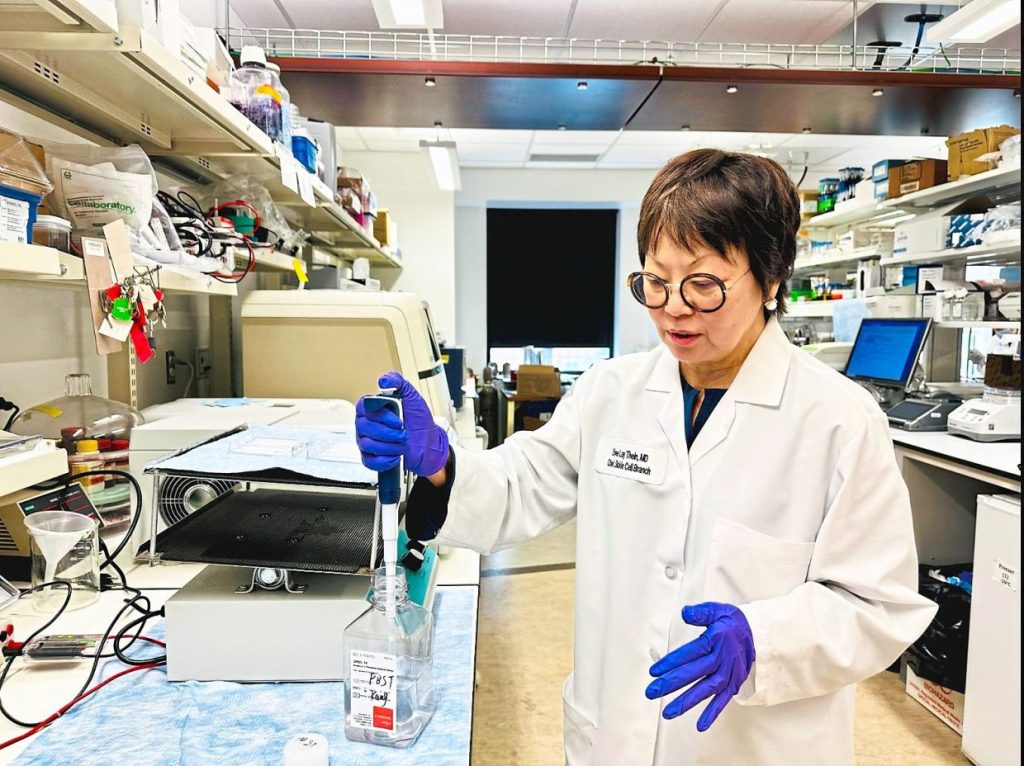
PETALING JAYA: Consultant haematologist Dr Thein Swee Lay has won one of the six 2026 Breakthrough Prizes – the first Malaysian-born scientist to do so.
Dr Thein is the first Malaysian-born scientist to receive the award, dubbed the “Oscars of Science”.

The US National Heart, Lung and Blood Institute Sickle Cell Branch chief and senior investigator shared one of the three Life Sciences prizes with Harvard Medical School David G. Nathan Distinguished Professor of Paediatrics Dr Stuart H. Orkin.
Each prize comes with a cash award of US$3mil (RM12mil) – the largest for scientific achievements.
Dr Thein was recognised for discovering the gene B-cell lymphoma/leukaemia 11A (BCL11A), which has been identified as a key regulator of fetal haemoglobin production.
Prof Orkin also separately discovered the gene, as well as demonstrated how it acts as a “switch”, controlling the transition from fetal to adult haemoglobin.
This breakthrough laid the foundation for gene-editing therapies for sickle cell disease and beta-thalassaemia – two inherited blood disorders that affect an estimated nine million people worldwide.
Dr Thein described the recognition as a significant honour.
“To be the first Malaysian to receive this recognition is not just a personal milestone – it belongs to everyone who believed in me, mentored me and to the country that shaped me,” said the Universiti Malaya medical graduate.
“I hope it will send a message to young people in Malaysia and across South-East Asia that their background does not define what they can achieve.
“Only their dedication and hunger to ask the next question does.”
She added that her greatest fulfilment came from knowing her work might one day ease patients’ suffering.
“Every setback at the (lab) bench reminded me how long the road to discovering BCL11A was,” she said.
“That memory pulls me back, driven by the quiet hope that the treatments we were developing would one day make a difference to patients I might never meet.”
Looking ahead, she hopes to help develop new drugs, particularly those that can prevent or abort severe pain crises in sickle cell patients.
“We are closer than ever to therapies that not only manage the disease but also allow patients to live alongside it,” she said.
“With effective treatment, education and self-care, many patients can achieve a good quality of life, and that prospect gets me back into the lab every morning.”
Dr Thein also previously received the 2024 Shaw Prize in Life Science and Medicine for the same discovery.
The other three Breakthrough Prizes went to researchers in physics and mathematics.
In addition, 15 early-career physicists and mathematicians shared six US$100,000 (RM395,165) New Horizons Prizes.
Three women mathematicians who had recently completed their PhDs also each received a US$50,000 (RM197,583) Maryam Mirzakhani New Frontiers Prize.
See StarHealth for more on Dr Thein next Sunday (April 26)