
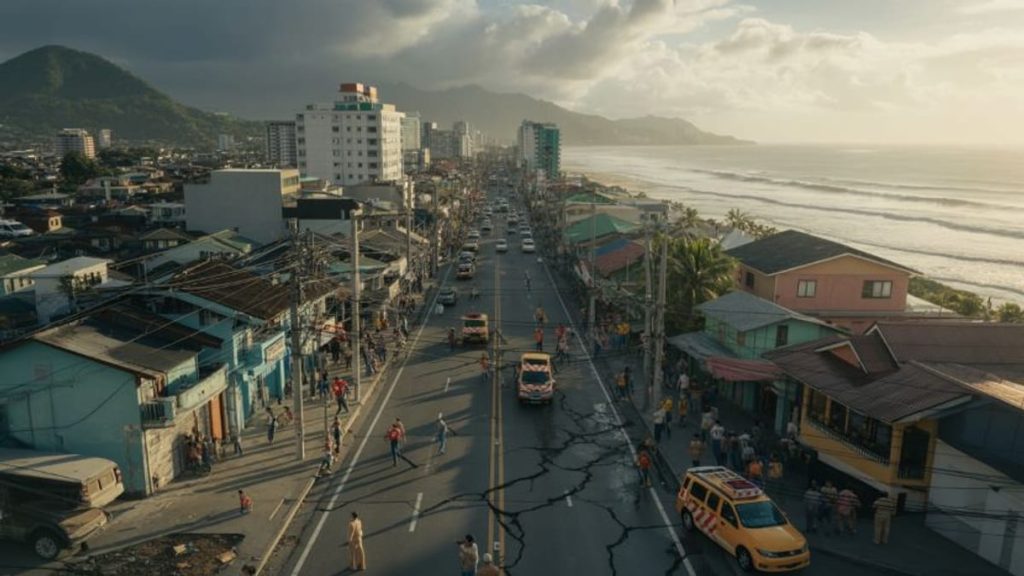
Jakarta is rapidly recasting its image from sprawling, chaotic megacity to one of Southeast Asia’s safest urban hubs, as fresh safety rankings and resilient tourism data converge to reposition the Indonesian capital on the regional travel map.
Get the latest news straight to your inbox!
Safety rankings place Jakarta near the top of ASEAN cities
Jakarta’s transformation has been underscored by the latest Safety Index compiled by Global Residence Index, which in its 2026 edition places the city second in Southeast Asia for overall safety. Indonesian media reports note that the capital now sits ahead of regional tourism stalwarts such as Bangkok and Manila, a shift that contrasts with older perceptions of Jakarta as a destination where traffic congestion and petty crime were central concerns rather than robust policing and urban management.
The Global Residence Index assessment aggregates indicators such as crime risk, political stability, public safety and environmental factors. Jakarta’s scores show low levels of security and political risk in comparative regional terms, placing it just behind Singapore in the ASEAN grouping. National coverage of the ranking highlights that Jakarta’s move up the table is part of a broader, gradual improvement rather than a sudden swing, suggesting that long-term policies around security, infrastructure and urban governance are beginning to show measurable results.
Other international datasets echo the trend. Mid‑year 2024 quality‑of‑life rankings from crowd‑sourced platforms show Jakarta with improving safety scores relative to several neighboring capitals, while global city safety tables compiled by research institutes list the Indonesian capital in the middle of worldwide rankings but on an upward trajectory. For travel planners comparing metropolitan hubs, this combination of regional leadership and steady global progress is beginning to influence itineraries.
Tourism rebound dovetails with new perceptions of security
Jakarta’s rising safety profile is emerging just as Indonesia experiences a strong tourism recovery. Official statistics cited in local business coverage recorded more than 11 million foreign visitors to Indonesia in 2023, almost double the previous year, with further growth through 2024 and 2025 as borders fully reopened and airline capacity returned. Industry-focused reports indicate that international arrivals reached around 13.9 million in 2024, leaving Indonesia still behind Thailand and Malaysia in absolute numbers but closing the gap after a slower initial rebound.
Within that national picture, Jakarta has reasserted itself as a key gateway rather than merely a necessary transit point. Publicly available data on visitor flows show that the capital welcomed close to two million foreign tourists in 2023, while domestic travel to the wider metropolitan region climbed into the tens of millions of trips. Hotel and hospitality sector filings for 2024 and early 2025 describe higher occupancy rates and stronger forward bookings in Jakarta, particularly around business districts and major event venues.
Regional tourism analyses suggest that safety considerations are now intertwined with decisions about where to route multi‑stop Southeast Asia itineraries. As Jakarta’s safety reputation improves, tour operators and conference planners are more willing to anchor programs in the capital rather than shifting participants directly to Bali or other resort destinations. This is reshaping traffic patterns so that the city functions not only as an aviation hub but also as a primary urban experience in its own right.
Urban transport and surveillance upgrades underpin traveler confidence
Infrastructure has been central to Jakarta’s repositioning. Over the past five years, the capital has rolled out a series of major transport projects that have changed how residents and visitors move around the metropolis. The Greater Jakarta light rail network, known as the Jabodebek LRT, opened in 2023 and has already logged tens of millions of passenger journeys, with record monthly ridership reached in 2024 according to operational statistics. Together with the existing MRT line and expanded Bus Rapid Transit corridors, the system offers cleaner, more predictable routes that reduce travelers’ exposure to informal transport and road‑safety risks.
City authorities have also invested in an extensive network of cameras, improved street lighting and better integrated emergency response systems. While these upgrades are often framed domestically as tools to manage congestion and flooding, they also have safety implications that are increasingly discussed in regional tourism commentary. Visitors arriving via Soekarno‑Hatta International Airport, which has undergone ongoing terminal refurbishments, now connect into rail and bus links that are widely perceived as safer and more user‑friendly than previous ground transport options.
Travel guides and independent safety advisories published in 2024 and 2025 generally describe Jakarta as a city where violent crime against visitors is uncommon but where situational awareness remains important. These sources point to pickpocketing and occasional scams as the primary issues, yet they also emphasize that central business districts, major shopping areas and transport corridors feel more controlled and predictable than in past decades. For travelers familiar with other Southeast Asian megacities, Jakarta is increasingly portrayed as comparable or even preferable in terms of everyday security.
Regional competition shifts as Jakarta challenges established hubs
Jakarta’s surge in safety rankings comes at a time when Southeast Asia’s major cities are competing intensely for high‑spending tourists, long‑stay visitors and international events. Regional outlook reports from ASEAN and tourism research organizations describe an uneven recovery across the bloc, with some countries returning to or surpassing 2019 arrival levels while others still lag behind. In this environment, reputational factors such as health resilience, urban security and political stability are being weighed alongside beaches, nightlife and heritage attractions.
Singapore remains the region’s benchmark for urban safety and efficiency, yet its high costs and strict regulations can deter some segments of travelers. Bangkok and Ho Chi Minh City continue to attract large visitor volumes, but international coverage regularly notes issues around congestion, air pollution and petty crime. Against this backdrop, Jakarta’s recognition as the second‑safest city in ASEAN in the latest Global Residence Index report gives Indonesia a fresh talking point when promoting the capital as an events and meetings destination.
Analysts who track aviation and hotel performance point out that airlines are already adjusting capacity on key routes into Jakarta as corporate travel, trade fairs and cultural festivals return. The repositioning of Indonesia’s political capital to the new city of Nusantara on Borneo, while still underway, is also being watched for its potential to spread visitor flows between two distinct hubs. For now, however, Jakarta’s combination of improving safety metrics, expanding infrastructure and relative affordability is strengthening its hand in the competition for regional city‑break and stopover traffic.
What the new safety narrative means for visitors
For travelers, Jakarta’s evolving safety profile translates into a more predictable and confidence‑inspiring environment without eliminating the need for basic precautions. Current advisory material aimed at visitors consistently recommends using licensed taxis and ride‑hailing services, favoring well‑lit streets and established nightlife districts, and keeping valuables discreet, particularly in crowded markets and transport hubs. These are similar guidelines to those applied in other major Asian cities, underscoring that Jakarta is no longer seen as an outlier in terms of risk.
At the same time, the city’s efforts to promote cultural quarters, waterfront revitalization projects and museum districts rely heavily on the perception that visitors can explore beyond hotel zones safely. New or upgraded public spaces along Jakarta’s rivers and in its historic core are being marketed with an emphasis on walkability, community events and family‑friendly programming. This reflects a strategic bet that security and comfort are now as decisive as social media buzz when travelers choose between urban destinations across Southeast Asia.
The emerging consensus across rankings, tourism data and traveler feedback is that Jakarta has entered a new phase in its development as a gateway city. It is still grappling with chronic issues such as flooding, traffic congestion and air quality, but in the domain of personal safety and visitor security it has moved from defensive explanations to proactive messaging. For Indonesia’s wider tourism ambitions, that shift could prove pivotal in converting transit passengers into overnight guests and in encouraging repeat visits to a capital that is beginning to look, and feel, considerably safer than its old reputation suggests.