

Speeding and motorcycles still dominate crash risk
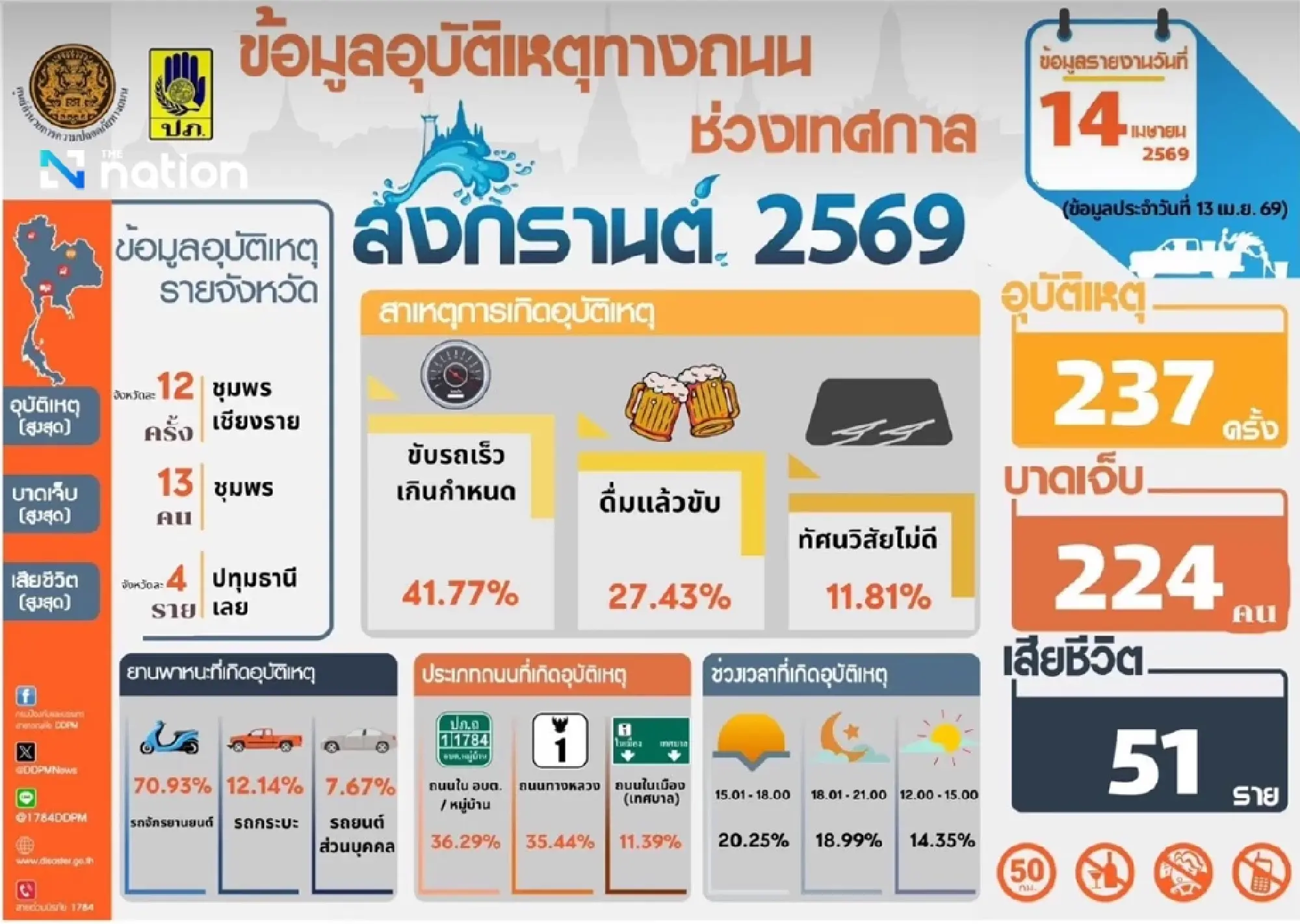
The four-day figures reinforced the same pattern seen earlier in the campaign, with risky driving behaviour still at the centre of the toll. The RSOC said speeding and drink-driving continued to drive casualties higher, while motorcycles remained by far the most accident-prone vehicle during the Songkran holiday rush.
Family Day and water-play zones put under tighter watch
With April 14 observed as Family Day, authorities said many people were expected to travel to visit elderly relatives, go to temples or continue joining Songkran celebrations. The centre has therefore ordered all provinces to step up safety measures at water-play areas and tourist sites, while strictly enforcing the law under the 10 main traffic offence measures.
Measures highlighted for April 14 include:
- tighter policing in Songkran water-play zones
- stricter checks during Family Day travel
- stronger action against drink-driving
- closer enforcement of alcohol sales restrictions for minors
- use of community checkpoints and family checkpoints to intercept risky drivers
- action against unsafe behaviour such as standing or sitting in the back of pick-up trucks
- bans on high-pressure water guns
- crackdowns on alcohol sales inside event areas
Authorities said anyone ignoring warnings could be referred to local police to stop them from driving out of celebration areas and putting others at risk.
Public transport drivers face stricter safety checks
Theerapat said traffic remained heavy on April 14, both from people still heading to Songkran events and from some travellers starting their return trips to Bangkok early to avoid even heavier congestion on Wednesday. He said relevant agencies had been instructed to manage traffic according to local conditions, especially on major roads under construction, where checkpoints and service points should be positioned appropriately to reduce the risks of drowsy driving and rear-end crashes.
Provincial transport offices were also told to step up inspections of public transport vehicles and drivers, especially those operating for several consecutive days. The centre said public transport drivers must:
- have zero alcohol in their system
- be free from narcotic drugs and psychoactive substances
- stop to rest for at least 30 minutes every four hours
- report for inspection at designated checkpoints as required
Passengers were urged to watch for signs that a driver might be unfit to continue, while motorists were told to pull over immediately or switch drivers if they felt fatigued.
Anyone involved in or witnessing an accident can report it through the 1784 hotline, available around the clock, or via the Line account @1784DDPM for emergency assistance.