
Sun Chemical has introduced AquaHeat, a range of food-safe, bio-based printing inks designed for high-temperature food packaging such as baking and foodservice.
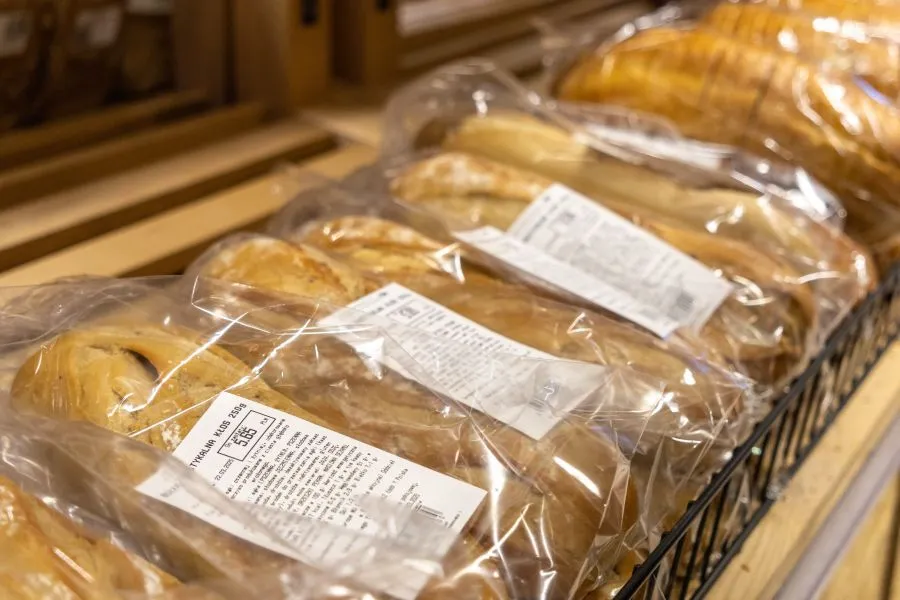
The inks have been tested at temperatures of up to 220 degrees Celsius, making them suitable for bread, pastries, and ready meals. The inks are said to comply with EU safety regulations on migration and leaching caused by extreme heat.
Eric Dejean, product director and product manager for water-based products, Europe, at Sun Chemical, says: “Brand owners and food packaging manufacturers have long sought to design unique packaging that can carry processed food products through their entire lifecycle while maintaining safety and visual appeal.”
“AquaHeat exemplifies our commitment to delivering transformative innovations that address market challenges and help our customers.”
The bio-based ink range also delivers “robust” capabilities in high-speed printing. Moreover, the inks are printable like standard water-based inks using rotogravure or flexographic processes. The ink range can be applied to different material types, such as paper, board, and film.
With ten ink colors featured in the range, Sun Chemical highlights that the portfolio offers a larger color gamut than previously available on the market.
Bio-based adoption
The AquaHeat ink range is made with up to 60% bio-renewable content. The solution can be combined with Sun Chemical’s liquid functional coatings with optional heat-sealing capabilities.
The ink plus coating solution can facilitate recyclable paper and board packaging for standard oven temperature applications.
Sun Chemical provides design tools, such as The GamutViewer software and SunDigiGuide books, which help predict and illustrate colors, aim at reducing the need for reworks, and accelerating product launches.
Bio-based solutions are experiencing an uptick as consumers and supplies move to mitigate the environmental and human harm caused by plastic pollution.
Recently, Henkel Adhesive Technologies collaborated with Swedish chemical company Sekab to accelerate the transition from fossil-based to bio-based raw materials in adhesive production. The partnership aimed to replace conventional ethyl acetate with a bio-based alternative.
Meanwhile, SmartSolve debuted a plastic-free, bio-based, and water-soluble film. Touting “global implications,” the solution is designed to replace single-use plastic in consumer-packaged goods.
Similarly, Sulapac joined forces with TripleW, a Belgian innovator in circular biochemistry, to launch a recycling pilot for bio-based cups.