
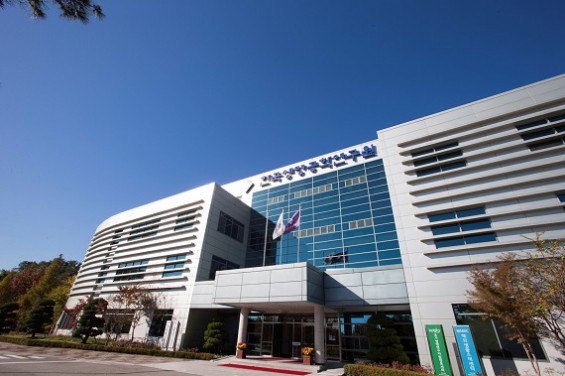
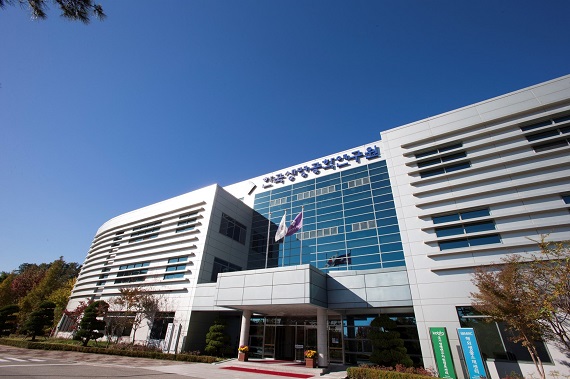
Exterior view of the Korea Research Institute of Bioscience and Biotechnology. Photo provided by KRIBB
An audit has revealed that three researchers at the Korea Research Institute of Bioscience and Biotechnology (KRIBB) colluded with a supplier to fraudulently expense over 700 million won in research material costs.
According to a special audit report on KRIBB released by the National Research Council of Science & Technology (NST) Audit Committee on the 22nd, researchers A, B, and C conspired with a company to fake purchases of research materials they never intended to buy for their respective projects, fraudulently expensing a total of 746,408,041 won.
This special audit began after the NST Audit Committee was referred a case related to fraudulent purchases from the Office for Government Policy Coordination in July 2025 and received a tip about workplace abuse in August of the same year. The committee conducted the audit for 15 days, from September 11 to October 1 of that year.
They fraudulently expensed the research material costs by obtaining false quotes from the supplier, submitting purchase requests, and then returning the materials to the company after they passed inspection.
A, a former center director who was responsible for the largest amount of fraudulent expenses, colluded with company CEO D to embezzle 604,717,729 won in research material costs over 100 transactions from June 2019 to November 2024. Of this amount, A personally received 369 million won via bank transfer, while D misappropriated the remaining 235,717,729 won.
Researcher B conspired with the same CEO, D, to fraudulently expense 23,252,350 won over five transactions from November 2024 to April 2025, which D then held as a slush fund.
Researcher C colluded with eight different companies to fraudulently expense 118,437,962 won over 29 transactions from November 2021 to November 2024. C used 108,386,850 won of this slush fund to purchase items different from what was officially recorded, using a significant portion for the R&D of a private company where C is a shareholder. The remaining 10,051,112 won was found to be held by the suppliers.
The audit also uncovered evidence that C planned to transfer equipment, which was purchased with the slush fund and not registered as an institutional asset, to the private company after retirement.
The Audit Committee has requested that the President of KRIBB take heavy disciplinary action (dismissal) against the three researchers—A, B, and C—and to devise plans to recover the fraudulently expensed funds and sanction the involved companies. It also recommended reporting the researchers to the head of the relevant central administrative agency for potential bans from national R&D projects and the imposition of administrative penalty surcharges, while also ordering the development of measures to prevent recurrence.
A criminal investigation has also been requested for A, B, C, and other related parties.
KRIBB has accepted the audit’s findings and stated its intention to take strict action against the wrongdoers and companies in accordance with regulations and to strengthen preventive education. An official stated, “We plan to establish a dedicated inspection team, create measures to reduce contact between researchers and suppliers, and promote improvements in our organizational culture to enhance compliance awareness.”
Copyright ⓒ DongA Science. All rights reserved.