
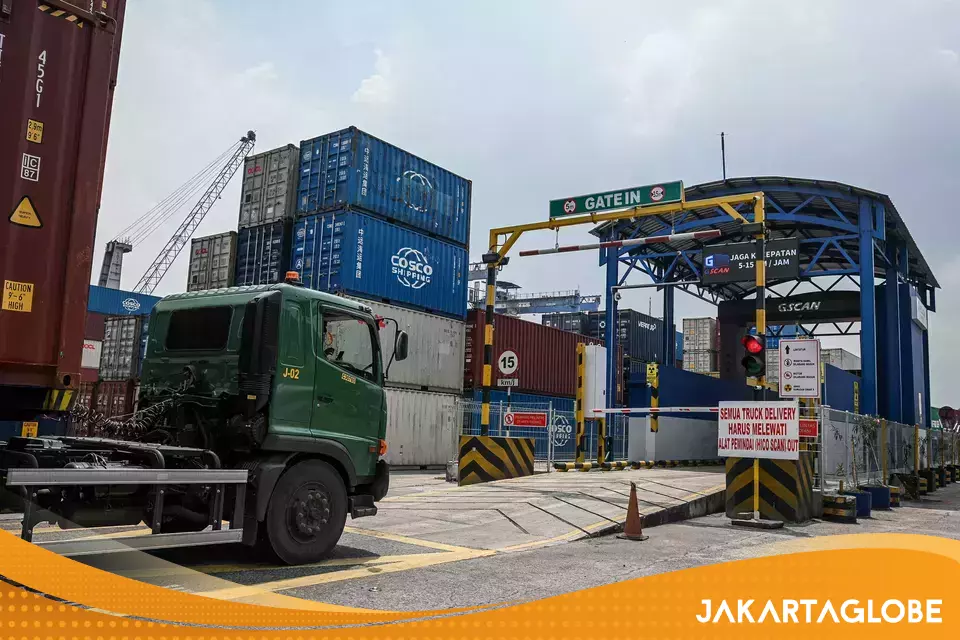
Jakarta. Indonesia’s customs authority said nearly 10,000 containers piled up at Jakarta’s Tanjung Priok port because companies failed to remove cargo after customs clearance, denying accusations that slow bureaucracy was behind the congestion.
Customs Director General Djaka Budhi Utama told lawmakers that customs processing at Indonesia’s busiest port had operated within national service standards, but thousands of containers remained stranded because importers continued using port storage facilities even after receiving permits to release their goods.
“The increase in container buildup at the port was not caused by customs clearance procedures,” Djaka said during a parliamentary hearing in Jakarta on Tuesday.
“After the cargo release approvals were issued, many containers still remained at the port because companies did not immediately transport them out,” he added.
ADVERTISEMENT
Djaka specifically mentioned Chinese automakers BYD and Wuling Motors among firms that continued using temporary storage facilities provided by the port for up to three days after customs approval had been granted. In some cases, containers reportedly remained at the port for more than two weeks.
“At one point there were nearly 10,000 containers still sitting at the port,” Djaka said.
According to customs officials, some companies deliberately kept containers inside the port because external warehouse capacity was limited and storage costs inside the port area were cheaper than private logistics facilities outside.
The congestion has raised concerns over Indonesia’s logistics efficiency and supply chain resilience as prolonged dwelling times at ports risk disrupting industrial raw material supplies.
Earlier this month, Finance Minister Purbaya Yudhi Sadewa conducted an inspection at Tanjung Priok after receiving reports of severe container congestion.
During the inspection, authorities found around 3,100 container documents still pending processing, contributing to longer dwelling times and beginning to affect the flow of industrial raw materials.
“The situation has increased dwelling time and started disrupting raw material supplies for businesses,” Purbaya said.
The government has ordered customs officials to expand manpower and operate around the clock until container queues return to normal levels.
“I asked them to increase personnel and work 24 hours in shifts until the queue falls back to around 500 containers,” Purbaya said.
Indonesia’s government is also preparing financial penalties for companies found intentionally holding containers inside port areas for excessive periods, part of broader efforts to reduce logistics bottlenecks and improve supply chain efficiency in Southeast Asia’s largest economy.
Tags:
Keywords: