
xpeng.com
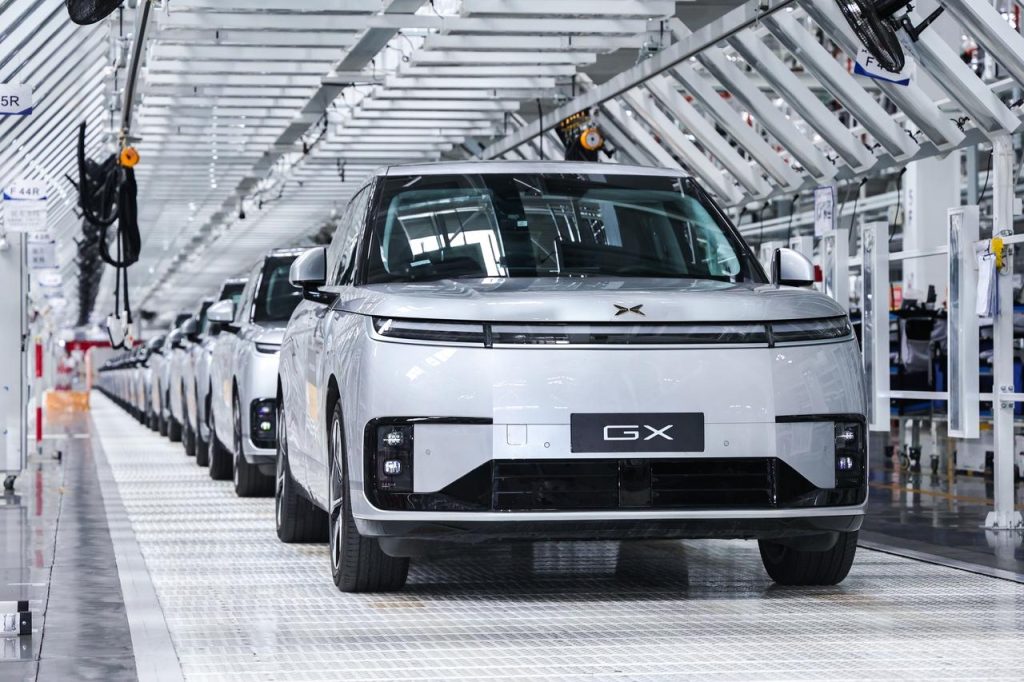
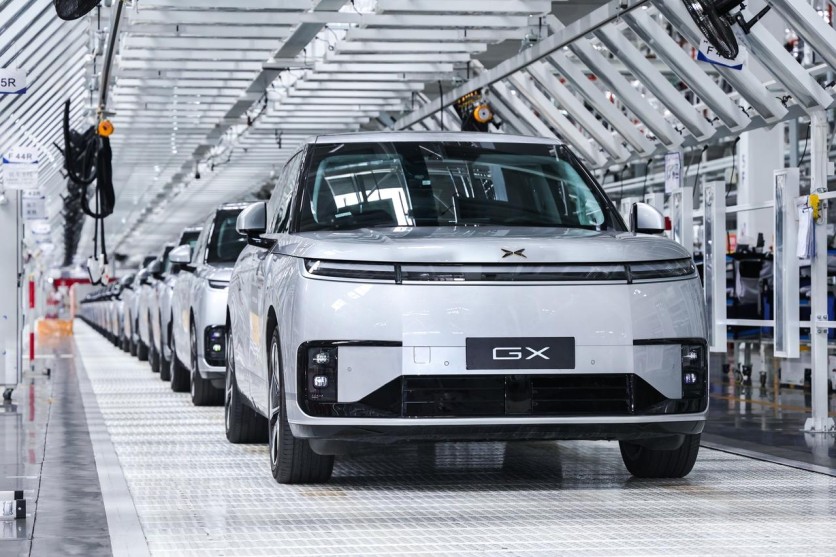
XPENG launched internal employee testing of its Robotaxi platform in Guangzhou on July 10, 2026, with Chairman and CEO He Xiaopeng completing the service’s first fully autonomous end-to-end trip — placing a ride-hailing order, being picked up, and reaching his destination without any human intervention. The milestone arrived eight months after XPENG unveiled its Robotaxi initiative at AI Day 2025, a pace the company described as exceeding its own initial expectations.
What distinguishes XPENG’s approach is not just that it is entering a competition already running at scale — Waymo was operating approximately 500,000 paid trips per week across ten US cities by March 2026, and Baidu’s Apollo Go delivered 3.2 million fully driverless rides in the first quarter alone — but that it is doing so with a technically distinct architecture and a business model that neither of those market leaders uses. Understanding both is essential to evaluating what the employee testing launch actually means. International riders who use a licensed XPENG Robotaxi service outside China should also be aware that China’s National Intelligence Law requires XPENG’s Chinese affiliates to cooperate with state intelligence requests — a legal obligation with implications for the location and behavioral data those rides generate.
Why VLA 2.0 Eliminates the Handoffs That Slow Rival Systems
The heart of the XPENG Robotaxi platform is VLA 2.0 — the company’s second-generation Vision-Language-Action model, unveiled at a Guangzhou media event on March 2, 2026, and subsequently deployed via over-the-air update to XPENG’s P7, G7, and X9 Ultra consumer vehicles in March 2026. The Robotaxi is powered by four of XPENG’s proprietary Turing AI chips, delivering 3,000 TOPS of onboard computing power — a figure XPENG describes as the highest global standard for a deployed autonomous vehicle as of this writing.
The architectural distinction that VLA 2.0 represents is worth explaining precisely. Conventional autonomous driving stacks — including older versions of Tesla’s Full Self-Driving and most modular systems from Waymo, Mobileye, and others — use a sequential pipeline: a perception module identifies objects in the sensor feed; a prediction module models where those objects will move; a planning module generates a safe trajectory; a control module converts that trajectory into steering angle, throttle position, and braking commands. Every handoff between modules is a translation step, and each step is a point where information can be lost, simplified, or mis-encoded — and where latency accumulates.
VLA 2.0 collapses this pipeline into a single unified neural network. Camera images arrive as input; steering, acceleration, and braking commands emerge as output. The “language” in Vision-Language-Action does not refer to a conversational interface. It refers to the large-language-model backbone that gives the system semantic reasoning capability — allowing it to interpret a construction worker directing traffic, a child stepping toward a crosswalk, or a bus that is half-obscured by another vehicle, and to generate driving behavior directly from that interpretation without routing it through separate prediction and planning modules. XPENG trained VLA 2.0 on 100 million video clips of challenging driving scenarios.
The tradeoff built into this approach is real and documented. By relying on cameras alone — no LiDAR, no pre-built high-definition maps — VLA 2.0 saves substantial cost per vehicle: LiDAR units add $500 to $2,000 or more per sensor to a vehicle’s bill of materials, and maintaining centimeter-accurate HD map databases for every operating city is a significant ongoing expense. But camera-based systems have well-documented performance degradation in adverse weather and low-light conditions — scenarios where LiDAR maintains ranging capability independent of visibility. Independent academic research has consistently found that camera-LiDAR fusion outperforms camera-only systems in these scenarios. XPENG has not published independent third-party safety validation of VLA 2.0’s performance in rain, fog, or nighttime driving conditions; the 23% driving efficiency improvement and Guangzhou rush-hour performance figures the company has cited are self-reported.
An Electrek test driver covered 40 minutes of Beijing traffic in a VLA 2.0-equipped XPENG P7 Ultra in April 2026 without a single intervention and characterized the performance as “driving intuition” rather than a machine following rules. That is a meaningful data point and not equivalent to an independent safety audit.
Map-Free Architecture Is How the Licensor Model Actually Works
XPENG’s Robotaxi business model diverges fundamentally from those of the current market leaders. Waymo and Baidu Apollo Go each own and operate their own fleets: Waymo ran over 3,500 active vehicles as of mid-2026; Apollo Go operates more than 1,000 vehicles across 27 cities and has accumulated over 22 million cumulative rides. Both companies bear the capital costs of maintaining those fleets and the operational burden of proving safety in each city they enter.
XPENG intends to be a technology provider and licensing partner instead, supplying the software stack, hardware platform, and AI system to local operators who then deliver the actual service. He Xiaopeng framed this positioning explicitly at the company’s Robotaxi business meeting on July 9: the goal is to build infrastructure and share it, not to compete with fleet operators for the asset-intensive work of running vehicles.
The camera-only, HD-map-free architecture is what makes this model economically coherent. A licensing partner can deploy XPENG’s Robotaxi stack in a new city without first paying to survey and maintain a centimeter-accurate HD map of every road in the operating zone — a process that typically takes months and significant capital. That friction reduction is the actual competitive rationale for the sensor choice, not the sensor choice itself. XPENG confirmed at the July 9 meeting that it is already in discussions with potential Robotaxi partners across Europe, the Middle East, and Southeast Asia.
XPENG does not yet appear in the top tier of the Road to Autonomy Index — the Autnmy AI/S&P Dow Jones benchmark that, in its June 2026 rankings, placed Waymo, Baidu Apollo Go, Pony.ai, WeRide, and Tesla as the top five global robotaxi operators. That index weights commercial revenue-generating deployment heavily, and XPENG is in employee testing, not commercial service. The licensor model, if it succeeds, could allow XPENG to expand its operational footprint through partners at a pace that asset-heavy fleet operators cannot easily match — but that is a conditional claim, not a result.
How Does XPENG Robotaxi Compare to Waymo and Apollo Go?
The honest competitive picture is that XPENG is entering testing at a moment when the top-ranked operators have years of commercial deployment experience and tens of millions of real-world rides generating training data and operational learning. Waymo crossed 20 million lifetime driverless trips in 2026; Apollo Go crossed 22 million cumulative rides. These numbers represent an operational depth that eight months of development cannot replicate regardless of how elegant the architecture is.
VLA 2.0’s benchmarks are self-reported. The 23% driving efficiency improvement is measured against XPENG’s own prior systems, not against Waymo’s or Apollo Go’s current software. No independent third-party organization has published a comparative performance audit of VLA 2.0 against the systems used by the current market leaders. He Xiaopeng’s stated goal of matching Tesla FSD v14.2 by August 30, 2026, is a competitive aspiration that reflects the company’s own assessment of where the gap lies — and Tesla currently ranks fifth globally, behind three Chinese operators.
XPENG’s structural advantage is the data flywheel its consumer EV fleet creates. The same Turing chip and VLA architecture that power the Robotaxi underpin XPENG’s L2+ intelligent driving systems across its consumer vehicle lineup, which delivered 103,295 units in Q2 2026 alone. Every kilometer driven by a VLA 2.0-equipped consumer XPENG generates data that feeds back into the Robotaxi training pipeline. Pure-play AV companies like Waymo do not have this cross-product data source. Whether the accumulated diversity of consumer driving data compensates for the depth of purpose-built robotaxi operational data that Waymo and Apollo Go have collected is an open question that only real-world deployment will answer.
The regulatory path is also unresolved. XPENG holds a road-testing permit in Guangzhou and plans to complete trial operations and establish demonstration services in the city during 2026. Fully driverless commercial service is planned for early 2027 — but that timeline requires Chinese regulatory approval for unsupervised L4 commercial operation, which has not yet been granted. International licensing partnerships face the added complexity of satisfying each country’s autonomous vehicle regulatory framework on a city-by-city basis, a burden that the licensor model transfers to local partners but does not eliminate.
Volkswagen’s Adoption and What It Does — and Does Not — Confirm
The most credible external validation XPENG has for VLA 2.0 is Volkswagen. VW, which holds a 4.99% stake in XPENG following a roughly $700 million investment in 2023, was named as the first external customer to adopt VLA 2.0 in the Chinese market. VW is not a neutral evaluator — its equity stake gives it a financial interest in XPENG’s success — but it is a sophisticated automotive organization with engineering teams that do not adopt AI driving systems on press-release claims alone. The licensing relationship represents a meaningful vote of confidence in the technical foundation.
What VW’s adoption does not confirm is that VLA 2.0 performs comparably to competing systems in independent testing, that it meets the safety thresholds required for unsupervised L4 commercial operation in any jurisdiction, or that its performance in Chinese urban driving conditions will generalize to the varied road environments, weather conditions, and traffic behaviors it will encounter through international licensing partners.
What International Riders Should Know About Passenger Data
XPENG is a Chinese company, headquartered in Guangzhou, whose Chinese affiliates are subject to the full suite of China’s national security and data laws. Riders who use XPENG Robotaxi services — whether in Guangzhou or in a future partner city in Europe, the Middle East, or Southeast Asia — generate real-time location data, trip routing data, and potentially in-cabin data from a vehicle that transmits to systems operated or maintained by those Chinese affiliates.
Three laws create the structural framework:
China’s National Intelligence Law (2017), Article 7 requires all organizations and citizens to “support, assist, and cooperate with national intelligence efforts in accordance with law.” Article 14 grants intelligence agencies the authority to demand that cooperation. The law applies to XPENG’s Chinese affiliates regardless of where data is physically stored or through which partner the service is delivered.
China’s Data Security Law (2021), Article 36 prohibits organizations from transferring data stored in China to foreign judicial or law enforcement bodies without Chinese governmental approval — this restricts outbound data while leaving Chinese state inbound access intact.
China’s Cybersecurity Law (amended January 1, 2026) expanded the law’s extraterritorial reach and increased penalties for non-compliance.
XPENG has stated that it operates isolated data architectures for different jurisdictions. No independent third-party security audit confirming the scope or effectiveness of any such isolation for the Robotaxi platform has been published. XPENG also has a prior documented privacy incident: the company admitted in 2021 that it had collected facial recognition data from showroom visitors without consent.
The Robotaxi’s data collection profile, by the nature of the service, includes precise origin and destination location, time of travel, and, depending on vehicle configuration, in-cabin camera data. A rider has no contractual or technical mechanism to cause XPENG’s Chinese affiliates to decline a Chinese government intelligence request made under Article 7. This is not a risk to be weighed against cost — it is a fixed legal condition of using a service operated by a company subject to Chinese jurisdiction.
XPENG’s Roadmap and What Comes Next
Guangzhou is designed to be a proof-of-concept city. The employee testing phase that launched July 10 will progress toward trial operations and demonstration services before the end of 2026, with XPENG using the city’s results to develop a replicable operational playbook for international licensing partners. He Xiaopeng’s language at the Robotaxi business meeting positioned this as a decade-long trajectory: autonomous vehicles are mobile robots, and the Turing chip and VLA architecture that power the Robotaxi today will eventually extend across the company’s humanoid robot and flying vehicle programs under the “Physical AI” umbrella.
Whether XPENG’s camera-only, map-free architecture proves itself as a viable commercial robotaxi stack — generating the safety record required for broader regulatory approval and the operational density required to compete with Waymo and Apollo Go — remains genuinely open. The internal employee testing phase that began July 10 is a controlled environment, not commercial operation. The CEO’s first autonomous ride is a statement of technical readiness for that controlled phase, not evidence of commercial readiness for the open market. The next meaningful milestone will be when XPENG transitions from internal employees to the Guangzhou public — a step the company suggested, in He Xiaopeng’s own Weibo post from July 10, could come soon.
Frequently Asked Questions
How does XPENG’s VLA 2.0 architecture differ from Waymo’s or Tesla’s autonomous driving systems?
Waymo and Tesla’s Full Self-Driving use modular pipeline architectures — separate software modules for perception, prediction, planning, and vehicle control, with each stage passing processed information to the next. XPENG’s VLA 2.0 replaces this chain with a single neural network that takes camera images as direct input and produces steering, throttle, and braking commands as output, eliminating the intermediate handoff points where latency accumulates and information is lost. The practical difference is faster response and the ability to handle complex, semantically ambiguous scenes without translating observations through multiple processing layers. The tradeoff is that camera-only systems have documented performance degradation in adverse weather and low-light conditions, where LiDAR-equipped systems like Waymo’s maintain ranging capability independent of visibility.
Will XPENG Robotaxi be available outside China, and when?
XPENG is pursuing a licensor model rather than operating its own international fleet. The company confirmed on July 9 that it is already in discussions with potential partners across Europe, the Middle East, and Southeast Asia. Under this model, XPENG supplies the autonomous driving stack and local partners operate the vehicles and manage regulatory approval in their own cities. The timeline depends on both XPENG completing its Guangzhou pilot and trial operations — targeted for 2026 — and prospective partners obtaining autonomous vehicle operating permits in their jurisdictions. No specific international launch dates or confirmed partner agreements have been announced as of July 13, 2026.
Is XPENG Robotaxi’s camera-only approach safe without LiDAR?
XPENG’s camera-only system has not been independently audited for safety performance in low-light or adverse weather conditions. The company’s self-reported figures — a 23% driving efficiency improvement versus its own prior systems and Guangzhou rush-hour performance described as comparable to experienced human drivers — are not equivalent to third-party safety validation. Independent academic research consistently finds that camera-LiDAR sensor fusion outperforms camera-only systems in poor visibility scenarios. The Electrek test driver who covered 40 minutes of Beijing traffic in April 2026 reported no interventions, but a 40-minute urban test drive is not a statistically sufficient safety dataset. Fully driverless commercial operation will require XPENG to demonstrate safety metrics sufficient for Chinese regulatory approval — a standard that has not yet been met.
What happens to my location and trip data if I ride in an XPENG Robotaxi?
The XPENG Robotaxi platform collects real-time location, routing, and trip data — and potentially in-cabin sensor data, depending on vehicle configuration. XPENG is a Chinese company whose affiliates are subject to China’s National Intelligence Law (2017), Article 7, which requires all organizations to support and cooperate with state intelligence work. This obligation applies regardless of where data is physically stored or through which partner city the service is delivered. No independent audit of XPENG’s Robotaxi data isolation architecture has been published. Riders in licensed XPENG Robotaxi services outside China have no contractual or technical mechanism that fully addresses this legal framework.