
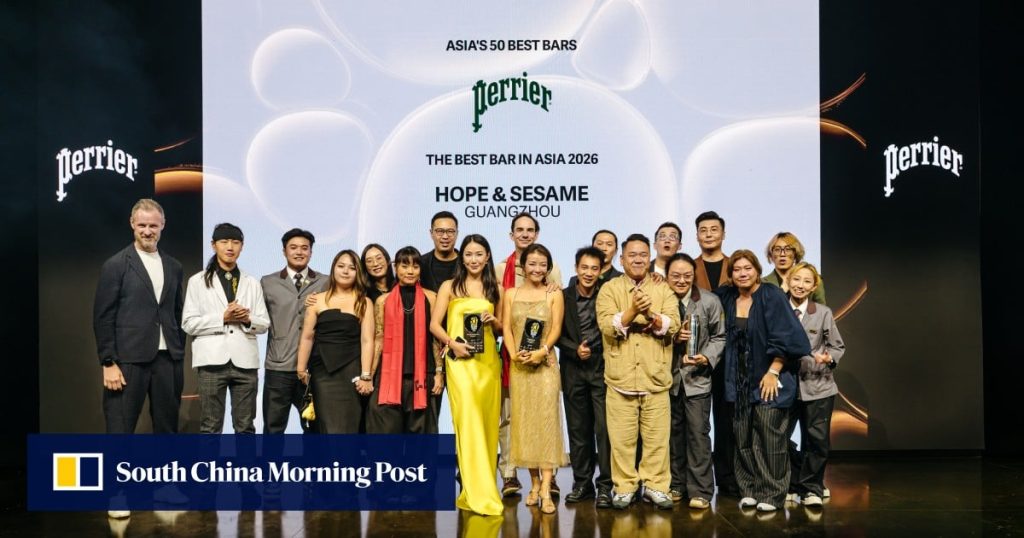
The Guangzhou bar (which also has a location in Shenzhen) leads something of a changing of the guard. Mainland Chinese representation has ballooned from three bars last year – Hope & Sesame, MO Bar Shenzhen and CMYK in Changsha – to seven among Asia’s 50 Best Bars this year, plus three more on Asia’s 51-100 extended list. Hong Kong is still one of the most represented territories – but only just, with eight venues on Asia’s 50 Best Bars and three on the extended list.
Liu estimates that 90 per cent of his guests are in their early twenties and late thirties, with many travelling from first-tier cities and finding their way to CMYK through resources such as RedNote. Most of these guests – 70 to 80 per cent – are female and are looking for cocktails rather than baijiu.
“When they go out, you don’t see four or five girls get together, open a bottle of baijiu,” he says, noting that baijiu is more of a dinner and occasion drink. “They want to have some fun, try different flavours, take pictures.”
The data seems to support Liu’s numbers. The International Wine and Spirits Record is seeing a shift in demand towards hospitality and “on-trade” consumption at bars and bistros. Baijiu sales have fallen, while spirits and ready-to-drink mixes are on the rise as younger drinkers embrace casual drinking and older drinkers become more selective about what they buy.