
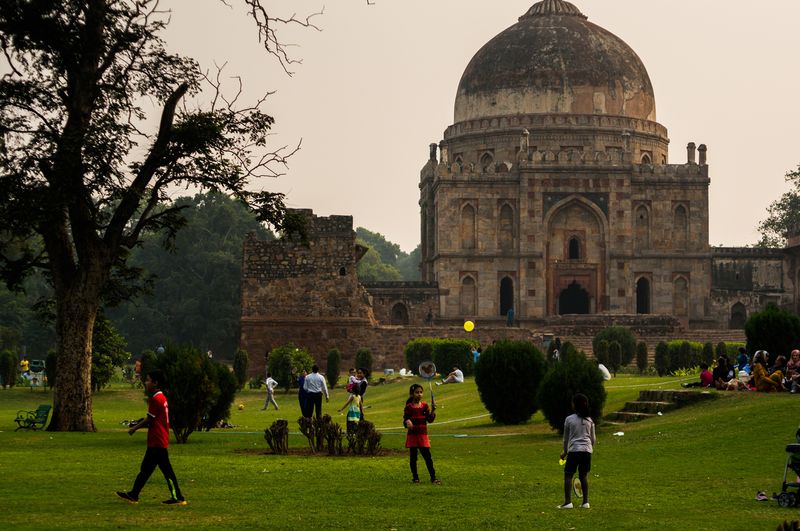
In the middle of the capital’s fast-paced urban life, Lodhi Garden stands as a rare sanctuary where history and nature coexist in quiet harmony. As the iconic garden turns 90 today, it continues to draw walkers, historians, and tourists alike, offering a living window into Delhi’s layered past.
Spread across acres of lush greenery, Lodhi Garden traces its origins back to the 15th century, when rulers of the Lodi dynasty chose the site as a burial ground. The garden houses architectural gems such as the tombs of Muhammad Shah and Sikandar Lodi, making it one of the few public spaces where medieval history is seamlessly woven into everyday life.
Its transformation into a public garden began in 1936 under British rule, when Lady Willingdon redesigned the area as Lady Willingdon Park, creating a landscaped setting around the historic tombs. Following Independence in 1947, it was renamed Lodhi Garden, symbolising a shift toward reclaiming India’s heritage.
The garden underwent another major redesign in 1968, led by American landscape architect Garrett Eckbo and architect Joseph Allen Stein. Their vision introduced features such as a glass house, a scenic lake with fountains, and curated spaces like a bonsai park and rose garden, transforming it into a modern urban retreat without disturbing its historical essence.
Beyond its famed tombs, the garden also shelters lesser-known relics, including a mysterious turret believed to date back to the Tughlaq dynasty. These structures quietly narrate centuries of Delhi’s evolution.
Today, as it marks nine decades in its present form, Lodhi Garden remains more than just a park, it is a cultural landmark where heritage, ecology, and community life intersect. From morning joggers to heritage walks, it continues to serve as a breathing space for the city, reminding Delhi of its past while offering respite in the present.