
Last Updated:
Speciality coffee demands respect for the farmer, the process, and the product. Both Libertario and Pour Over Coffee Roasters reiterate this idea.




Unlike commercial coffee, which is often mass-produced and blended to maintain consistency, speciality coffee celebrates difference.
I had always thought of coffee as a functional beverage; a hurried, bitter companion of those chasing deadlines on early mornings and late nights. Since I have never needed this fuel to function, I have always taken my coffee cold, masked in sugar and dressed in milk and chocolate. This delicious concoction, for me, became so synonymous with leisure that I rarely questioned it.
To my coffee connoisseur (read: snobs) friends, my harmless concoction felt “fake”. For the longest time, I was told that coffee had to be bitter to be “real”. That sharp, almost punishing taste felt like something you trained yourself to tolerate in exchange for alertness. Milk and sugar, I was told, were crutches. Black coffee was the truth. And the truth, apparently, was bitter.
But what good is a journalist who never questions the norm? What I then realised was that while many believe that bitterness is the hallmark trait of good coffee, somewhere between Delhi’s Greater Kailash and Chankyapuri, that notion quickly crumbles. Here, I was introduced to speciality coffee, which felt less like tasting the beverage and more like discovering it for the first time.
It was lighter, almost tea-like, with a gentle acidity that reminded me of citrus and something faintly floral. There was no heaviness or harsh bitterness. Instead, it unfolded slowly on my palate, layered and deliberate. It wasn’t sweet in the way sugar is sweet, but it wasn’t aggressively bitter either. I remember pausing after the first sip, slightly confused by the cup of black coffee that didn’t make me wince.
What Is Speciality Coffee?
This was my initiation into the world of speciality coffee. Speciality coffee refers to coffee that scores 80 points or above on a 100-point scale by certified tasters, known as Q graders. But beyond the numbers, it’s about the bean’s traceability, quality, and care at every step.
Unlike commercial coffee, which is often mass-produced and blended to maintain consistency, speciality coffee celebrates difference. Each cup tells the story of the soil the beans grew in, the altitude of the farm, the climate of the region, and the hands that cultivated it. It is, perhaps, a rather intriguing lesson in geography.
Where Is Speciality Coffee Grown?
Speciality coffee is mainly grown in Ethiopia, Colombia, Brazil, and parts of India. Here, altitude plays a crucial role. Speciality coffee is typically grown at higher elevations, where cooler temperatures slow the growth of coffee cherries. This extended maturation allows the beans to develop more complex sugars, which translate into richer, more nuanced flavours.
The cherries are often hand-picked, ensuring only the ripest ones are selected. This alone sets speciality coffee apart. The beans then undergo careful processing via methods like washed, natural, honey or carbonic maceration. Washed coffees tend to be cleaner and brighter, while natural processes can bring out fruity, wine-like notes. The beans are carefully dried, sorted, graded (every year), and then roasted in small batches to highlight their inherent characteristics rather than mask them.
A Coffee Omakase Experience
My first lesson in speciality coffee education happened at Libertario, a speciality coffee roaster proudly placed in Greater Kailash 2. They primarily source their beans directly from the La Palma y El Tucan estate in Colombia, giving Delhi a touch of international flair. I attended their curated coffee Omakase experience, where I was guided through a multi-beverage tasting journey exploring different brewing techniques, bean origins and flavour profiles.
The story-led experience was quite the sensory journey, which took me from traditional to entirely experimental profiles. As I made my way to the private space dedicated to this experience, the coffee bag-lined walls gave me an air of importance typically reserved for those who can differentiate between the pour-over and the siphon.
Smell First, Sip Later
I was first asked to close my eyes and get a whiff of the grounds used for their Paz profile. The instructions for my first sip were similar. The Paz felt familiar and comfortable due to notes of caramel and milk chocolate. It felt well-rounded, and our first encounter was rather smooth. Then came Libre with its bolder, more intense flavour.
Libre had hints of cherry, brown sugar and dark chocolate. It was made with Indian coffee beans sourced from the Riverdale estate in Tamil Nadu, and it accurately expressed its layered character. This felt like a brew that would be enjoyed by people who need a wake-up coffee punch in the mornings. It was also my wonderfully knowledgeable barista’s favourite profile.
Then we entered the experimental territory, and my elementary education was over. I was then introduced to the Geisha varietal, which is considered as precious as gold in the coffee world. What are varietals? Think of them as “types of coffee”. For example, an apple can be of the red, yellow, red delicious or Granny Smith variety.
Their first preparation was called Voyage, and it featured notes of jasmine, black tea, honey and lavender. We were in the big leagues then. The flavour felt vibrant yet sophisticated. It was like nothing I had had before. The taste evolved with every sip, allowing me the opportunity to fully explore its complexity.
The Rebel came at last. It had notes of rose, orange blossom, raspberry and dark chocolate. This Geisha preparation felt unconventional, disruptive and experimental to a simpleton like me. As much as I relished the taste of speciality coffee, I also enjoyed the unhurried Omakase experience. It almost felt like a gin tasting.
A Slow, Almost Hallowed Process
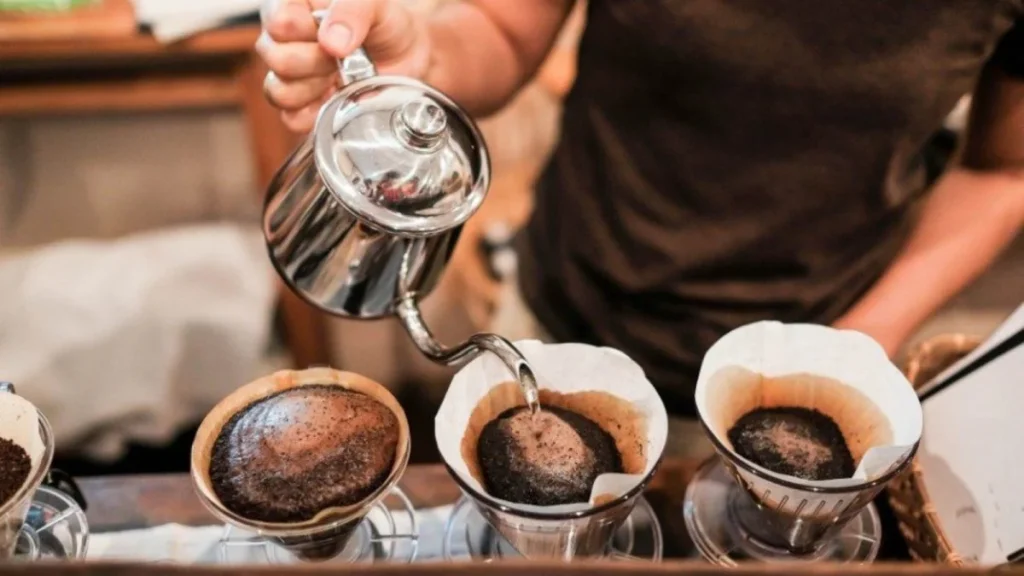
The baristas didn’t seem like they were just making my coffee; it looked like they were engaging in a holy ritual. Water was poured slowly in circles over freshly ground beans, blooming them first, then coaxing out their flavours with patience. It took time, and there was an insistence on slowing down. I didn’t quickly gulp down my drink. I sat with it and noticed how it changed as it cooled. I identified notes like a quiet conversation unfolding between me and the cup.
Here I learnt that when coffee is treated with a little more care, something shifts. The bitterness doesn’t disappear entirely, but it stops dominating the palate. Instead, it shares space with other notes: a gentle acidity that can feel bright rather than sour, a rounded body that feels almost comforting, and sometimes even a natural sweetness that lingers at the end. Black coffee, in that sense, isn’t about stripping something away. It’s about revealing what’s already there.
Speciality coffee demands respect for the farmer, the process, and the product. It’s about transparency in sourcing, sustainability in farming, and intentionality in consumption. It asks you to care about where your coffee comes from, and in doing so, transforms a daily habit into something meaningful.
A Modern Take On Speciality Coffee
This is also the intent behind Pour Over Coffee Roasters tucked in Chanakyapuri’s Santushti Complex. Pour Over believes in making great coffee accessible without necessarily screaming “Speciality” from the top of their lungs. Their coffee speaks for itself, without emphasising the fluff.
From Typica from South and Central America, Bourbon and Geisha from Latin America and special beans harvested in India, Africa and Indonesia, they want to create an experience for every palate without overwhelming the consumer.
My experience here was quite different from my time at Libertario. It felt less pious and more informal. It is a space where you don’t take yourself too seriously and where even my milky, chocolatey coffee felt different. Pour Over is a modern, engaging and friendly space. I felt at ease at Pour Over, mostly because of how I was welcomed to be a part of their process.
What Is A Cupping Session?
From understanding the math (of roasting temperatures and ratios) behind the method to being a part of the first cupping session for their coconut profile, I was invested from the first sip. Coffee cupping is a method for tasting and evaluating coffee aroma, flavour, acidity, body, and aftertaste. It allows one to compare different beans by steeping coarsely ground coffee in hot water, breaking the crust, and loudly slurping from a spoon to assess quality and flavour.
Tasting freshly ground coconut coffee was a transformative experience for me. I learnt about flavour profiles from industry experts and also realised how I understand them through my palate. While the roaster could easily detect notes of coconut oil, my taste buds picked up the flavour of burnt husk. If taste is so personal, how can a bitter Americano be “more right” than a sweeter mocha?
Why Does Coffee Turn Bitter?
This Earth-toned cafe is not a space that judges you for how you like your coffee. The coffee nerds here were also quick to dismiss the notion that coffee needs to be bitter to be good. It turns out, bitterness isn’t the defining feature of coffee. They taught me that it’s often just the result of how we make it. Over-extracted coffee, where hot water pulls too much out of the grounds, can taste harsh and astringent.
Poor-quality beans, roasted too dark to mask defects, can lean heavily into bitterness. Even something as simple as water that’s too hot or a brew that sits too long can tip the scales in the wrong direction. Since Pour Over is founded by a coffee roaster, there is meticulous detailing that goes into every cup.
Coffee Beyond The Americano
Pour Over takes ‘special’ to another level. From introducing a whiskey barrel-aged coffee in Delhi to soon bringing never-before-seen (in India) profiles to the country, they are focused on their mission of accessibility. This access was also highlighted in their concoctions beyond the Americano that tasted equally as interesting.
I tried their strawberry mocha, and it was unlike anything similar that I had tried before. While many cafes treat their milkier and fruitier drinks with less seriousness and more sugar, Pour Over gives them a certain respect. Here, the coffee still takes centre stage with strawberry and chocolate only enhancing the flavour of the grounds, not consuming it entirely. It is treated like coffee and not a milkshake.
But milk aside, even the Raspberry Espresso Tonic had an interesting character of its own. The punchiness of the raspberry married and magnified the flavour of the espresso instead of overwhelming it. In treating the “less serious” coffee drinks with equal respect, this place increased my appreciation of the bean and the beverage. It echoed the sentiment that coffee isn’t meant to be endured. It’s meant to be experienced.
What Is Good Coffee?
What I had been drinking all along wasn’t “how coffee tastes”. It was only one version of it. The idea that “true coffee” has to be bitter and black is outdated. It feels too formulaic. Good coffee demands a little presence. It asks you to slow down just enough to notice the taste, texture, temperature, even the way the flavour evolves as the cup cools. Trying speciality coffee is a good way to understand this.
What speciality coffee does, more than anything else, is challenge the idea that bitterness is coffee’s defining trait. Once you experience its balance, where acidity, sweetness, and body exist in quiet harmony, it becomes difficult to go back to the idea that coffee has to be harsh to be authentic. Because it doesn’t. It never did.
April 09, 2026, 10:45 IST